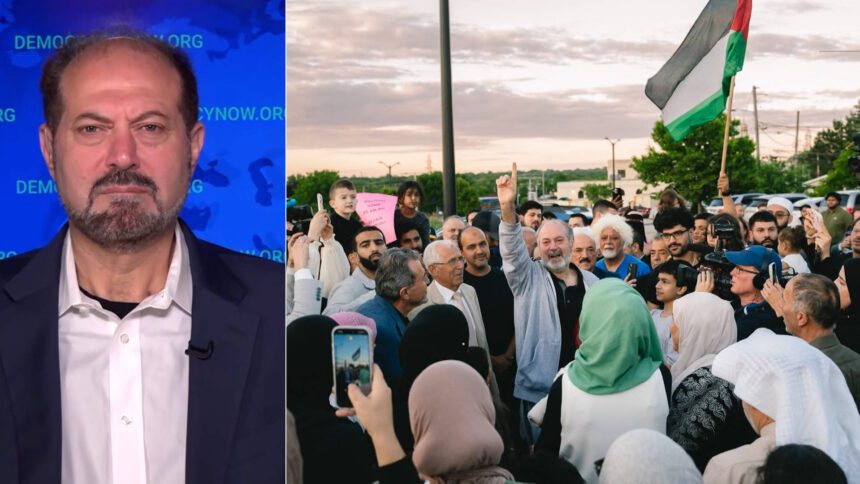

Salah Sarsour, president of the Milwaukee Islamic Society and a legal permanent resident for over 30 years, has been embroiled in a contentious deportation case that underscores ongoing concerns about discrimination against Muslim communities in the United States. His arrest by ICE agents on March 30 while he was preparing to take his mother to a doctor’s appointment raises critical questions about the intersection of civil rights and national security policies under the Trump administration’s approach to activism related to Palestinian rights.
Background on Salah Sarsour’s Case
On March 30, 2023, Salah Sarsour was confronted by plainclothes immigration agents brandishing weapons. He was arrested in a dramatic showdown, with nearly a dozen vehicles and 20 agents present. Sarsour’s arrest is alleged to be linked to past convictions in Israeli military courts during his teen years in the occupied West Bank, a claim that has raised eyebrows regarding its validity. His legal representatives argue that Sarsour is being targeted for his vocal advocacy for Palestinian human rights.
Despite being previously released by a district judge who cited First Amendment retaliation in Sarsour’s case, the ruling did not affect the ongoing deportation proceedings initiated by the Department of Homeland Security (DHS). Sarsour describes his detention as an egregious act that not only affects him but sets a dangerous precedent for the treatment of activists and their families.
Emotional Impact of Detention
During his 80-day confinement, Salah Sarsour experienced conditions that he described as reminiscent of his childhood under Israeli military occupation, emphasizing how the trauma resurfaced in the U.S. detention facility. This evocation of memory is particularly significant in discussions about the lived experiences of Palestinians, particularly those who have faced militarized state actions.
Sarsour noted the psychological toll of being separated from his family, including his six children and nine grandchildren. The emotional ramifications are profound, shedding light on how governmental actions not only affect the targeted individual but extend to their families and communities, reinforcing cycles of trauma and marginalization.
Community Solidarity and Responses
The response from the local and national communities has been notable. Organizations like Jewish Voice for Peace rallied in support of Sarsour, illustrating a rare coalition across different faiths and backgrounds that oppose the use of governmental power to silence dissent. This unity underlines the importance of collective action in the face of perceived injustice.
Sarsour’s case has garnered significant attention within and beyond Wisconsin, emphasizing the importance of civil rights advocacy in the current geopolitical climate. The community’s coalition efforts have not only led to increased awareness but also mobilized public opinion against what many perceive as the discriminatory practices of the immigration system.
Why It Matters
The significance of Salah Sarsour’s case extends beyond individual suffering. It reflects broader systemic issues regarding how marginalized communities, particularly Muslims, are treated within the immigration framework in the U.S. It underscores the necessity for legal protections that uphold free speech and civil rights while scrutinizing national security policies. Furthermore, the political implications of this case highlight the ongoing struggle against discrimination and social exclusion affecting various groups, pushing for legislative reform and greater accountability within immigration practices. Understanding these dynamics is critical for policymakers, advocates, and concerned citizens who wish to foster a just society.
Frequently Asked Questions
What led to Salah Sarsour’s arrest by ICE?
Salah Sarsour was arrested by ICE agents who claimed he had allegedly lied on his 1993 green card application regarding a conviction in Israeli military courts when he was a teenager.
What has Salah Sarsour stated about his detention experience?
Sarsour described his ICE detention as traumatic and reminiscent of his experiences growing up under Israeli military occupation, emphasizing the psychological impact of separation from his family and his activism for Palestinian rights.
What is the current status of Salah Sarsour’s deportation case?
As of now, deportation proceedings against Salah Sarsour are ongoing, despite a previous ruling where a federal judge noted a substantial claim of First Amendment retaliation related to his activism.
How has the community responded to Sarsour’s situation?
There has been significant community support, particularly from groups like Jewish Voice for Peace and various interfaith organizations, advocating for Sarsour’s rights and condemning the use of immigration enforcement as a means of silencing advocacy for Palestinian rights.