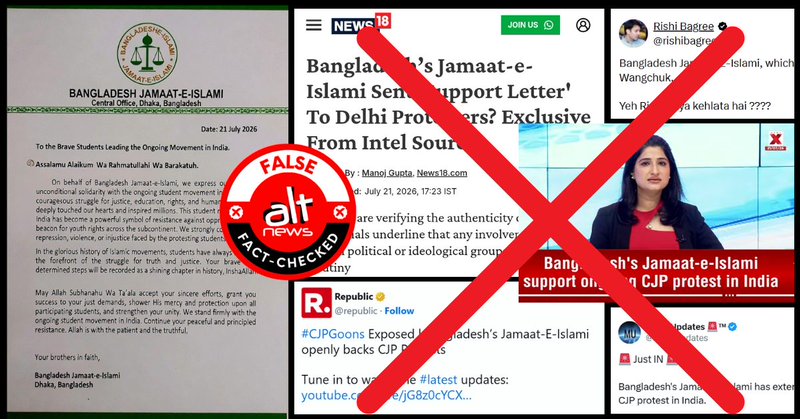

In a recent controversy, Indian media outlets Republic, News 18, and News X falsely reported that the Bangladeshi political party Jamaat-e-Islami extended its support to the Cockroach Janta Party (CJP). This claim was based on a viral fake letter circulated by right-wing handles, leading to significant misconceptions in the political discourse.
Context of the Claim
The reports emerged after an apparent letter surfaced online, which purported to show Jamaat-e-Islami expressing its backing for the CJP’s protest. This was disseminated primarily through social media platforms by users such as Rishi Bagree, Jaipur Dialogues, and MeghUpdates, all known for their alignment with right-wing narratives. Such a letter, however, has been identified as a forgery, raising questions about the reliability of the sources that amplified the claim. Fact-checking website AltNews has confirmed the document’s inauthenticity and highlighted how it played a pivotal role in the confusion that ensued.
Background on Jamaat-e-Islami and CJP
Jamaat-e-Islami, an Islamist political party in Bangladesh, has historically been a contentious figure in South Asian politics, often criticized for its controversial stances and relationships with other political factions. The CJP, often seen in opposition to mainstream political parties in India, has similarly attracted attention for its protest activities. The idea that Jamaat-e-Islami would support an Indian political party adds another layer of complexity, highlighting how cross-border politics can be misrepresented. Moreover, the sensational nature of the claim reflects broader trends in media practices, where a lack of rigorous fact-checking can lead to the spread of misinformation.
Analysis of Media Practices
The propagation of this fake letter underscores significant issues with how news is reported and consumed in the current digital age. First, it points to the need for enhanced media literacy among the public, encouraging individuals to verify information before accepting it as truth. Second, the involvement of prominent media outlets in reporting unverified claims indicates a troubling trend where sensational headlines take precedence over factual integrity. This incident serves as a case study in the importance of responsible journalism in an era where misinformation can have substantial political ramifications.
Why This Matters
The political implications of this incident are profound, particularly for Indian readers. In a diverse democracy, misinformation can easily polarize opinions, create unnecessary tensions, and mislead citizens regarding critical issues. The false reports linking Jamaat-e-Islami to CJP not only distort perceptions of inter-party relationships but also fuel divisive narratives that can affect the political climate. Moreover, the episode serves as a reminder of the vulnerabilities within the political discourse, urging a collective need for vigilance against false narratives that can undermine democratic processes.
Frequently Asked Questions
What was the nature of the false claim made by Indian media?
The claim suggested that Jamaat-e-Islami publicly supported the Cockroach Janta Party’s protests, which was based on a fake letter that has since been debunked by fact-checkers.
Who is Jamaat-e-Islami?
Jamaat-e-Islami is an Islamist political party in Bangladesh that has been embroiled in various controversies and is often criticized for its political positions and alliances.
What is the significance of the Cockroach Janta Party?
The CJP is known for its opposition to mainstream political parties in India and is recognized for organizing protests and campaigns within the country’s political landscape.
Why is media literacy important in this context?
Media literacy helps individuals discern credible information from misinformation, which is essential for fostering informed public opinion and maintaining the integrity of democratic processes.





![Community members raise their arms during a gratitude poem at a supper in Westbrook, Maine, in July 2025 [Courtesy of Community Plate]](https://www.indianewsweek.com/wp-content/uploads/2026/09/Potluck-Parties-Surge-in-Popularity-Across-America-A-Culinary-Revival-300x203.jpeg)