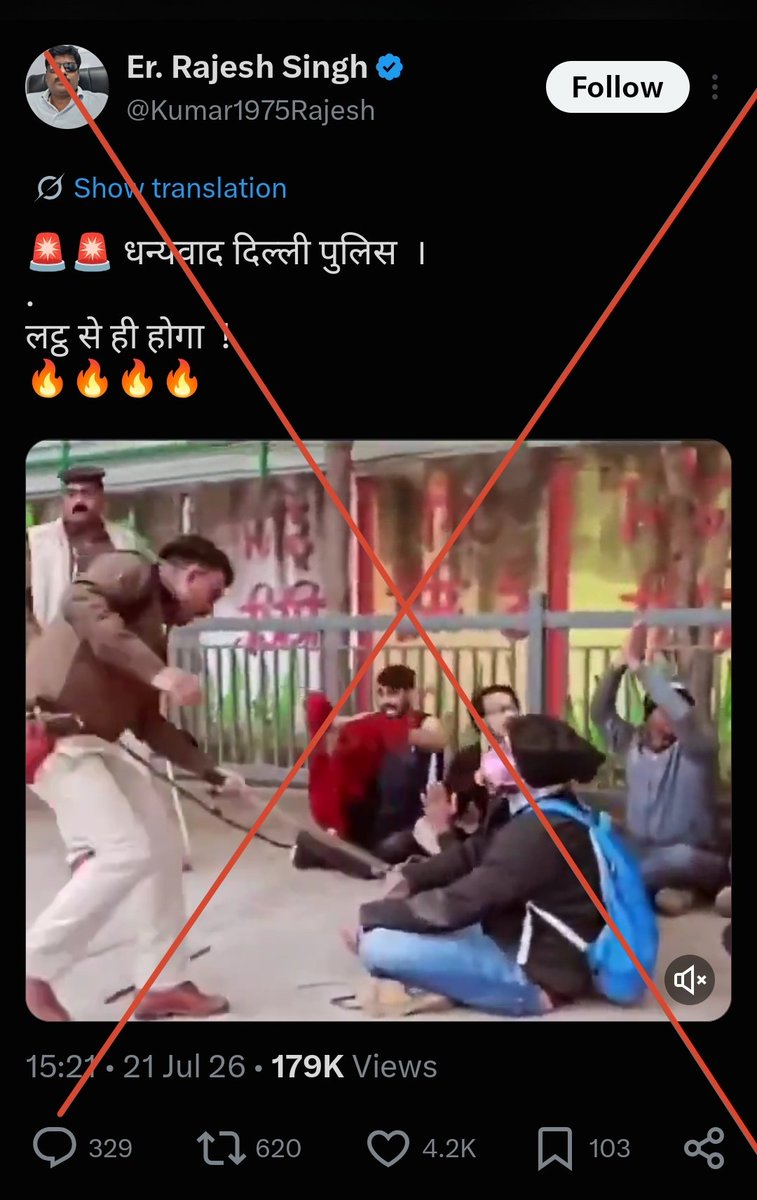

Recent claims have surfaced on social media that pro-BJP troll accounts are misusing a video of police violence from Bihar in 2024, falsely presenting it as footage from a protest at Jantar Mantar. In this context, the inaction of verified Twitter accounts like @DelhiPolice and @PIBFactCheck has drawn criticism for not addressing the misinformation.
Contextualizing the Claims
The allegation stems from a video that depicts police brutality, purportedly occurring in Patna during a protest. This video is now being circulated on social media, with users implying that it is a recent instance of police misconduct at Jantar Mantar, a site in Delhi known for political protests. The original event occurred in Bihar in 2024, but the video is being recontextualized to fit the current narrative against the police and the ruling government.
The Role of Verified Accounts
Accounts like @DelhiPolice and @PIBFactCheck are expected to fact-check and correct misinformation circulating on social media platforms. However, the failure of these accounts to address or debunk the misleading video raises concerns over accountability and transparency. In an ecosystem where misinformation can easily sway public opinion and incite unrest, their silence is particularly troubling.
The Impact of Misinformation
Misleading narratives such as this one can exacerbate tensions between the public and law enforcement. By manipulating past events and presenting them as current incidents, those spreading the misinformation contribute to a more polarized political environment. Furthermore, this manipulation can distract from genuine grievances that the public may have, complicating the landscape of political discourse in India.
Why This Matters
Understanding the ramifications of misinformation is crucial for Indian readers, especially in a politically charged environment. This incident highlights the responsibility of both social media users and verified accounts. With the potential for unrest and manipulated public narratives, voters should remain vigilant about the information they consume and share. The integrity of sources and the accountability of those who spread false information are vital for a healthy democracy.
Frequently Asked Questions
What is the origin of the video being circulated?
The video in question originally depicts police brutality in Patna during a protest in 2024, but it is currently being misrepresented as occurring at Jantar Mantar.
Why haven’t the verified accounts addressed the misinformation?
There is no clear explanation as to why verified accounts like @DelhiPolice and @PIBFactCheck have not reacted to the misleading claims about the video. It could be due to prioritization issues or an assessment that the claims do not warrant a response.
What are the broader implications of this incident?
This incident underscores the ease with which misinformation can spread, revealing potential vulnerabilities in the public’s ability to discern truth from manipulation. It also highlights the importance of accountability for public figures and institutions in correcting misinformation.
How can individuals verify the authenticity of information shared on social media?
Individuals can verify information by consulting credible news outlets, cross-referencing with official government and police statements, and relying on fact-checking organizations. Engaging critically with the content shared on social media is essential to prevent the spread of misinformation.