
Summary
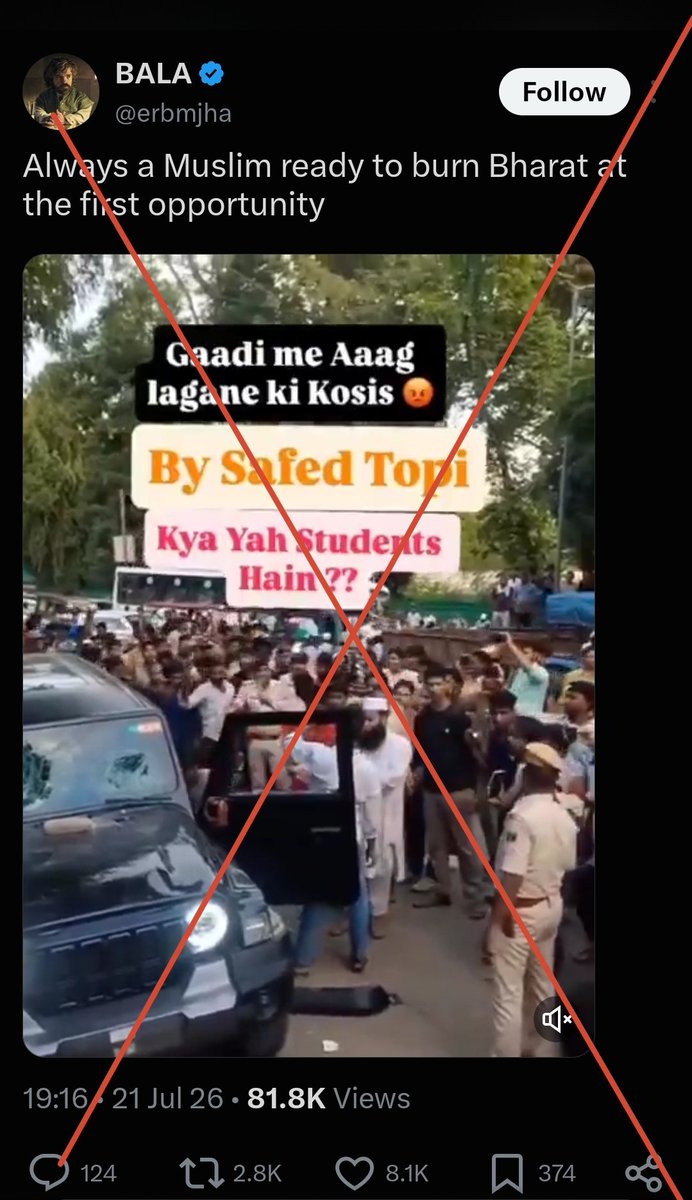
Recent discussions surrounding student protests in India have drawn attention to attempts to discredit these movements by associating them with communal violence. Notably, claims have surfaced regarding an incident in Gaya, allegedly misrepresented as occurring during the Delhi student protests. This false narrative has been propagated by certain right-wing accounts, highlighting the ongoing tension and politicization of educational dissent.
Context of the Allegations
The incident in question originally took place in Gaya, far removed from the ongoing protests in Delhi. Social media has played a significant role in shaping perceptions of both the student protests and the narratives surrounding them. Right-wing accounts, such as @erbmjha, have been accused of spreading misinformation to create a communal divide. This tactic leverages existing societal cleavages and attempts to undermine the legitimacy of student demonstrations which often call for reform and social justice.
Such misinformation campaigns are not new in the Indian political landscape. In recent years, various political factions have utilized social media to bolster their narratives, often distorting facts to frame opponents negatively. The widespread use of social media as a communication tool has made it easier for false narratives to gain traction, as seen in this instance.
Official Responses and Responsibilities
In light of the misinformation being disseminated, many are looking towards official bodies such as @PIBFactCheck and @DelhiPolice for intervention. The expectation is that these institutions would actively fact-check claims made by social media users to prevent the spread of false information. However, skepticism remains about their willingness or ability to address such contentious narratives, particularly those that could influence public sentiment against student protests.
This skepticism is fueled by perceptions that governmental agencies may not act impartially, particularly when the narratives challenge the state’s stance on youth unrest. The lack of robust fact-checking mechanisms further complicates the situation, potentially leading to the entrenchment of misinformation within the public discourse.
Analytical Outlook on Communal Narratives
The politicization of social issues, particularly those involving young protestors, often leads to a narrative that emphasizes communal divisions rather than the underlying socio-economic or educational issues at hand. In this case, framing the protests as a communal threat distracts from the legitimate grievances voiced by students, such as demands for better educational infrastructure and an end to oppressive state measures.
The strategic use of communal rhetoric aims to delegitimize the voices of dissent, which poses a serious risk to India’s pluralistic society. As such narratives proliferate, they threaten to obscure vital discussions about democracy, representation, and rights within the academic sphere. Moreover, they can escalate communal tensions, ultimately harming social cohesion.
Why This Matters
The spread of misinformation regarding student protests is critical not just for the immediate context but for the future health of democracy in India. It highlights the challenges of free expression in a rapidly digitizing world, where information can be manipulated to serve political ends. For Indian readers, recognizing and addressing these trends is imperative to safeguard civil liberties and to ensure that legitimate dissent is not stifled by false narratives.
As the landscape of political discourse continues to evolve, it is essential for citizens to engage critically with the information presented to them. Understanding the implications of communal narratives can aid in fostering a more informed electorate, capable of discerning fact from fiction and advocating for constructive change.
Frequently Asked Questions
What triggered the misinformation regarding the Gaya incident?
The misinformation was triggered by a misrepresentation of an incident that occurred in Gaya, which was falsely linked to the ongoing student protests in Delhi by certain right-wing accounts.
Who is responsible for fact-checking misinformation?
Official bodies like @PIBFactCheck and @DelhiPolice are expected to fact-check information shared on social media. However, there is skepticism regarding their impartiality and effectiveness in addressing inflammatory claims.
Why is the communal narrative concerning student protests significant?
Communal narratives seek to delegitimize student dissent, diverting attention from crucial socio-economic issues and potentially exacerbating societal divisions, ultimately undermining democratic discourse.
How can citizens combat misinformation?
Citizens can combat misinformation by critically evaluating the sources of information, engaging with reputable media, and promoting digital literacy to distinguish between fact and falsehood in the public discourse.