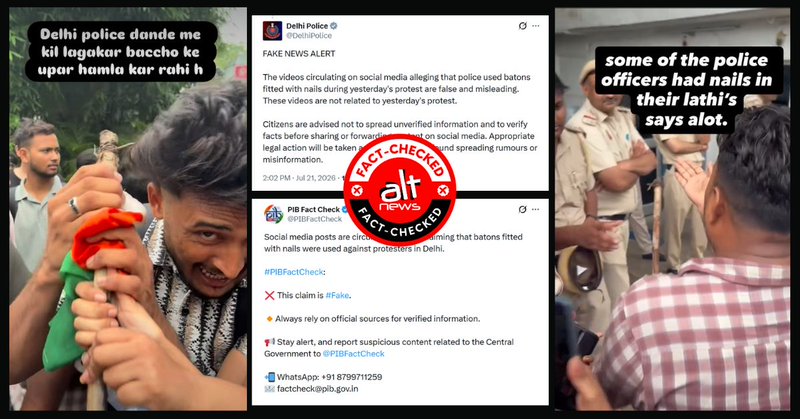

Mohammed Zubair, a prominent political commentator, has shared compelling evidence that contradicts the Delhi Police’s claims regarding the presence of batons with nails during protests on July 20. Videos and testimonies collected by Alt News have been cited as pivotal in debunking official statements, suggesting a need for further scrutiny into government fact-checking processes.
Context of the July 20 Protests
The protests on July 20 in Delhi were part of a larger movement addressing various social and political grievances. Participants reported that police confronted demonstrators with aggressive tactics. This unrest has sparked national debate surrounding law enforcement protocols and civil liberties in India. Eyewitness accounts and social media have played a significant role in shaping public perception of these events, highlighting the power of grassroots reportage.
The Role of Fact-Checking in Political Discourse
The claim made by the Delhi Police, which suggested that allegations of officers carrying batons with nails were unfounded, was contradicted by documentation from Alt News. The social media platform is known for its fact-checking efforts, and Zubair’s involvement in disseminating this information underscores the ongoing tension between state narratives and independent journalism. The consequences of inaccurate claims can impact public trust and governmental accountability.
Implications for Civil Rights
The apparent discrepancy between fact-checks and the evidence presented raises significant questions about rights and freedoms within India. The use of potentially lethal weapons by police during protests calls for a re-evaluation of law enforcement practices and the protection of citizens’ rights to assemble peacefully. Furthermore, reliance on state-sanctioned fact-checking may hinder the objective assessment of events, which is vital for a functioning democracy.
Why This Matters
The unfolding situation highlights the larger narrative of governmental authority versus citizen rights in India. Such incidents have the potential to influence public discourse and behavior regarding protests and dissent. The reliance on official fact-checks, especially when they appear to misrepresent truth, can erode the public’s trust in institutions meant to safeguard democracy. This issue accentuates the need for transparent dialogue and the indispensable role of independent media in providing checks and balances on governmental power.
Frequently Asked Questions
What was the nature of the protests on July 20?
The July 20 protests in Delhi were aimed at voicing various social and political grievances, and they witnessed significant police presence and intervention.
What evidence has been presented against the Delhi Police’s claims?
Alt News has presented videos, metadata, geo-location data, and testimonies that contradict the Delhi Police’s denial of officers carrying batons with nails during the protests.
Why is fact-checking important in political contexts?
Fact-checking serves as an essential tool in upholding transparency and accountability in political discourse, helping to prevent the dissemination of misinformation and protect the public’s right to accurate information.
What are the implications of the public’s trust in governmental institutions?
A decline in public trust towards governmental institutions can lead to diminished social cohesion and increased tensions between the state and its citizens, particularly during times of unrest.