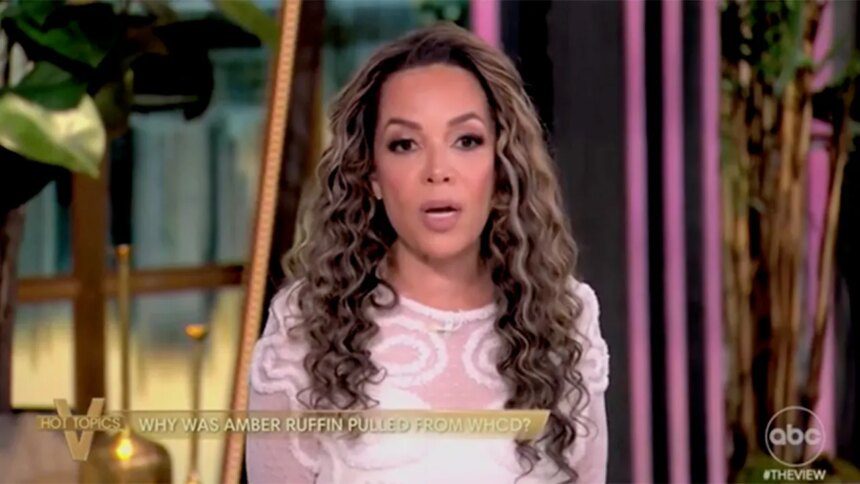

Sunny Hostin, a co-host of “The View” and former federal prosecutor, faced a tangled situation when her son, Gabriel Hostin, was stopped for trespassing on Metro-North railroad property. Newly released body camera footage showcases her efforts to persuade the police to show leniency, emphasizing her son’s character and education.
Incident Background
On June 16, 2026, Gabriel Hostin, 23, was observed by Metropolitan Transportation Authority (MTA) police running near an electrified third rail at the New Rochelle station before being stopped. Officers alleged that he was trespassing in an area with several “NO TRESPASSING” signs. Body camera footage reveals Sunny Hostin speaking to officers and identifying herself as a former federal prosecutor, pleading for discretion regarding her son’s situation.
“That’s my son. He’s a Harvard graduate. He doesn’t have a criminal record,” Sunny stated. “It’s an innocent mistake.” Gabriel was subsequently issued a summons for trespassing but was released due to his lack of a criminal history and his cooperation during the encounter.
Legal Arguments and Police Procedure
During the interaction, officers explained their rationale behind the summons. They noted that while Hostin’s lack of a criminal background would typically mitigate the situation, the presence of cameras and strict enforcement protocols limited their discretion. One officer stated, “Because it is an arrestable offense. I want to make that clear.” The officers acknowledged they were willing to lower the charge to a trespassing violation due to Gabriel’s cooperative demeanor.
Sunny reiterated her plea by highlighting her son’s achievements, saying, “He’s a Harvard grad who teaches fourth-grade geometry to South Bronx kids.” Her emotional appeals were met with a firm adherence to procedure by the officers, who were bound by regulations regarding trespassing on railway property.
Social Media Reactions
The body camera footage ignited a considerable reaction online. Many took to social media to critique Sunny’s insistence on her legal background during the police stop. Conservative commentators argued that her actions displayed a contradiction to her public statements championing equal treatment under the law. An organization known as “Libs of TikTok” highlighted her previous remarks that “no one is above the law,” while End Wokeness similarly criticized her for attempting to leverage her status for preferential treatment in this incident.
This situation raises broader questions about privilege, legal accountability, and the role social media plays in public discourse about such encounters. Critical voices highlight that undue emphasis on legal credentials can be perceived as an attempt to circumvent justice.
Why This Is Trending
This incident has garnered attention in India as discussions about privilege and justice systems resonate globally, mirroring similar concerns in Indian society. The perception of how social status influences legal proceedings has sparked outrage and curiosity. Moreover, as Indian audiences engage more closely with international issues, the incident underscores the complexities surrounding celebrity, police interactions, and legal ethics, making it a trending topic in modern discourse.
Frequently Asked Questions
What happened to Gabriel Hostin?
Gabriel Hostin was stopped by MTA police for allegedly trespassing on railroad property in New Rochelle and issued a summons for the violation.
Why was Sunny Hostin involved with the police encounter?
Sunny Hostin arrived at the scene to support her son and invoked her background as a former federal prosecutor to advocate for leniency from the officers.
What did the police say during the incident?
The police explained that although they recognized Gabriel’s lack of a criminal record, they had to follow procedures as trespassing is considered an arrestable offense.
How has social media reacted to this incident?
The body camera footage sparked criticism on social platforms, particularly from conservative commentators who argued that Sunny’s attempts to use her legal background suggest privilege and a contradiction to her previous public statements about equality under the law.