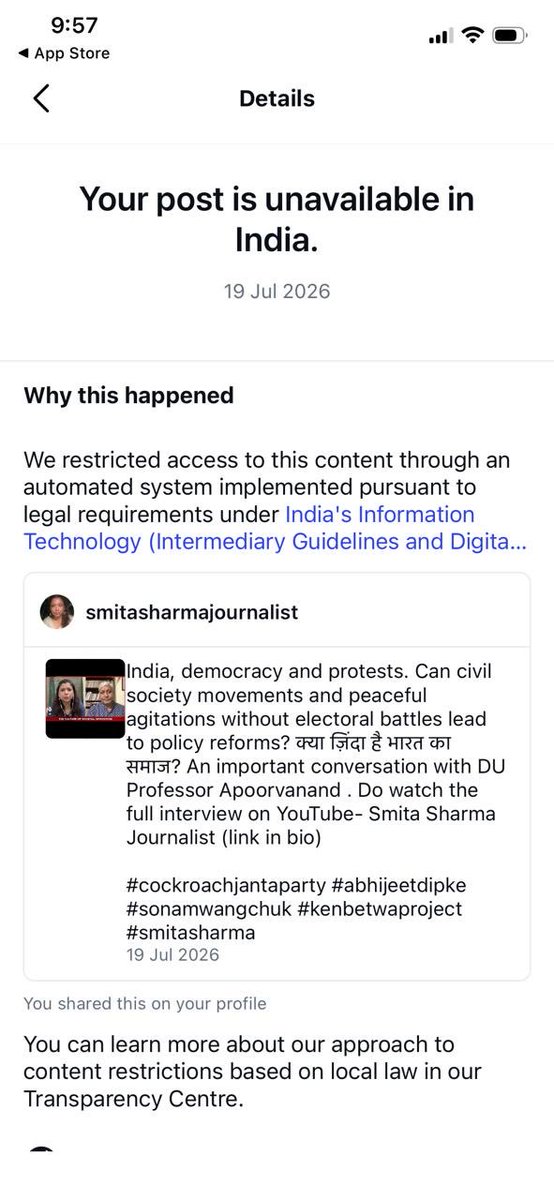

In a recent upload on Instagram, a clip highlighting the state of democracy and civil society movements in India has been made unavailable to viewers in the country for the fourth or fifth time by Meta. The commentator expresses frustration over this censorship, questioning the criteria that differentiates acceptable content on platforms like X or YouTube versus Instagram.
Context of Censorship in India
Censorship remains a contentious issue in India, especially concerning digital platforms. Social media platforms have often faced scrutiny for their content moderation policies, which critics argue are inconsistent and politically motivated. The current situation reflects ongoing tensions regarding freedom of expression and the role of digital platforms in shaping public discourse.
Comparative Analysis of Content Moderation
Meta’s policies appear to differ from those of other platforms like X and YouTube, raising questions about standards for content moderation. Content that doesn’t violate community guidelines on one platform may be deemed unacceptable on another. This inconsistency points to a broader debate over the power these tech companies wield in controlling information and the implications for democracy in India.
Frustration from Indian Users
The repeated unavailability of content has ignited frustration among Indian users who feel marginalized by these corporate decisions. Users are increasingly vocal about perceived biases in content moderation, questioning why discussions related to civil society and policy reforms can be silenced, while similar discussions might thrive elsewhere. This serves to illustrate not only a local struggle for free speech but also a global conversation about the role of technology in governance and civil liberties.
Why This Matters
The political significance of this situation extends beyond individual censorship instances; it represents a troubling trend in Indian civil society. The rise of corporate censorship can hinder public discourse essential for a functioning democracy. Civil society movements and peaceful protests play a critical role in advocating for policy reforms and holding those in power accountable. Limiting access to discussions surrounding these topics could stifle necessary debates and lead to a more homogenized narrative controlled by corporate interests.
Frequently Asked Questions
What are the consequences of censorship on social media platforms?
Censorship can inhibit public discourse, limit access to information, and prevent significant societal discussions from taking place, ultimately impacting democratic engagement.
Why are some platforms stricter with content moderation than others?
Each platform operates under its own set of guidelines, often influenced by various factors, including regional laws, advertiser preferences, and stakeholder pressures, which can lead to discrepancies in content availability.
How can users combat unfair censorship?
Users can voice their frustrations through advocacy, engaging with digital rights organizations, and utilizing alternative communication platforms to ensure their voices are heard despite corporate restrictions.
What role does civil society play in advocating for free speech?
Civil society organizations are crucial in promoting and protecting freedom of expression, pushing for policy reforms, and mobilizing public opinion against unjust censorship practices.