
Summary
A recent tweet by Mohammed Zubair, a prominent Indian political commentator, has sparked significant attention after he identified a woman who threw ink at political figure Abhijit Dipke. The individual, Barkha Trehan, he claims is a supporter of the ruling party and has connections to the Men’s Rights Activist movement, having previously shown support for controversial convicts.
Context of the Incident
The incident involving Abhijit Dipke, who was a target of an ink-throwing attack, reflects the intense political climate in India, particularly in relation to the ruling Bharatiya Janata Party (BJP). Barkha Trehan’s action raises questions about political dissent and how far supporters or opposite factions will go in expressing their ideological commitments. The act of throwing ink is historically symbolic of protest against individuals whose views are perceived as harmful or objectionable, especially during heated political times.
The Figure Behind the Attack
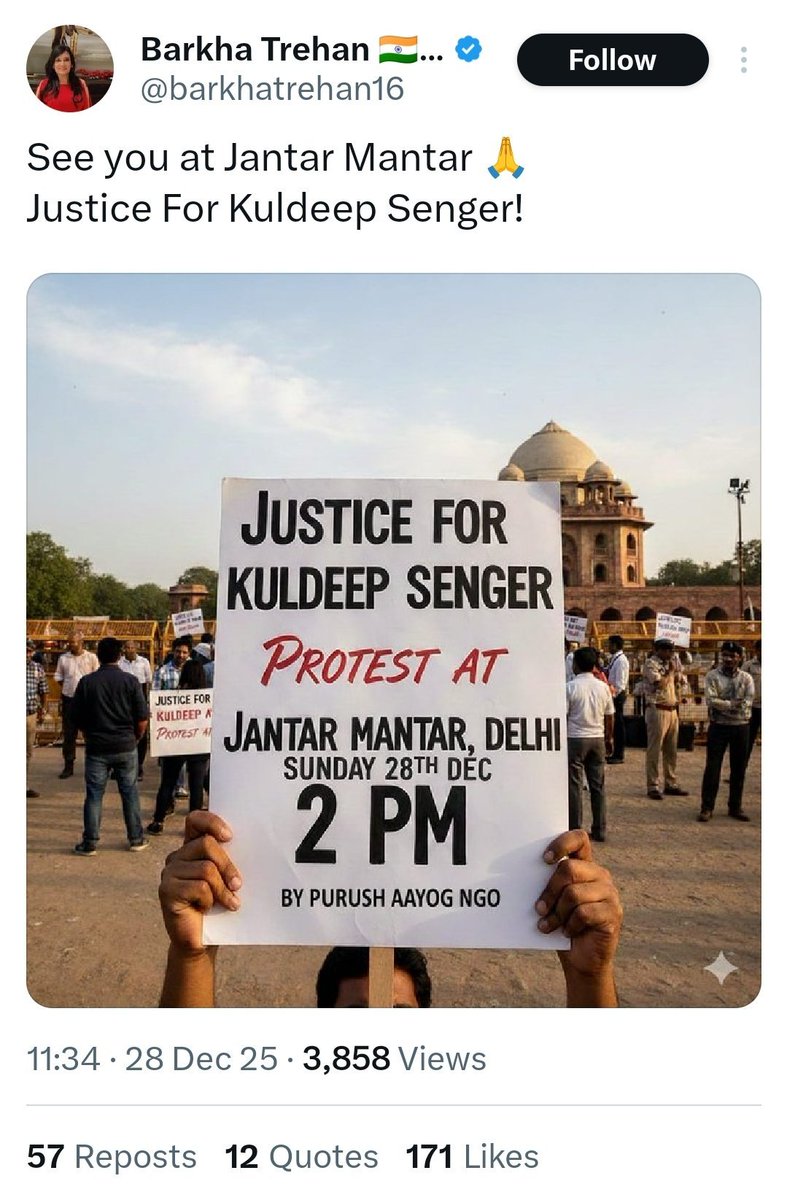
Barkha Trehan’s identification as a Men’s Rights Activist adds another layer of complexity to this situation. This designation places her within a contentious movement that often faces criticism for its stance on gender issues. The fact that she recently attended a protest supporting Kuldeep Sengar, a rape convict, has further fueled the narrative surrounding her political affiliations. Such actions paint a broader picture of the intersection between political allegiance and social advocacy in contemporary India.
The Role of Social Media
Social media platforms have played a crucial role in disseminating information related to political incidents like this one. Mohammed Zubair’s tweet quickly circulated, allowing for a rapid spread of opinions and analyses across platforms like Twitter. The immediacy of social media magnifies such incidents, often leading to polarizing debates that can affect public perception and political discourse. In this instance, the discussion has extended beyond the act itself, pulling in various ideologies and individual histories, contributing to the ongoing political narrative in India.
Why This Matters
The significance of this incident and the subsequent online discourse lies in its reflection of India’s current political landscape. The convergence of political support, activist movements, and controversial convicts highlights a society grappling with its values. As political identities become more sharply defined, such incidents are likely to become flashpoints, igniting public sentiment and possibly influencing electoral outcomes. The visibility of such events via social media also emphasizes the need for critical engagement with differing ideologies, posing essential questions about accountability, dissent, and the role of activism in a democracy.
Frequently Asked Questions
Who is Barkha Trehan?
Barkha Trehan is identified as both a supporter of the Modi government and a Men’s Rights Activist. Her public actions include attending protests for controversial figures, raising questions about her motivations and affiliations.
What happened during the ink-throwing incident?
During a public appearance, Abhijit Dipke was confronted by Barkha Trehan, who threw ink at him, an act typical of political protest aimed at silencing or discrediting a political figure.
What does being a Men’s Rights Activist signify?
The Men’s Rights Activism movement seeks to address issues perceived to disproportionately affect men, such as legal biases in divorce and custody cases. However, it faces criticism for often disregarding broader gender issues and feminist viewpoints.
What role does social media play in political discourse?
Social media acts as a platform for rapid dissemination of information and diverse opinions, shaping public discourse and influencing political narratives through grassroots engagement and mobilization.