
Summary
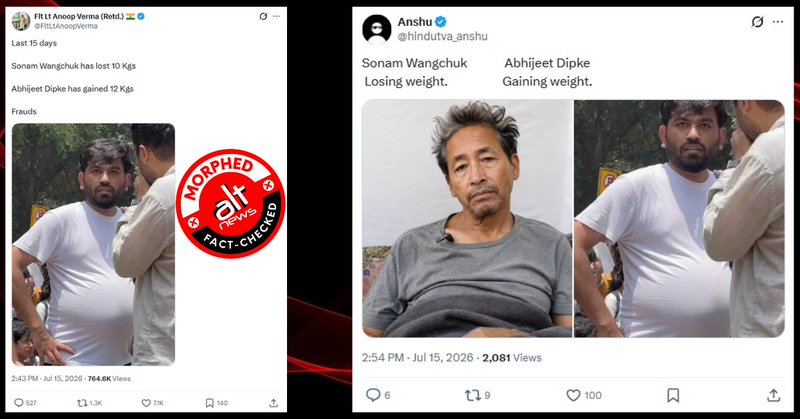
A photo claiming that CJP founder Abhijit Deepke has gained 12 kg while Sonam Wangchuk has lost 10 kg in the past 15 days is circulating online. Investigations have revealed that the photo of Deepke is digitally altered using AI technology.
Context of the Viral Photo
The image in question shows Abhijit Deepke engaged in a conversation with spokesperson Ashutosh Ranka. However, it gained traction primarily due to the exaggerated portrayal of Deepke’s appearance, with his abdomen looking prominently enlarged. The image has sparked discussions on social media regarding body image and health, particularly in the context of public figures.
The public’s response has been mixed, with some supporters defending Deepke against the spreading rumors, while others have taken the opportunity to emphasize the significance of weight in the public sphere. This has led to a conversation about societal expectations and how they reflect on individual well-being.
Sonam Wangchuk’s Weight Loss Claims
Simultaneously, claims about Sonam Wangchuk’s impressive weight loss have also emerged. Wangchuk, an engineer and environmental activist known for his work in Ladakh, reportedly lost 10 kg over a span of 15 days. His transformation has been praised by many, positioning him as a role model for fitness and health.
The juxtaposition of these two individuals—Wangchuk’s successful weight loss versus Deepke’s alleged weight gain—has fueled comparisons and conversations online. Both figures represent different aspects of public life in India, bringing weight issues to the forefront of discussion concerning health, activism, and image.
Media Verification and the Role of AI
Fact-checking organization Alt News has confirmed that the image of Abhijit Deepke has been altered using AI technology. They emphasize the dangers of misinformation spreading through manipulated visuals, particularly regarding weight and body image, which can have profound effects on public perception and mental health.
Such alterations raise ethical questions about the portrayal of individuals in media. When public figures are subjected to digitally enhanced representations, it not only misleads the audience but also affects the individuals being scrutinized. This incident serves as a case study for the need for responsible media consumption and the importance of verifying claims before sharing them widely.
Why This Matters
This situation is politically significant as it highlights how digital misinformation can shape public opinion about political figures. Given the prominence of both Abhijit Deepke and Sonam Wangchuk in their respective spheres, the discussion surrounding their images amplifies broader societal issues of body image, health perceptions, and the influence of social media on political narratives.
As misinformation continues to proliferate online, understanding its implications becomes crucial for Indian readers. The challenge of discerning fact from fiction in the digital age is more pressing than ever, and this incident underscores the necessity for vigilance and critical thinking within political discourse.
Frequently Asked Questions
What caused the controversy around Abhijit Deepke’s weight gain?
A digitally altered image claiming that Abhijit Deepke gained 12 kg went viral, leading to public discussions about weight and body image.
How did the image of Deepke get fact-checked?
Fact-checking organization Alt News analyzed the image and confirmed that it had been manipulated using AI, thus raising concerns about the spread of misinformation.
What is Sonam Wangchuk’s connection to this story?
Sonam Wangchuk’s reported weight loss of 10 kg has been contrasted with Deepke’s alleged weight gain, creating a narrative comparing their public perceptions.
Why is understanding misinformation important in politics?
Misinformation can significantly shape public opinion, influence political narratives, and impact the reputations of public figures, making it critical for citizens to discern fact from fiction.