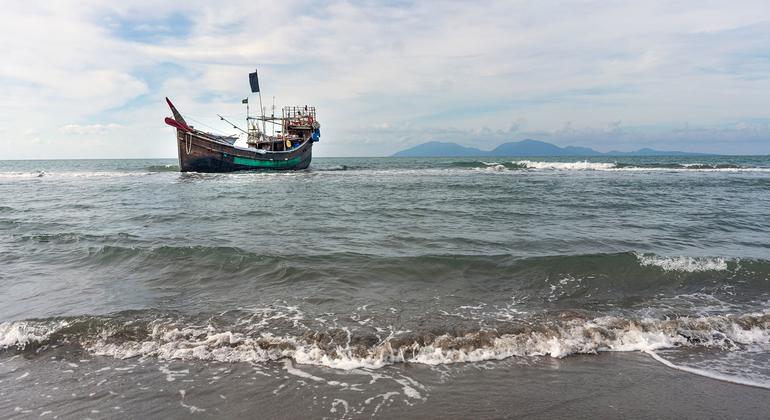

The ongoing humanitarian crisis in Myanmar has led to perilous sea journeys for many, particularly the Rohingya community, with recent reports indicating that hundreds may have drowned in maritime mishaps. Amid worsening conditions in refugee camps due to funding cuts, displaced individuals are increasingly risking their lives to seek safety at sea.
Rohingya Crisis Deepens
The UN migration agency, IOM, and the UN refugee agency, UNHCR, have issued a joint alert regarding the maritime incidents along Myanmar’s coast. Both vessels that set sail from Rakhine state in late June are believed to have met devastating fates. One boat carrying approximately 250 people lost contact shortly after departure, while the other, with 280 passengers, is presumed to have sunk on July 8.
Most of those aboard were ethnic Rohingya, a group that has experienced systemic persecution for decades. Recent torrential rains and floods have exacerbated the already dangerous conditions for maritime travel, prompting further desperation among those seeking refuge.
Ongoing Conflict Fuels Displacement
The conflict in Myanmar, worsened by a military coup in February 2021, continues to drive many to seek better lives outside their homeland. The UN agencies report that before these latest tragedies, nearly 300 individuals were already missing or dead in the Andaman Sea and Bay of Bengal this year. These individuals include both Rohingya refugees and Bangladeshi nationals, emphasizing the regional ramifications of Myanmar’s civil strife.
With the situation in Cox’s Bazar refugee camp, which houses around one million Rohingya, deteriorating due to significant funding cuts, many are left with no alternatives but risking dangerous sea crossings. The lack of sustainable solutions exacerbates the plight of Rohingya communities, with little hope for improvement on the horizon.
International Response and Aid Challenges
UNHCR and IOM aim to assist governments in coordinating search-and-rescue operations for vulnerable individuals. They stress the need for a route-based approach to save lives and manage mixed migration movements effectively. Despite these efforts, the situation remains dire. The UN highlighted that foreign arms continue to supply Myanmar’s military, undermining local civilian protection initiatives.
The agencies point to a correlation between the lack of humanitarian aid and increasing civilian casualties, emphasizing that ongoing military conflicts directly nullify essential services and protections for displaced individuals. The focus is now on finding durable solutions for those affected by decades of conflict and displacement.
Why This Is Trending
The tragic maritime incidents involving Rohingya refugees have caught the attention of Indians as they resonate with broader themes of migration, human rights, and regional stability. As India shares a border with Bangladesh, the plight of the Rohingya has implications for its own refugee policies and humanitarian responses. Increased media coverage and social media discussion around these ongoing crises, particularly in light of recent maritime tragedies, have propelled this issue into public consciousness.
Frequently Asked Questions
What led to the recent Rohingya maritime incidents?
Two boats carrying Rohingya refugees set sail from Myanmar’s Rakhine state, with subsequent reports indicating that one lost contact and the other sank, leading to fears of hundreds drowning.
Why are Rohingya refugees risking sea journeys?
Ongoing violence and conflict in Myanmar, coupled with dire conditions in Bangladeshi refugee camps due to funding cuts, have forced many to take perilous sea routes in search of safety.
What is the role of international agencies in this crisis?
International agencies like UNHCR and IOM aim to coordinate search and rescue operations, protect vulnerable populations, and promote solutions to ensure the safety of those on the move.
How can individuals help Rohingya refugees?
Individuals can contribute to humanitarian organizations working with displaced Rohingya by donating to refugee aid programs, raising awareness through social media, and advocating for policy changes to support refugees.