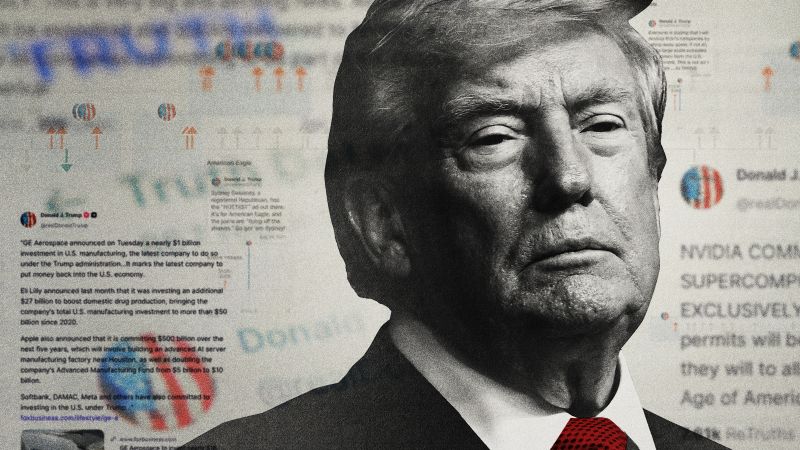

In a controversial revelation, President Donald Trump has been found to have engaged in stock trading while promoting various companies on his social media platform, Truth Social. Analysts are now questioning the ethical implications of his actions, particularly regarding potential conflicts of interest that challenge the integrity of presidential conduct.
Trump’s Stock Trading Activities
Recent findings indicate that Trump purchased between $200,000 and $500,000 worth of Nvidia stock shortly before announcing government incentives aimed at the company. A CNN investigation revealed that Trump promoted over 20 companies on his Truth Social account soon after buying shares in those firms. This pattern raises serious ethical questions, as several government actions he mentioned could directly benefit the companies he invested in.
Despite these allegations, the White House maintains that Trump’s stock trades are managed by independent financial advisors and that he has no direct control over the transactions. White House spokesperson Anna Kelly emphasized that Trump acts in the best interests of the American public and rejected claims of any conflicts of interest. However, unlike past presidents, Trump has not placed his assets in a blind trust, allowing him insight into his managed investments, which could lead to allegations of impropriety.
Public and Expert Reactions
Trump has faced backlash from various quarters. Dan Greenberg, a senior legal fellow, called it an “ethics disaster,” highlighting the incompatibility of presidential duties with personal financial interests. While advocating for the ban on congressional stock trading, Trump has distanced himself from similar standards for presidents, further complicating the narrative around ethical governance.
Government watchdogs have raised red flags regarding Trump’s trading and social media posting, questioning the potential for conflicts of interest. Dylan Hedtler-Gaudette from the Project on Government Oversight remarked that Trump’s online actions and stock trading combined present a clear case of presidential conflict, undermining public trust in elected officials. With Trump frequently posting opinions about companies while trading heavily in their stocks, the overlap raises questions about his commitments and accountability.
The Broader Implications for Governance
The issue gained traction as discussions on ethics reform in government accelerate. Trump’s case stands out as an urgent example of why the U.S. needs stricter regulations on stock trading by public officials. Experts argue that the president’s unique position requires even higher standards of accountability, as lapses in ethical conduct can lead to widespread public cynicism towards government institutions.
In contrast to previous presidents who placed assets in blind trusts, Trump’s method allows him to remain aware of his financial dealings. Critics note that this deviation sets a troubling precedent in governance, particularly as Trump actively engages in both stock trading and executive decisions affecting those investments. There are ongoing efforts in Congress to pursue bills restricting stock trading by lawmakers, but attempts to extend these restrictions to the presidency face significant political hurdles.
Why This Is Trending
The scandal has garnered significant attention in India, partly due to international buzz around Trump’s presidency and how it impacts global stock markets. As the Indian economy continues to integrate with global markets, Indian investors and policymakers are keen on understanding the ethical frameworks surrounding leadership and investment practices abroad. The revelations about Trump’s financial activities have opened discussions in India about the need for transparent governance, particularly in how leaders manage personal finances amidst public service.
Frequently Asked Questions
What specific stocks has Trump traded?
Trump has made numerous trades, most notably in Nvidia, Tesla, and several healthcare and defense contractors. He has been reported to have purchased over 21 different companies’ stocks shortly before making promotional posts about them.
Has Trump faced any legal consequences for his trading activities?
As of now, there have been no legal actions taken against Trump regarding his stock trades; however, public and governmental scrutiny is intensifying as discussions about ethical reforms advance.
What measures are being proposed to prevent such conflicts of interest?
Various proposals include the establishment of stricter regulations on stock trading by public officials and a move towards mandatory blind trusts for assets held by the president and other high-ranking officials.
Why does this matter for the average citizen?
Public trust in government is essential for a functioning democracy. When leaders are viewed as potentially using their position for personal financial gain, it undermines confidence in governance and can lead to broader concerns about accountability and transparency in political systems.