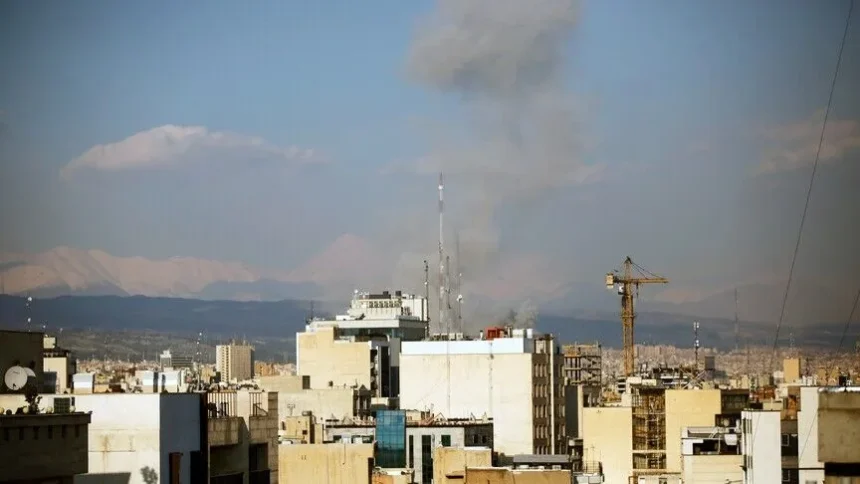

Escalating Military Tensions: Iran’s Retaliatory Strikes
On Monday, Iran’s Islamic Revolutionary Guard Corps (IRGC) claimed responsibility for a missile and drone strike targeting Prince Hassan Air Base in Jordan. This aggressive move was framed by the IRGC as the first phase of a response to US military operations against Iranian coastal bases, highlighting the growing tension in the region.
Jordan’s Defense Response
In the aftermath of the IRGC’s announcement, Jordan’s military reported intercepting and downing four missiles that originated from Iranian territory, successfully preventing them from penetrating Jordanian airspace. This incident underscores the heightened military readiness in the region, with Jordan actively engaged in countering Iranian advancements. The IRGC claims that their strikes caused significant damage, including fires at fuel depots and ammunition storage facilities, heightening the stakes in an already fraught geopolitical landscape.
The Broader Context: US-Iranian Tensions
This altercation is part of a larger pattern of conflict between US forces and Iranian military entities. According to the IRGC, their initial missile barrage was a direct response to prior US strikes on their naval forces, which themselves had intercepted two vessels that allegedly violated navigation protocols in the strategic Strait of Hormuz. Notably, CENTCOM has characterized these US operations as efforts to weaken Iran’s capacity to conduct maritime attacks, emphasizing the military’s focus on safeguarding commercial shipping through crucial trade routes.
Why It Matters
The hostilities between US and Iranian forces signify rising tensions that could escalate into broader regional conflicts. For the AI industry, understanding the ramifications of these geopolitical conflicts is essential for risk assessment in sectors like defense technology, cybersecurity, and international trade. Developers and users must remain aware of how such tensions can affect not only military operations but also technological advancements and economic conditions in affected regions.
Frequently Asked Questions
What prompted the recent military action by Iran?
The IRGC’s recent missile and drone strikes were characterized as retaliation against US attacks on Iranian military targets following the interception of vessels in the Strait of Hormuz.
How did Jordan respond to the missile strikes?
Jordan’s military successfully intercepted and downed four missiles that originated from Iranian territory, preventing them from entering Jordanian airspace.
What is the significance of the Strait of Hormuz in this conflict?
The Strait of Hormuz is a crucial maritime route through which a significant portion of the world’s oil supply is transported, making it a focal point of geopolitical strife and military engagement.
What are the implications of these tensions for regional stability?
The ongoing military exchanges between US and Iranian forces could lead to wider regional instability, impacting not only military strategies but also economic conditions and diplomatic relationships across the Middle East.