Summary
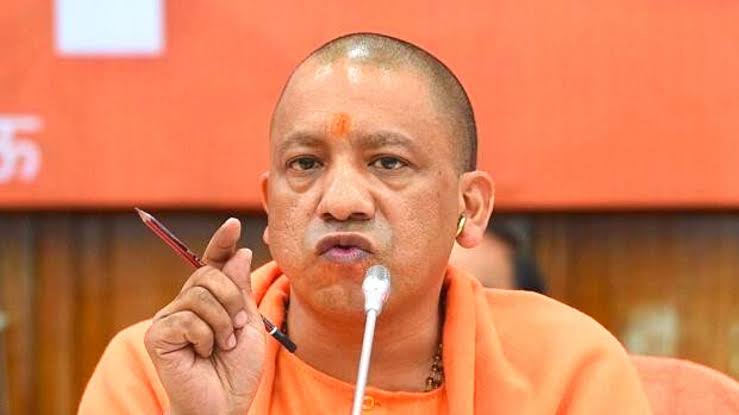
Uttar Pradesh Chief Minister Yogi Adityanath has launched a scathing attack on the Samajwadi Party (SP) and Congress during a public gathering in Ayodhya. He accused these opposition parties of misusing temple donations for their own ends and attempting to undermine the significance of the Ram Mandir. Adityanath’s comments have heightened political tensions, particularly amid ongoing investigations into donation irregularities at the temple.
Accusations Against Opposition Parties
In a public address, Chief Minister Adityanath claimed that leaders of the Samajwadi Party misappropriated funds intended for temples. Allegedly, “Samajwadi Party leaders used to take over temples and pocket the money donated by devotees,” he alleged. He has tied these claims to an investigation concerning the alleged misappropriation of donations at the Ram Mandir and positioned them within a broader narrative of political rivalry with the BJP.
The Chief Minister did not stop at economic allegations; he also accused both the SP and Congress of historically questioning the existence of Bhagwan Ram. Such accusations are intended to frame the BJP as the sole protector of Hindu religious sentiments, thereby drawing a clear line between the ruling party and the opposition. Adityanath asserted that the long-anticipated construction of the Ram Mandir was only realized following the BJP’s assumption of power.
Revisiting Past Controversies
Adityanath revived a controversy from 2003, wherein an attempt was purportedly made to conduct namaz near the Hanumangarhi temple complex under the SP government. He criticized what he termed “appeasement politics,” questioning why similar practices would not be tolerated in religious contexts for Hindus. Such rhetoric is strategically designed to appeal to the majority Hindu electorate, framing the opposition as supportive of policies that undermine Hindu interests.
These narratives also reinforce sentiments of marginalization felt among sectors of the Hindu population, as they are led to believe that their cultural and religious values are under threat. This has broader implications for social cohesion, as it further polarizes Hindu and Muslim communities in Uttar Pradesh and beyond.
Ayodhya’s Transformation and Political Narratives
Adityanath spoke of significant infrastructural advancements in Ayodhya, specifically mentioning the establishment of an international airport—a development he claims was ridiculed by political adversaries. “No one imagined Ayodhya would have an international airport. Today it has one, but some people are unhappy because it has been named after Maharishi Valmiki,” he remarked. This narrative is constructed to paint the BJP’s leadership as visionary, even as it raises questions about the accuracy of the claims regarding past opposition to development.
The Chief Minister also brought attention to alleged irregularities concerning Waqf land, asserting that large tracts had been sold off, leaving marginalized communities without potential economic benefits. This points to ongoing issues of land and resource allocation in a state where marginalized groups, including Muslim communities, often feel disproportionately affected by such policies.
Why It Matters
The remarks from Chief Minister Adityanath mark a significant moment in the political landscape of Uttar Pradesh, with implications that extend beyond state politics. They highlight the ongoing struggle for identity among different communities and the use of religion as a mobilizing force in electoral politics. This ongoing political maneuvering risks deepening social rifts and perpetuating cycles of discrimination and marginalization against Muslim communities, which may affect various facets of Indian society, including economic opportunities and social relations.
This political discourse also serves as a catalyst for international observers and policymakers, illuminating the challenges and complexities within India’s diverse society. Understanding such dynamics is essential for anyone engaged in the development sector or humanitarian efforts, as they provide crucial context for broader socioeconomic issues in the region.
Frequently Asked Questions
What are the main allegations against the Samajwadi Party by CM Adityanath?
Adityanath accused the Samajwadi Party of misappropriating temple donations and questioned their commitment to the construction of the Ram Mandir.
How has the opposition responded to Adityanath’s claims?
As of now, specific responses from the SP and Congress to these allegations have not been detailed in the public sphere. However, political confrontation between these parties and the BJP is expected to intensify.
What significance does Ayodhya hold in Indian politics?
Ayodhya is a focal point of Hindu-Muslim tensions in India, largely due to its association with the Ram Mandir and historical disputes. These issues are often leveraged in political discourse to galvanize support among specific voter bases.
How do these political narratives impact Muslim communities in India?
Such narratives often contribute to the marginalization and exclusion of Muslim communities, raising concerns about their social and economic welfare within the increasingly polarized landscape of Indian politics.