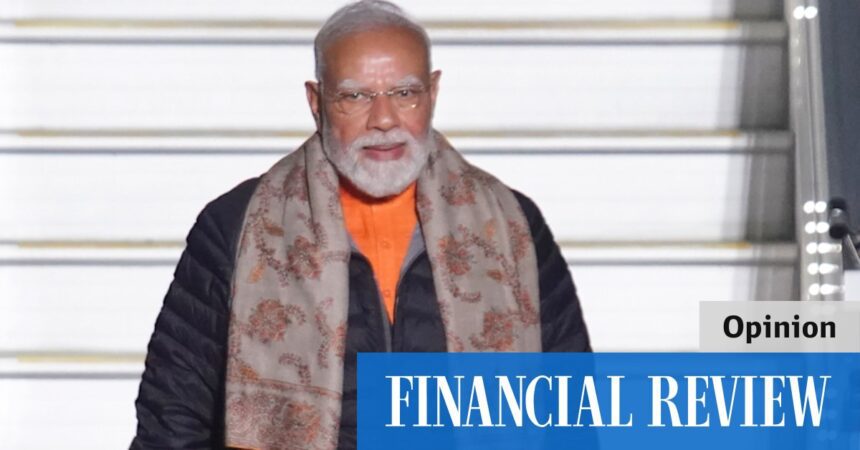

Prime Minister Narendra Modi’s political landscape bears striking similarities to that of Australian politician Pauline Hanson, especially regarding their respective positions on minority rights and nationalism. Both leaders emerged during times of considerable public discontent with the prevailing political ideology of their countries, advocating for a nationalistic agenda that resonates with many citizens.
Historical Context of Hindu Nationalism in India
Since the early 1990s, India’s political climate has experienced a significant shift towards Hindu nationalism, primarily championed by the Bharatiya Janata Party (BJP) and its ideological parent, the Rashtriya Swayamsevak Sangh (RSS). This transformation gained momentum following decades of what many perceived as appeasement of Muslim communities by the Indian National Congress, a secular party. The Congress party’s efforts, often branded as a commitment to secularism, attempted to address the communal disparities resulting from British colonial policies. However, this approach has historically been criticized for making the Hindu majority feel marginalized.
Modi’s ascent in 2014 was propelled by a palpable frustration among Hindus, many of whom felt that their cultural identity was being undermined. By framing his political vision around a strong defense of Hindu values, Modi successfully attracted a broad base of support, indicating a rejection of previous policies that many viewed as detrimental to Hindu interests. This shift is notable against the backdrop of increasing communal tensions, exemplified by the marginalization of Indian Muslims, who have frequently been portrayed as ‘others’ in the current political narrative.
The Current State of Muslims in India
Under the BJP government’s rule, there has been an alarming trend of discrimination against Indian Muslims. Reports and analyses indicate a growing atmosphere of social exclusion, where Muslims face increasing hostilities, both politically and socially. Incidents of mob lynching, particularly targeting Muslims accused of cattle smuggling, have garnered media attention, reflecting a violent enactment of majoritarian sentiments.
Moreover, legislative measures such as the Citizenship Amendment Act (CAA) have raised serious concerns regarding religious discrimination, as the Act offers a pathway to citizenship for refugees from specific religious backgrounds while ostensibly excluding Muslims. This legislation has reignited debates over the secular fabric of the Indian Constitution and reflects wider patterns of economic boycotts against Muslim-owned businesses and marginalization of Muslim voices in the socio-political arena.
Global Parallels and Comparative Analysis
The parallels between Modi’s political trajectory and that of Pauline Hanson in Australia illustrate a broader global trend in which populist leaders capitalize on public discontent with multicultural policies. Hanson, much like Modi, advocates for a stringent defense of national identity at the expense of perceived minority appeasement. Both leaders have successfully framed their narratives to rally support from those who feel disenfranchised or overlooked by mainstream parties.
This evolution of political rhetoric has significant implications, not only in India and Australia but globally as other nations grapple with similar issues of identity, belonging, and integration. Such ideologies can foster environments where xenophobia and intolerance flourish, affecting social cohesion and minority rights across different contexts.
Why It Matters
The rise of Hindu nationalism in India under the BJP, marked by its impact on Muslim communities, underscores the importance of scrutinizing the intersection of politics, identity, and legislative measures. For technologists and developers in the AI industry, these developments highlight the need for algorithms that are sensitive to social dynamics and can promote inclusivity rather than echo societal biases.
This also raises questions about the ethical implications of deploying AI technologies in diverse societies. In a world increasingly reliant on data and automated systems, understanding the socio-political climate is essential for developers seeking to create tools that respect and nurture all community voices instead of reinforcing divisions.
Frequently Asked Questions
What is the Citizenship Amendment Act (CAA)?
The Citizenship Amendment Act (CAA) is a law passed in India that provides a pathway for undocumented non-Muslim immigrants from neighboring countries to obtain Indian citizenship. It has been criticized for being discriminatory towards Muslims and has led to widespread protests.
How has the BJP government affected the rights of Muslims in India?
The BJP government’s policies have led to increased social exclusion and discrimination against Muslims, manifesting in mob violence and legal measures that many perceive as undermining Muslim citizenship and religious freedoms.
What parallels can be drawn between Modi and Hanson?
Both Modi and Hanson emerged in political contexts characterized by major public dissatisfaction with multiculturalism, advocating for nationalist policies while promoting narratives that resonate with their respective national identities, often at the expense of minority communities.
Why is understanding the BJP’s policies significant for global audiences?
Understanding these policies is essential for recognizing how political movements can affect societal norms and minority rights globally. It allows observers to discern patterns of discrimination that may emerge in other contexts, emphasizing the need for vigilance and advocacy in protecting vulnerable communities.