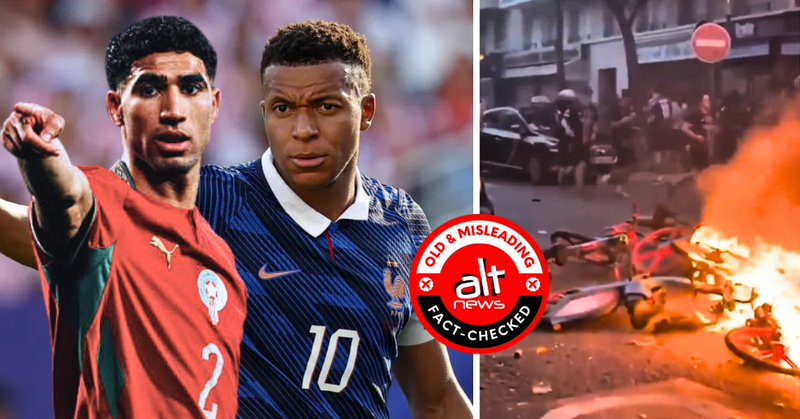

A recent video depicting violent celebrations in Paris following PSG’s UEFA Champions League victory in May 2026 is being erroneously associated with Moroccan fans or migrants rioting after their World Cup defeat to France. Notably, this misinformation has sparked public outrage and raised concerns regarding the integrity of information being shared on social media platforms.
Understanding the Misinformation
The viral video being circulated shows a chaotic scene, complete with mobs throwing flares and burning vehicles. Claims have emerged that this footage is representative of Moroccan fans rioting in response to their country’s loss to France in the World Cup. However, reliable sources have confirmed that the video actually originates from a public celebration following PSG’s victory in a major football tournament.
This misrepresentation highlights the pitfalls of rapid information sharing on social media. Users often do not verify the sources of content before propagating it, resulting in the spread of false narratives. The case emphasizes the importance of fact-checking and being circumspect about sourcing information, particularly in the politically charged landscape of sports fandom where emotions run high.
Context Behind the Claims
The UEFA Champions League and the FIFA World Cup are pivotal events in the global football calendar, drawing in massive viewership and passionate fan engagement. Following big wins or losses, fans often express themselves in various ways, which can sometimes manifest in tensions spilling onto the streets.
In the case of the alleged Moroccan riots, the actual incident transpired on July 10, with footage of violent displays being misinterpreted and misattributed. Social media campaigns often thrive on sensationalism, and in this instance, the interplay of nationality, sports allegiance, and celebration has led to unfounded accusations against Moroccan fans.
The Role of Fact-Checking
To combat misinformation, reliable fact-checking websites such as Alt News play a crucial role in providing clarity. Through rigorous examination of claims and presentation of verified evidence, these organizations help to debunk false narratives and ensure accurate discourse in the public sphere. The erroneous association made in this instance serves as a reminder of the responsibility that comes with sharing information—a responsibility that extends to all users of social media, especially in today’s politically charged environment.
Why This Matters
The implications of such misinformation extend beyond mere inaccuracies; they can fuel xenophobia, social tensions, and polarized narratives within communities. In India, where ethnic and communal identities can be sensitive topics, the spread of unverified claims threatens to exacerbate divisions. The incident urges Indian readers to adopt a discerning approach to the information they consume and share, promoting a culture of inquiry and accountability.
Frequently Asked Questions
What did the viral video actually show?
The video depicts violent celebrations in Paris after PSG’s UEFA Champions League win, not riots involving Moroccan fans.
How did misinformation spread regarding this event?
The misinformation spread primarily through social media platforms where users shared the video without verifying its origin or context.
What are the negative consequences of sharing false information?
Sharing false information can lead to misunderstandings, increased social tension, and even instigate xenophobic sentiments towards certain groups.
How can I verify the authenticity of information online?
Utilize reputable fact-checking organizations, scrutinize the source of the information, and cross-reference with multiple credible outlets before sharing.