
A shrine in Uttar Pradesh was vandalized by members of the Bajrang Dal, a Hindu militant group, following accusations of religious conversions and “love jihad” against its caretakers. The incident raises concerns about rising intolerance and discrimination faced by Muslims in India under the current political climate.
Incident Overview
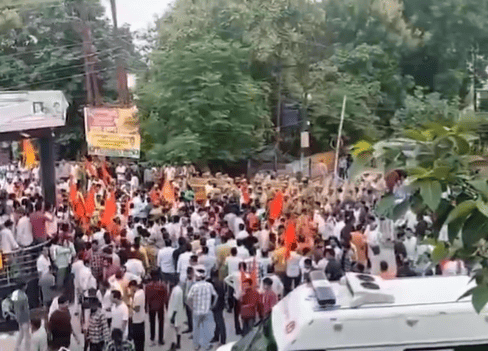
The vandalism occurred in Shahzadpur Uphar village, Kaushambi district, where a group of approximately 25 to 30 men, belonging to Bajrang Dal, descended on the Syed Salar Ghazi shrine. Witnesses reported that the men arrived on motorcycles and began to damage the shrine’s entrance and other structures. When the caretaker of the shrine tried to intervene, he was reportedly assaulted.
As the attackers chased away onlookers, panic ensued at the shrine, which attracts followers from various faiths, including Hindu devotees. Reports indicate that some visitors were beaten during the chaos, highlighting the indiscriminate nature of the violence.
Claims by Bajrang Dal
The district coordinator of Bajrang Dal, Dhirendra Singh, defended the group’s actions by claiming they were responding to community complaints about alleged religious conversions and exploitation connected to the shrine. Singh asserted that women were being drugged for conversion purposes but failed to provide any evidence to substantiate these serious allegations.
Despite the claims made, local residents reportedly confronted the group, expressing that their actions were driven by public anger, and the Bajrang Dal members denied responsibility for any property damage.
Official Response and Context
In the aftermath of the attack, local police intervened to control the situation and ensure the safety of the community. Authorities announced that an investigation is underway, with officials conducting an assessment of the damage and promising the restoration of the shrine. This incident underscores a troubling trend in India, where increasing incidents of communal violence have been linked to the rising influence of organizations like Bajrang Dal, often espousing nationalist rhetoric that fuels discrimination against Muslims.
This incident fits into a broader narrative of marginalization faced by Muslim communities in India. Under the leadership of the Bharatiya Janata Party (BJP) and its affiliates, there has been a notable increase in socially divisive policies and rhetoric. This environment contributes to discrimination, social exclusion, and widespread fears among minority populations.
Why It Matters
The vandalism at the Syed Salar Ghazi shrine reflects a significant challenge to communal harmony in India. The incident highlights the growing assertion of Hindu nationalism, which can lead to ongoing marginalization and violence against religious minorities, particularly Muslims. In a society increasingly stratified along religious lines, such events can exacerbate social tensions and impede efforts toward inclusivity. The global community must recognize these developments as vital signs of the rising intolerance that can affect societal stability and cohesion.
Frequently Asked Questions
What is “love jihad”?
“Love jihad” is a conspiracy theory suggesting that Muslim men are trying to convert Hindu women through deceptive romantic relationships. It has been widely discredited but is often cited by right-wing groups in India to justify violence against Muslims.
What is the Bajrang Dal?
Bajrang Dal is a Hindu nationalist organization that asserts a Brahminical view of culture and religion in India. It has been implicated in multiple incidents of communal violence, advocating for Hindu dominance over minority communities.
Why are attacks on religious places increasing in India?
Attacks on religious places often reflect broader societal tensions fueled by political rhetoric and rising Hindu nationalism. Such incidents are often pointed towards minority communities, particularly Muslims, as a means of asserting dominance and control.
What steps are authorities taking to address communal violence?
Authorities have pledged to investigate incidents of communal violence and ensure safety. However, the effectiveness of these measures is often questioned due to the infiltration of communal ideologies within law enforcement and governance.