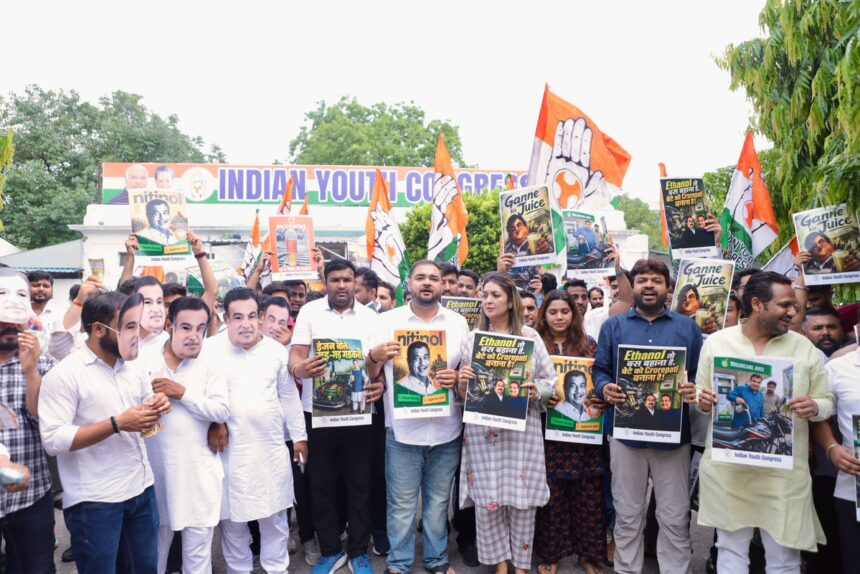

Protests Erupt Against E20 Ethanol Policy
Delhi’s Youth Congress workers have voiced their opposition to the government’s E20 ethanol blending policy, alleging that it primarily benefits Union Minister Nitin Gadkari’s family rather than addressing the concerns of the common citizen. Demonstrators express that millions are worried about maintenance costs and engine issues related to new fuel standards, pointing out that introducing such policies without public input harms ordinary citizens.
Background of the Policy
The E20 ethanol blending policy aims to include 20% ethanol in petrol. This initiative is promoted as part of the government’s broader agenda to enhance renewable energy use and reduce dependence on fossil fuels. However, critics assert that such policies can lead to significant issues for vehicle owners, particularly those with older models that may not be equipped to handle the higher ethanol content.
Challenges such as potential engine damage and increased maintenance costs are recurring worries among everyday consumers. The protestors claim that millions of car owners, who rely on their vehicles for daily commuting, face escalating expenses due to government policies that prioritize experimental fuel formulations over public welfare.
Political Repercussions
In recent years, the political landscape has seen significant divisions on matters concerning environmental policies, industrial benefits, and the everyday concerns of citizens. The Youth Congress’s protest against the E20 policy not only highlights dissatisfaction among young voters but also signals a potential shift in narrative against an administration that is perceived to favor corporate interests over individual citizen welfare.
Speculation prevails about the influence of personal interests, particularly concerning Nitin Gadkari, whose policies are under scrutiny regarding potential benefits to his family. Protesters explicitly accused him of using the ethanol initiative as a pretext to secure advantages for his son, thus raising broader questions about political accountability and transparency.
Why This Matters
This growing discontent among citizens regarding ethanol policies reflects ongoing tensions between the government’s environmental goals and the practical realities faced by the public. For Indian readers, this incident is indicative of a larger struggle for political representation, especially among youth who fear that their voices are being silenced in critical discussions affecting their lives. The implications of these protests may resonate in the next election cycle, influencing voter sentiment significantly.
Frequently Asked Questions
What is the E20 ethanol blending policy?
The E20 ethanol blending policy allows for a 20% ethanol mix in petrol, aimed at promoting cleaner fuel alternatives and reducing fossil fuel dependence.
Why are people protesting this policy?
Protesters are concerned that the policy imposes undue costs on vehicle owners, especially those with older cars that may not function optimally with higher ethanol content, leading to potential engine damage and increased maintenance expenses.
What accusations are being made against Nitin Gadkari?
Critics have accused Nitin Gadkari of using the ethanol policy to benefit his family, particularly his son, raising concerns about nepotism within government policy-making.
What are the broader implications of this protest?
The protests signal rising public discontent toward government policy, particularly concerning citizens’ daily lives. They could also influence forthcoming elections by highlighting generational divides and the need for more transparent governance.