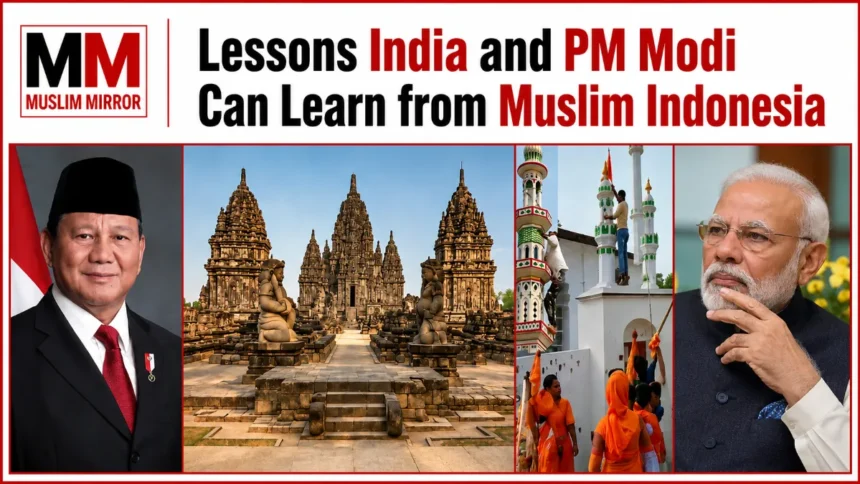

Prime Minister Narendra Modi’s recent visit to Indonesia highlights the pressing need for India to reflect on its approach to religious coexistence. While Indonesia successfully showcases its Hindu heritage within a Muslim-majority context, India struggles with persistent discrimination, marginalization, and communal tensions affecting its Muslim population.
Contrasting Narratives of Religious Coexistence
During Modi’s visit to the Prambanan Temple, a UNESCO World Heritage Site that symbolizes Indonesia’s multicultural identity, no protests or backlash occurred despite the temple’s Hindu significance. Indonesian President Prabowo Subianto’s nonchalant acceptance of a Hindu ritual in his country underlines a commitment to pluralism. In stark contrast, India today grapples with increasing legal and political disputes surrounding religious structures and practices. The tolerance once celebrated in India is becoming a relic of the past, as communal tensions are rising.
The Dark Side of India’s Religious Landscape
The rise in mob lynching incidents, often conducted under the guise of cow protection, has stained India’s democratic reputation. Not only are these acts a violation of basic human rights, but they also illustrate a growing societal acceptance of violence against minorities. Additionally, attacks on churches and Christian institutions further exacerbate the anxiety felt by religious minorities. The government’s push to amend Waqf laws has caused concern among Muslim communities, leading to accusations that such changes undermine the protections afforded to minority religious properties.
Normalization of Hate Speech and Communalism
The escalating normalization of hate speech contributes to a toxic environment where incidents of violence are often celebrated rather than condemned. Acts of aggression against minorities, particularly Muslims, have been met with a disturbing level of impunity. This culture erodes social trust and fosters an atmosphere of fear among those who belong to religious minorities. Ironically, while there is enthusiasm for preserving Hindu temples abroad, the urgency to ensure the well-being and safety of India’s minorities in practicing their faith is glaringly absent.
Why It Matters
The implications of India’s current religious climate extend beyond national borders, shaping its image on the global stage. For industries like technology and innovation, a divided society affects economic stability and international collaboration. Businesses increasingly favor environments characterized by inclusivity and social harmony. Developers and industry leaders need to recognize that fostering diversity isn’t just morally imperative; it’s crucial for sustainable growth and attracting global investment. The state of religious coexistence in India could ultimately influence how Indian companies are perceived internationally, affecting their competitiveness and innovation potential.
Frequently Asked Questions
What are the major issues affecting Indian Muslims today?
Indian Muslims face discrimination in various forms, including social exclusion, economic boycotts, and marginalization in political representation. Legal disputes over religious sites and violent incidents related to communal tensions further contribute to their concerns.
How does the Indian government address issues faced by religious minorities?
The Indian government has been criticized for not adequately addressing the issues faced by minorities. Critics argue that there has been a lack of robust policies to protect the rights and heritage of religious groups, particularly Muslims, amidst rising communal tensions.
What role does hate speech play in India’s current social climate?
Hate speech has become increasingly normalized in India, contributing to a culture of intolerance. It creates divisions among communities, often inciting violence and fostering a sense of fear among religious minorities.
How does Indonesia maintain its pluralistic identity?
Indonesia’s commitment to pluralism is evidenced by its respect for different religions, as seen in the peaceful coexistence of various cultural and religious sites. The government actively promotes this inclusivity, as symbolized by high-profile visits to sites of different faiths without controversy.