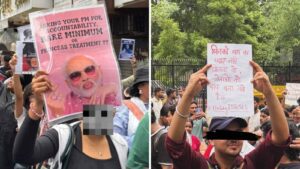
Protests Erupt in Bandra Over Demolition Drive Targeting Muslim Structures
Tensions flared in Mumbai’s Bandra area on Wednesday as protests erupted amidst a large-scale demolition drive targeting structures deemed illegal by authorities. The drive, which included the destruction of hundreds of huts and a mosque, was executed under the claim that these structures were built on railway land. Police responded with force, employing lathi charges to disperse demonstrators.
Clashes Between Protesters and Authorities
Reports indicate that several protesters sustained injuries due to police actions as tensions escalated. Approximately 50 to 60 individuals gathered at the demolition site, voicing their objections to the drive. Authorities allege that some protesters responded to the police presence by throwing stones. The ensuing clashes prompted the deployment of over 1,000 police personnel to restore order in the area.
In response to the unrest, police have initiated efforts to identify and detain those involved in the protests, using facial recognition technology and local intelligence to track down suspects. The situation has raised concerns among local Muslim populations regarding potential harassment, including rumors of house-to-house searches conducted by police in surrounding neighborhoods.
Context of the Demolition Drive
The demolition operation, classified as an “anti-encroachment drive,” began on Tuesday and is backed by directives from the Bombay High Court. Railway officials reported that around 15 to 18 percent of roughly 500 huts had been cleared in an initial phase of the operation. Chief Public Relations Officer Vineet Abhishek clarified that this drive aims to reclaim approximately 5,300 square meters of railway land to ensure safety and facilitate future expansion projects, such as the development of an integrated complex at Bandra Terminus.
This complex is projected to include elevated roads, multi-storey structures, and additional railway platforms. The order enabling these demolitions has been subject to extensive judicial scrutiny, with eviction proceedings initiated as far back as 2017 and upheld by both the Bombay High Court and the Supreme Court.
Historical Judicial Scrutiny and Implications
The legal battles surrounding the eviction of unauthorized encroachments have spanned nearly a decade. The Bombay High Court’s recent order on April 29, 2026, endorses the removal of illegal structures while providing protections for buildings recognized as eligible during joint inspections. However, the current context suggests systemic patterns of discrimination and marginalization affecting communities, especially in urban settings where Muslim populations often reside.
Local sentiments reiterate that these demolitions disproportionately impact marginalized sectors of society. Critics have voiced concerns regarding the motivations behind such actions, positing that they reflect a broader trend of economic and social exclusion among Muslims, especially in politically charged environments under the current Bharatiya Janata Party (BJP) administration.
Why It Matters
The Bandra demolition drive encapsulates broader societal issues involving discrimination and marginalization of India’s Muslim population. The intersection of judicial authority and executive action raises critical questions about the balance of power and the protection of vulnerable communities. The implications are significant not only for affected individuals but for social cohesion within a diversifying India. As urbanization accelerates and land becomes increasingly valuable, disputes over property and minority rights will likely escalate, necessitating critical examination of policy and governance frameworks.
Frequently Asked Questions
What are the legal justifications for the demolition drive in Bandra?
The drive is backed by directives from the Bombay High Court, which authorized the removal of unauthorized encroachments on railway land following prolonged legal scrutiny. The focus is on reclaiming land for safety and future railway expansion projects.
How has the local Muslim community reacted to the demolition?
Local residents have expressed outrage, alleging that these actions amount to targeted discrimination. Reports of protests and police violence during the demolition suggest significant community unrest and concern over systemic marginalization.
What are the long-term implications of such demolition drives?
These demolition drives could foster distrust between the state and marginalized communities. They may also exacerbate existing socio-economic disparities and impact the community’s access to essential resources and infrastructure, potentially fueling further social discord.
What measures are being taken to identify protesters involved in the clashes?
Authorities are utilizing facial recognition technology and local intelligence to identify individuals involved in the protests. There have been reports of police conducting searches and detaining those linked to the protests in nearby localities.