
Protests Erupt Over Waqf Board Appointments in Madhya Pradesh
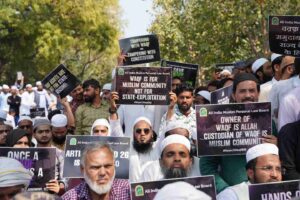
In Madhya Pradesh, India, protests have arisen from Muslim organizations in response to the state government’s decision to appoint non-Muslim members to the reconstituted Waqf Board. These groups criticize the action as an infringement on Muslim control over their religious institutions, vowing to legally contest the appointments in the Supreme Court.
Background of the Controversy
The unrest follows amendments to India’s Waqf law, leading to the formation of a new Waqf Board that controversially includes Hindus among its members. Historically, Waqf institutions—overseeing properties dedicated by Muslims for religious, educational, and charitable purposes—have been managed exclusively by members of the Muslim community. Protesters have gathered in significant numbers at Bhopal’s Budhwara Square to demand the revocation of these appointments, asserting that the nature of Waqf institutions necessitates Muslim oversight due to their religious significance.
The decision has sparked widespread claims among Muslim organizations that it signifies a troubling precedent where non-Muslims are given authority over what they regard as sacred community assets. As expressed by Shamshul Hasan, a patron of the All India Muslim Tyohar Committee, “Waqf is a religious and social institution of the Muslim community…” indicating a strong sentiment about preserving the autonomy of their charitable and religious endowments.
Legal and Political Implications
Political leaders and legal advocates, including Congress legislator Arif Masood, have raised alarms regarding the legality of the new appointments. Masood claims that the state government acted prematurely, undermining pending legal scrutiny of the amended Waqf law. He pointedly notes that the law allowed for only two non-Muslim members on the board, but the Madhya Pradesh Board has included three, suggesting further deviations from the legislative intent.
This event is emblematic of broader tensions regarding the BJP-led government’s policies, which Muslim organizations view as encroachments on their religious rights. As alterations to the governance of waqf properties are being debated, various community leaders assert that government intervention in religious affairs represents a growing trend of discrimination and marginalization against Muslims in India.
BJP’s Defense and Broader Context
The BJP government has defended these changes as efforts to promote greater transparency and accountability in Waqf management, arguing that the previous regime lacked oversight. However, critics contend that enhanced state involvement undermines the traditional autonomy that these institutions have historically enjoyed.
This ongoing struggle comes amidst a backdrop of what many Muslims perceive as discriminatory policies under the BJP, challenging community rights across multiple facets of life—from religious practices to socio-economic opportunities. The passage of the Waqf (Amendment) Act in 2025, which is currently facing legal challenges, has further angered community leaders, institutionalizing their fears about the erosion of Muslim management over charitable assets.
Why It Matters
The amendments to the Waqf law and the ensuing protests reflect significant socio-political dynamics in India. They highlight issues of community governance, religious autonomy, and the balance of power between state authorities and minority populations. The implications extend beyond law and politics; they resonate with global discussions around minority rights, religious freedom, and the role of state governance in overseeing community resources. This situation may possess long-term ramifications for social cohesion in a diverse society like India, which risks exacerbating divisions along religious lines.
Frequently Asked Questions
What is the Waqf Board?
The Waqf Board is a legal body in India that manages waqf properties—lands and assets dedicated by Muslims for religious and charitable purposes. It primarily oversees institutions like mosques, schools, and orphanages.
Why are non-Muslim members controversial on the Waqf Board?
Many Muslims perceive the inclusion of non-Muslims as a significant intrusion into their religious affairs, arguing that such appointments undermine the autonomy and traditional governance of waqf properties, impacting their management and integrity.
What legal actions are being considered regarding the Waqf Board’s composition?
Muslim organizations and political figures plan to challenge the appointments in the Supreme Court, citing legal conflicts and the inappropriate nature of non-Muslim involvement in a board meant for managing Muslim charitable endowments.
How does this issue reflect broader societal tensions in India?
This controversy exemplifies growing concerns regarding minority rights, discrimination, and state intervention in religious affairs under the BJP government, intensifying scrutiny on the treatment of Muslims in various aspects of Indian society.