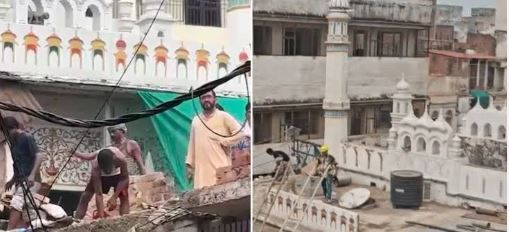

Authorities in Uttar Pradesh, governed by the BJP, are demolishing five historic mosques in Varanasi as part of a road-widening initiative, raising alarms about the systematic targeting of Muslim religious sites. This controversial action forms part of a larger redevelopment scheme, intensifying fears among local Muslims regarding the erosion of their cultural heritage.
Widening Roads or Widening Divides?
The demolition work is currently focused in the densely populated Dalmandi area, where significant police presence has been reported—approximately 1,860 personnel have been deployed. The operation is bolstered by security measures including area barricades and drone surveillance. Critics argue that such extensive security is not merely a precaution but an indication of the sensitive nature of the project.
District authorities have earmarked 187 properties, including six mosques, for acquisition. Among the mosques facing demolition are Langde Hafiz Masjid, Nesaran Ki Masjid, Rangile Shah Masjid, Ali Raza Masjid, and Sangmarmar Masjid. The historic Mirza Karimullah Beg Masjid is also under threat, a move that many locals see as an unnecessary sacrifice of their religious heritage for urban development.
Community Concerns About Marginalization
The local Muslim community voices deep concerns over these demolition activities, fearing that centuries-old places of worship are being unnecessarily sacrificed. Many residents view this action as part of a broader scheme that disproportionately affects Muslim populations under the guise of urban renewal. Activists and community leaders argue that these patterns of marginalization are reflective of a systematic effort to undermine Muslim cultural and religious identity.
As demolitions continue, local Muslims have questioned the necessity of targeting religious sites, emphasizing the urgent need for inclusive urban planning that respects all communities. “These are not just buildings; they are part of our culture and history,” stated a community member who wished to remain anonymous. The growing apprehension is that such actions are not isolated incidents, but rather contribute to an environment of fear and social exclusion for Muslims in India.
The Bigger Picture: Trends in India
This demolition is emblematic of a troubling trend in India over the last few years—an increasing number of Muslim religious sites under threat from government-led projects. Rights groups have raised alarms that this not only threatens the preservation of cultural heritage but also exacerbates communal divides and social polarization. Instances of demolition have been reported across various regions, further embedding a narrative of exclusion within urban development frameworks.
The systematic targeting of religious sites has prompted widespread condemnation from human rights organizations, who argue that such measures are inconsistent with the foundational principles of secularism enshrined in the Indian Constitution. The ongoing situation raises serious questions about the future of communal harmony and the cultural landscape of India’s diverse society.
Why It Matters
This situation is significant not only for the communities directly affected but also for the broader socio-political climate in India. The targeting of religious sites can contribute to increased communal tensions, which have far-reaching implications for social cohesion and national unity. The global community should closely monitor these developments, as they may influence international perceptions of India’s commitment to secularism and human rights. For the AI industry and developers, this scenario raises ethical considerations about digital representations of cultural heritage and the importance of inclusivity in technology.
Frequently Asked Questions
What are the main properties being demolished in Varanasi?
The current demolition effort includes five mosques: Langde Hafiz Masjid, Nesaran Ki Masjid, Rangile Shah Masjid, Ali Raza Masjid, and Sangmarmar Masjid, with the historic Mirza Karimullah Beg Masjid also under threat.
What justification is the government using for these demolitions?
The local government cites a road-widening project as the reason for targeting these religious sites as part of an urban redevelopment initiative.
What are the community’s concerns regarding this demolition?
Community members express fears of losing centuries of cultural heritage and feel that there is a disproportionate targeting of Muslim sites under the guise of urban renewal, raising concerns about marginalization.
How can the international community respond to these developments?
The international community can respond by advocating for the protection of cultural heritage and the upholding of secular principles in governance. Monitoring such developments can influence global perceptions of India’s commitment to diversity and human rights.