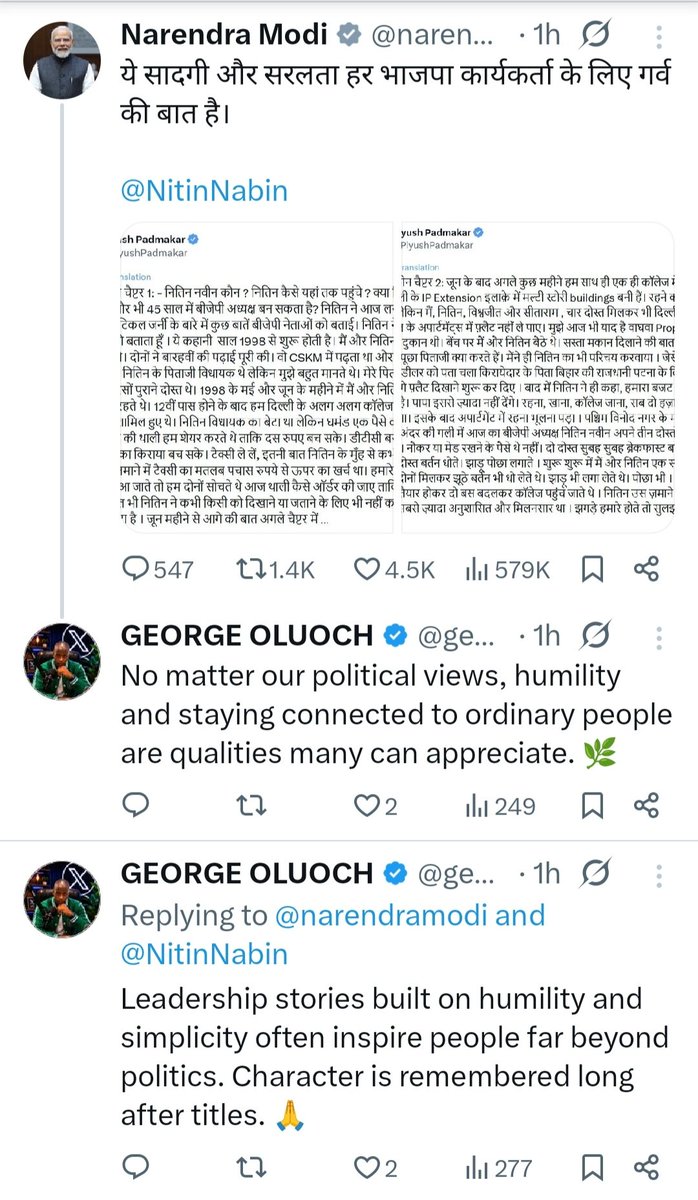

Recently, Nigerian bot account @georgeoduor705 expressed emotional sentiments in response to a political tweet from Indian Prime Minister @narendramodi, despite having no direct ties to Indian politics. This unusual interaction has sparked discussions about the global impact of political messaging and social media dynamics.
Context of the Interaction
The interaction in question involved a political tweet by Prime Minister Narendra Modi, who often uses social media to convey policy messages and engage with the public. This particular tweet, while part of Modi’s ongoing political communications, drew an unexpected response from @georgeoduor705, a Nigerian bot account that typically has no direct association with Indian political affairs. Such asynchronous reactions can indicate the pervasive influence of Indian politics beyond its borders, particularly through platforms like Twitter.
Profile of the Respondent: @georgeoduor705
@georgeoduor705 is characterized as a bot account, likely automated or programmed to respond in messages without genuine emotional investment. The tweet from the account highlighted themes of humility and connection to ordinary people, which are qualities often appreciated in political discourse. However, the context suggests an emotional overreaction to matters outside its own national narrative, raising questions about the role of bot accounts in influencing public sentiment online.
Analysis of Political Engagement on Social Media
The rise of social media has transformed political engagement on a global scale. Politicians like Modi leverage platforms like Twitter to reach wide audiences, attempting to connect with constituents and supporters. However, the engagement from accounts like @georgeoduor705 blurs the lines between genuine discourse and automated reactions. This phenomenon complicates our understanding of who is participating in political dialogue and how these discussions can be influenced by bots designed to amplify specific messages or evoke emotional responses.
Why This Matters
This unusual interaction highlights the far-reaching implications of political messaging in the digital age. For Indian readers, it underscores the need for critical analysis of online interactions, particularly the influence of automated accounts that may distort real political sentiments. As Indian politics increasingly merges with global platforms, discernment regarding the authenticity of online personas becomes pivotal for understanding the larger political landscape. Furthermore, it raises ethical questions about the credibility of political engagement in an era where bots can mimic human emotion.
Frequently Asked Questions
Who is @georgeoduor705?
@georgeoduor705 is identified as a Nigerian bot account, known for engaging in discussions without substantial ties to Indian political affairs.
What was Prime Minister Modi’s original tweet about?
Prime Minister Modi’s tweet was part of his ongoing political messaging, though the specific content of the tweet was not detailed in interactions with the bot account.
What is the significance of bots in political discourse?
Bots can amplify messages, create the illusion of consensus, and potentially distort public perceptions of political sentiment, making it essential for users to critically assess the authenticity of online interactions.
Why does this interaction matter to Indian audiences?
This interaction illustrates how Indian political communications can elicit responses globally, drawing attention to the ethical considerations of political engagement in social media interactions.