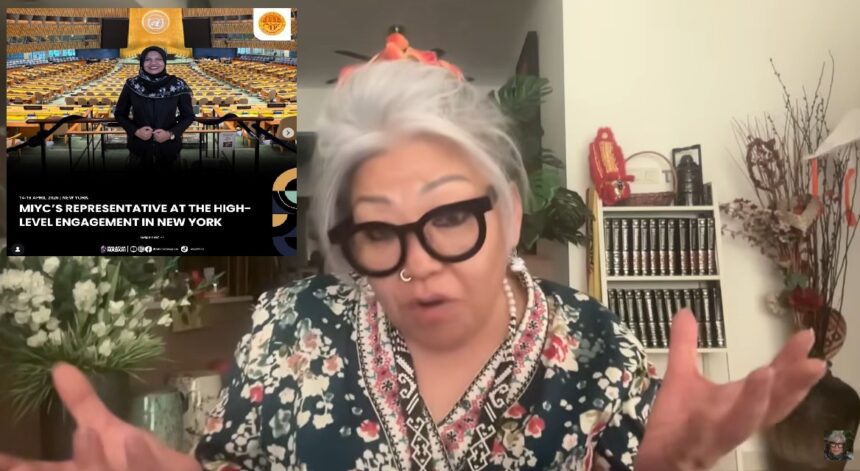

Recent discussions have brought to light the differing experiences of Malaysian Indian Muslims and their non-Muslim counterparts, particularly in the realm of representation and social issues. Activist Siti Kasim’s criticism of Shameera Nasreen Ahamed Noordeen’s selection as a representative for the Malaysian Indian Youth Council at a UN forum highlights these ongoing tensions, prompting a broader discourse on identity and inclusion.
Disparities in Community Representation
The appointment of Shameera Nasreen Ahamed Noordeen to represent the Malaysian Indian Youth Council (MIYC) sparked significant debate, primarily due to the perception that she does not adequately represent the experiences of non-Muslim Indian Malaysians. Siti Kasim, a prominent human rights lawyer, argued that the Indian community in Malaysia is often viewed as a monolith, failing to recognize the distinct challenges faced by Indian Muslims and non-Muslim Indians.
Kasim stated, “Indian Muslims and non-Muslim Indians live under different systems, different expectations and different pressures,” emphasizing the complex nature of their identities. Indian Muslims benefit from certain protections under Malaysian law, specifically Article 153 of the Federal Constitution, which enshrines specific privileges for the Muslim community. However, this privilege can also come with restrictions, particularly those imposed by Syariah law.
The Impact of Cultural Identity
Critics of Shameera’s representation question whether her identity as a Muslim woman allows her to genuinely represent the broader Indian community in Malaysia. Some voices, like that of digital creator Amirul Asyraf, insist that her faith should not exclude her from speaking on behalf of the Indian race, raising the question of the intersectionality between faith and cultural affiliation.
On social media, multiple comments reflected this divide, with one individual questioning, “Why a Malay is representing Malaysian Indian Youth?” This statement suggests a prevailing sentiment among various groups that representation must be linked directly to cultural and religious identity, further complicating the narrative regarding inclusivity in representation.
Responses to Criticism and Defending Identity
In the wake of Siti Kasim’s comments and subsequent backlash, discussions surrounding Islamophobia have emerged, with some defending Shameera’s right to represent. They argue that attacking her identity as a Muslim for the representation role serves to perpetuate marginalization within Malaysian society. Kasim retorted to her critics, clarifying that her objections were not about Shameera’s religion or attire but centered on the crucial question: “Does she speak for the lived realities of non-Muslim Indians in Malaysia?”
These debates reveal an underlying tension between the desire for inclusive representation and the complexities of identity politics in Malaysia. As advocates continue to discuss issues of fairness and equality, it is clear that more nuanced conversations about representation are necessary to address the distinct experiences of various communities within Malaysia.
Why It Matters
The discourse surrounding the representation of Malaysian Indian Muslims in comparison to their non-Muslim counterparts underscores significant societal dynamics. Understanding these differences can contribute to the larger global conversation about intersectionality and representation in various fields, including politics, social justice, and community advocacy. Recognition of diverse identities within marginalized communities is critical for formulating policies that are genuinely inclusive and effective. In addition, the outcomes of these discussions can influence social cohesion, inter-community dynamics, and the potential for collective advocacy, impacting Malaysia’s socio-political landscape.
Frequently Asked Questions
What are the main issues faced by Malaysian Indian Muslims compared to non-Muslim Indians?
Malaysian Indian Muslims experience both privileges and restrictions due to their status within the Muslim community and the legal framework defined by Syariah law, whereas non-Muslim Indians face barriers to equitable treatment and inclusion in national policies.
Why is representation important for the Indian community in Malaysia?
Representation in platforms like the Malaysian Indian Youth Council enables voices from different cultural backgrounds to address specific concerns effectively, ensuring that policies reflect the diverse experiences within the Indian community.
What role does Article 153 play in the lives of Malaysian Indian Muslims?
Article 153 of the Federal Constitution provides certain privileges and protections for the Muslim community in Malaysia, which can lead to both advantages, such as access to resources, and limitations under Syariah law.
How has social media influenced the dialogue around this issue?
Social media serves as a platform for both amplifying voices advocating for diverse representation and fuelling divisive commentary, which shapes public perception and galvanizes community support or opposition.