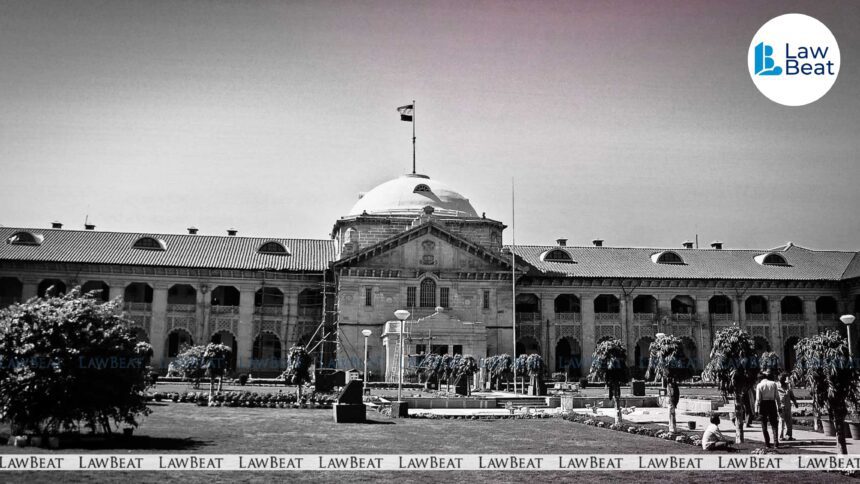

In a significant ruling, the Allahabad High Court dismissed a writ petition filed by six shopkeepers challenging the Varanasi Dalmandi Market’s proposed road widening and beautification project linked to the Kashi Vishwanath Corridor. The court reinforced that tenants lack the rights to contest property acquisition and clarified that the Places of Worship (Special Provisions) Act, 1991 does not prevent the state from acquiring religious properties for public development purposes.
Background of the Case
The petitioners, who have operated their businesses in the Dalmandi Market for decades, claimed that local authorities threatened them with eviction without proper due process. They also argued that six mosques, believed to be pre-Independence structures, were included in the acquisition plans, raising concerns about violations of religious protections under the Places of Worship Act. The judgment was delivered by a division bench comprising Justice J.J. Munir and Justice Arun Kumar, who engaged with legal representatives from various parties during the hearing.
Court’s Rationale on Tenancies and Property Rights
The High Court made it clear that long-standing tenancy does not convert into ownership rights. The judges noted that the petitioners acknowledged their status as tenants while relying on evidence such as rent agreements and receipts. Justice Munir emphasized that merely conducting business on the premises for generations does not justify proprietary claims. “It is not that since their shops are running for a long time… that their rights have been enlarged to some kind of proprietorship,” he stated. Moreover, the court highlighted the absence of challenges from property owners regarding the road project, implying that the tenants’ grievances were unwarranted.
Implications for Religious Properties
The judges addressed the petitioners’ contention linking the mosque acquisitions to the Places of Worship Act. They clarified that while the act aims to preserve the status of places of worship as of August 15, 1947, it does not restrict the state’s authority to acquire religious properties for legitimate public improvement projects. The court reiterated that ownership disputes involving waqf properties should be pursued by relevant authorities like the Mutawallis and Waqf Board, rather than tenants. The distinguishing of property acquisition from the religious status of a place of worship reflects a nuanced understanding of legal rights and public interest.
Why It Matters
This ruling highlights a growing trend in India where legal frameworks may be leveraged for large-scale urban development, often at the expense of marginalized communities. While the court’s decision emphasizes legal rights regarding property acquisition, it raises questions about the potential marginalization of tenants, especially from minority backgrounds, and the challenges they face in protecting their livelihoods. The balance between urban development and community rights will continue to be a critical area of discourse, especially as governmental priorities evolve under the current political climate.
Frequently Asked Questions
What was the key issue in the Varanasi Dalmandi case?
The core issue was whether tenants could challenge the state’s acquisition of property for a public road project, particularly concerning the protection of pre-Independence mosques under the Places of Worship Act.
What did the Allahabad High Court decide regarding tenants’ rights?
The court ruled that the tenants had no enforceable rights to contest the acquisition, emphasizing that their long-term business presence did not confer ownership status.
Does the Places of Worship Act prevent the acquisition of mosques?
No, the court clarified that the Act preserves the religious status of places of worship but does not inhibit the state from acquiring such lands for legitimate public purposes.
What should property owners and tenants consider following this ruling?
Property owners and tenants should be aware of the limited rights of tenants in matters of property acquisition and ensure any legal grievances about such projects are presented by the legitimate title holders or relevant authorities.