
The political landscape in India is witnessing seismic shifts, particularly with regard to Muslim voters who have historically faced discrimination and marginalization. Once seen as predictably aligned with regional parties, a growing disillusionment is causing a fragmentation of their votes, impacting the electoral fortunes of those parties and potentially shifting the balance of power toward the Bharatiya Janata Party (BJP).
Breaking the Cycle of Fear: The Erosion of Muslim Voter Loyalty
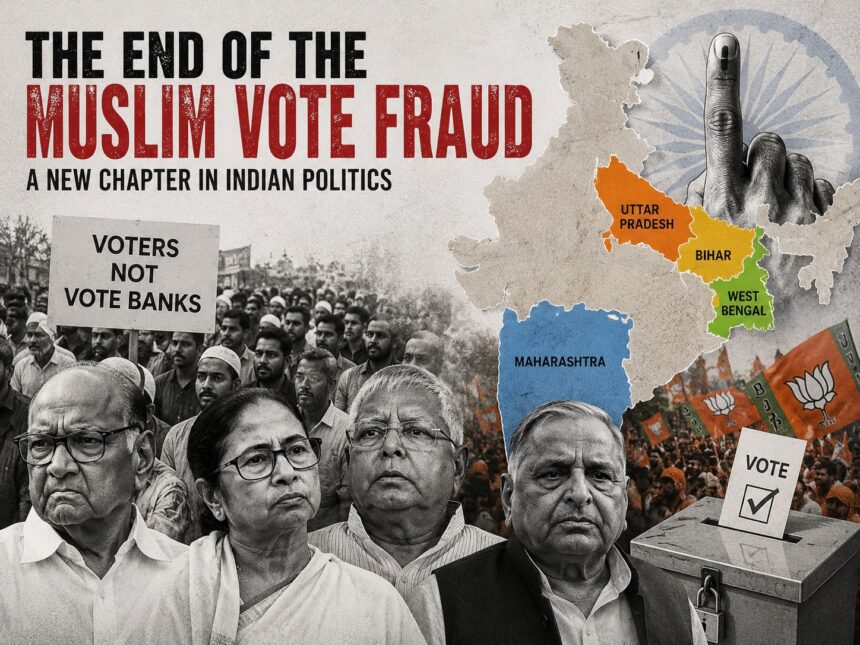
The recent assembly elections in West Bengal showcased a startling trend: the Bharatiya Janata Party’s (BJP) victory was not due to its appeal to Muslim voters but rather the failure of the Trinamool Congress (TMC) to represent legitimate Muslim interests. Mamata Banerjee’s long-standing view of Muslim votes as a captive asset led to a significant degree of voter fragmentation among Muslims, who now seek political dignity instead of mere fear management.
In 2021, Muslim votes splintered across various parties, including the Left Front-Indian Secular Front (ISF) alliance and the All India Majlis-e-Ittehadul Muslimeen (AIMIM). This fragmentation allowed the BJP to consolidate Hindu votes and achieve victory uncontested by Muslim solidarity. This pattern was echoed in Bihar, where the Rashtriya Janata Dal (RJD), traditionally supported by Muslim and Yadav communities, faced a drastic decline as smaller Muslim parties split the vote.
The Disintegration of Regional Strongmen
The regional power brokers—Sharad Pawar, Mamata Banerjee, Lalu Prasad Yadav, and Mulayam Singh Yadav—are increasingly losing their influence. Once viewed as champions of the Muslim vote, they failed to provide meaningful representation, making their regimes structurally weak. The evidence is compelling, with parties fielding a minuscule number of Muslim candidates despite Muslims making up significant portions of their states’ populations. For instance, the Samajwadi Party (SP) fielded just four Muslim candidates in the 2024 general election while Muslims constitute over one-quarter of Uttar Pradesh’s population.
The political collapse of these leaders can be traced back to their lack of engagement with serious political representation. The erosion of their power has left many Muslims actively seeking alternatives, thereby transforming political dynamics within the region.
Emerging Alternatives and Future Implications
As the traditional heavyweights fade, figures like Asaduddin Owaisi are beginning to articulate a new political vision that speaks to Muslim aspirations rather than fears. Owaisi’s approach, which emphasizes dignity and representation over fear-based campaigns, resonates with younger Muslim voters apprehensive about their identity and place within the political framework.
The Congress party has the potential to leverage this situation by adopting a more assertive stance toward Muslim representation. Successful models from states like Kerala, where Congress allied with the Indian Union Muslim League and won comprehensive victories, indicate that open affiliations are neither perilous nor politically detrimental when handled with confidence.
As the fragmentation continues, Congress must decide whether to remain in a subordinate position to declining regional parties or to reassert itself as a genuine representative—empowering a demographic that has long been marginalized.
Why It Matters
This evolving political landscape carries significant implications for India’s democracy. The fragmentation of Muslim votes indicates a shift toward more nuanced demands for representation that goes beyond mere identity politics. The potential consolidation of Muslim voters around candidates who prioritize their interests could fundamentally alter electoral outcomes, challenging the BJP’s hegemony.
This scenario raises questions about how governments engage with marginalized communities and shapes the broader discussions surrounding communal politics in India. An empowered and engaged Muslim electorate could also signal shifts in policy priorities that address social justice, economic equity, and political representation, reshaping the landscape of Indian politics for years to come.
Frequently Asked Questions
What has led to the fragmentation of Muslim votes in India?
Historically, regional parties have leveraged Muslim votes through fear-based tactics, treating them as a captive voting bloc rather than addressing their legitimate needs. This model is collapsing, causing a reevaluation among Muslim voters about which parties genuinely represent their interests.
How have regional parties failed the Muslim electorate?
Regional parties like the TMC, RJD, and SP have consistently fielded minimal Muslim candidates and have not fulfilled the demands of their Muslim constituents, leading to disengagement and fragmentation of the vote.
What role does Asaduddin Owaisi play in the current political landscape?
Asaduddin Owaisi represents a new voice that emphasizes political dignity and real representation for Muslims, attracting younger voters who are increasingly disillusioned with the traditional parties.
How can Congress rebuild trust among Muslim voters?
Congress can rebuild trust by adopting an assertive approach to Muslim representation, actively engaging with the community, and offering meaningful political partnerships, as demonstrated effectively in states like Kerala.