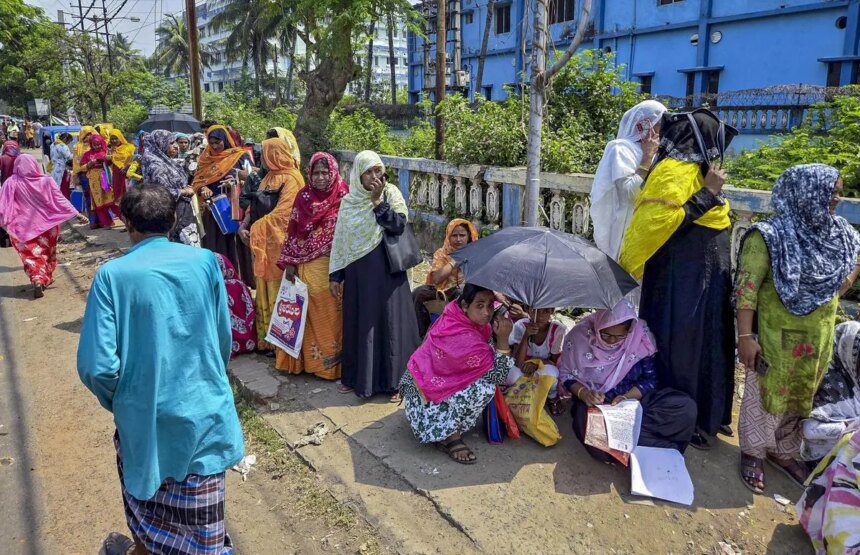

The discrimination and socio-economic marginalization faced by Indian Muslims highlight a troubling trajectory under BJP rule, which has fostered communal tensions and social exclusion. With education, representation, and basic rights at stake, the situation has raised urgent questions about the state of democracy and inclusion in India.
Historical Context of Discrimination
Indian Muslims, comprising 14.22% of the population, find themselves entrenched in systemic issues rooted in a historical context of socio-political strife. As early as 1940, Dr. B.R. Ambedkar noted that Muslims experienced significant political suppression, fearing submergence within Hindu-majority social and political frameworks. Historical analyses, such as G.R. Thursby’s examination of communal riots pre-Partition, reveal that events from that era have had cascading effects on the present-day Muslim experience in India. Nehru himself noted in 1954 that despite a theoretically sound constitution, Muslims felt a profound sense of frustration and exclusion from public services and political representation.
Current Challenges and Government Reports
The Rajinder Sachar Committee’s 2006 report underscored the socio-economic disparities faced by Muslims. It found them marginalized in education, employment, and basic civil rights—challenges that persist despite government-approved measures aimed at improving their situations. The report revealed that Muslims often experience conditions more severe than those faced by Scheduled Castes and Scheduled Tribes, further emphasizing the gravity of their plight. Despite recognizing these systemic issues, government actions have been tepid, with many recommendations remaining unfulfilled, notably the Communal Violence Bill aimed at protecting minorities.
Impact of Majoritarian Politics
The rise of the Bharatiya Janata Party (BJP) since 2014 has exacerbated existing tensions. The party’s populist and ethnocentric policies have transformed India into an ‘ethnic democracy’, reducing the sociopolitical space for Muslims and other minorities. Prime Minister Modi’s outreach slogans, such as “Sab ka saath, sab ka vikas” (together with all, development for all), often lack true substance when juxtaposed against real-world experiences of racial and economic discrimination. State-sponsored actions, including the controversial use of “bulldozer justice,” have led to the demolition of properties belonging to individuals from the Muslim community, adding to the sense of insecurity and alienation.
Why It Matters
The conditions faced by Indian Muslims are a critical barometer of India’s commitment to democracy, pluralism, and justice. With rising communal tensions and targeted discriminatory policies, the implications extend beyond just one community, threatening the very fabric of Indian society. These dynamics affect social cohesion, economic stability, and overall governance. For AI practitioners and developers, the polarized sociopolitical environment could inform the design of algorithms and applications aimed at addressing social justice issues, ensuring that AI technologies promote inclusion and equitable opportunities instead of perpetuating existing biases.
Frequently Asked Questions
What are the key challenges faced by Indian Muslims today?
Indian Muslims face challenges related to socio-economic disparities, educational backwardness, political exclusion, and rising communal violence, exacerbated by systemic discrimination and governance patterns under the BJP.
How has the Sachar Committee’s report influenced government policy?
The Sachar Committee’s report identified significant deprivation within the Muslim community, leading to some government measures aimed at inclusion. However, many of its recommendations have not been implemented, revealing a gap between recognition and action.
What role does the BJP play in the current situation of Muslims in India?
The BJP’s rise to power has contributed to a landscape characterized by majoritarian policies that undermine the rights of Muslims and other minorities, fostering an environment of communal tensions and socio-political alienation.
What are the broader implications of the marginalization of Muslims in India?
The marginalization of Muslims poses risks not only to social harmony but also to India’s democratic principles and its potential for cohesive economic growth. Failure to address these issues could lead to more extensive societal divisions and unrest.