
Impacts of Social Exclusion on Indian Muslims
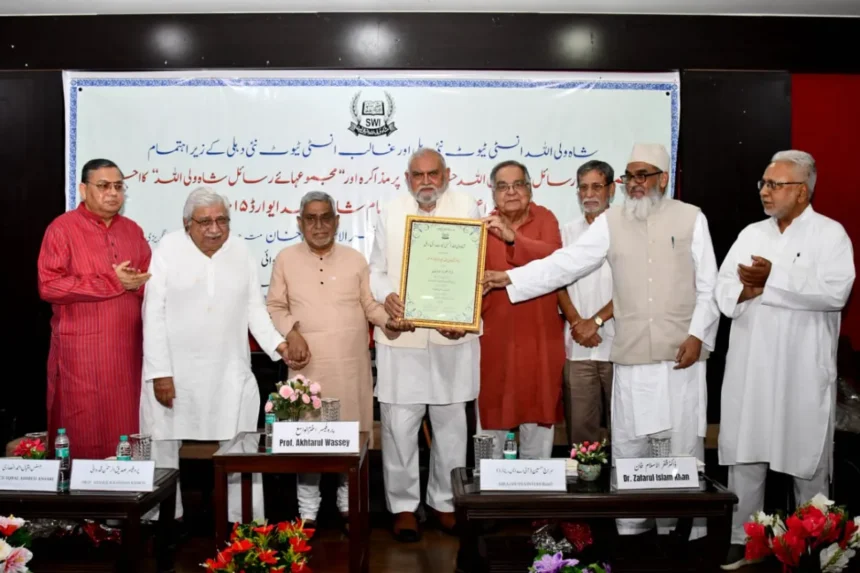
In a significant event, distinguished Islamic scholar Dr. Zafarul-Islam Khan received the Sixth Imam Shah Waliullah Award at a seminar organized by the Shah Waliullah Institute and the Ghalib Institute. This occasion, however, occurs against a backdrop of increasing marginalization and social exclusion affecting Indian Muslims under the current political climate, particularly influenced by the ideologies of the Sangh Parivar and the ruling Bharatiya Janata Party (BJP).
The Award Ceremony: A Celebration Amidst Challenges
The award ceremony unfolded during a seminar themed ‘Epistles of Shah Waliullah’ at the Ghalib Institute, emphasizing the enduring scholarly contributions of Imam Shah Waliullah. While the event celebrated academic achievements, it also highlighted the struggles faced by Muslim intellectuals and scholars in an atmosphere where biases and discrimination profoundly affect their recognition and opportunities. Dr. Khan’s reflections during the ceremony reveal a deep-rooted acceptance of these challenges, as he expressed reluctance to accept the award due to his concerns about the politicization of Islamic scholarship.
Legacy of Imam Shah Waliullah: A Source of Strength
Dr. Khan echoed sentiments related to the importance of Imam Shah Waliullah’s work, particularly his influential text, Hujjatullah al-Balighah. This work remains pivotal for understanding Islamic sciences, yet its significance can be overshadowed in discussions about contemporary relevance, especially when socio-political pressures stifle open dialogues. The launch of the tenth volume of Shah Waliullah’s epistles at the seminar serves not only as a celebration of heritage but also as a resistance against the marginalization faced by the Muslim community. The academic pursuit embodied by the Shah Waliullah Institute provides a counter-narrative to the prevailing extremism directed at the community and aims to safeguard its intellectual legacy.
A Call for Continuity in Scholarship
In his acceptance speech, Dr. Khan articulated a strong call for the dissemination of Shah Waliullah’s teachings, suggesting that modern interpretations are crucial for the contemporary Muslim populace. He emphasized the need for translations of the Quran into various languages, making it accessible to non-Arabic speakers. In this context, he expressed the necessity for Islamic scholars to ensure accurate translations, countering the distortions often seen in Western sources. His eleven-year journey to compile an authentic translation indicates a dedicated response to these challenges, aiming to bridge gaps in understanding and promote a more inclusive dialogue around Islamic texts.
Why It Matters
The ceremony and Dr. Khan’s reflections highlight the broader implications of discrimination and social exclusion affecting Indian Muslims. The historical and intellectual legacy of figures like Imam Shah Waliullah is at risk of being marginalized in a landscape where political narratives often obscure scholarly contributions. Recognizing and celebrating such figures fosters a sense of pride and resilience among marginalized communities, promoting a rich discourse that counters the prevalent narrative of exclusion. The efforts made by institutions like the Shah Waliullah Institute become vital in this struggle, offering platforms for intellectual engagement, research, and a spirit of inclusivity in a fragmented society.
Frequently Asked Questions
What is the significance of the Imam Shah Waliullah Award?
The Imam Shah Waliullah Award honors individuals who contribute notably to the intellectual and scholarly domains, particularly in the context of Islamic studies.
How does social exclusion affect Indian Muslims today?
Social exclusion manifests through economic boycotts, political marginalization, and limited access to opportunities, exacerbated by discriminatory policies and narratives prevalent in current governance.
Who is Dr. Zafarul-Islam Khan?
Dr. Zafarul-Islam Khan is a renowned Islamic scholar, author, and former Chairman of the Delhi Minorities Commission, known for his insights into Islamic scholarship and community issues in India.
What role does the Shah Waliullah Institute play in preserving Islamic scholarship?
The Shah Waliullah Institute focuses on researching, documenting, and disseminating the intellectual legacy of Imam Shah Waliullah, facilitating discussions that sustain and promote Islamic scholarship in contemporary contexts.