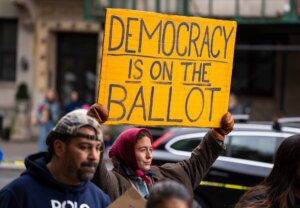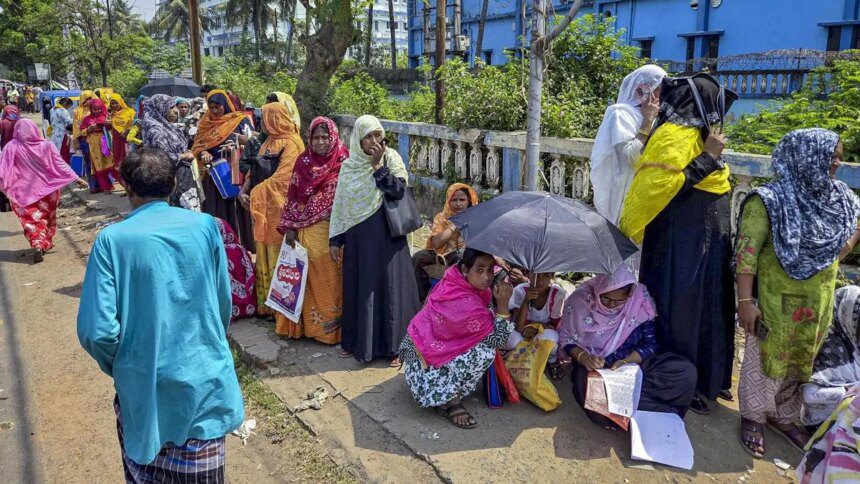

Indian Muslims, comprising 14.22% of the population, face considerable discrimination, social exclusion, and economic marginalization under the governance of the Bharatiya Janata Party (BJP) and the broader Rashtriya Swayamsevak Sangh (RSS) ideological framework. This systemic issue has become increasingly prevalent, leading to a perception among many Muslims that they are second-class citizens in their own country.
Historical Context of Marginalization
The socio-economic and political challenges that Indian Muslims face are deeply rooted in the country’s history. Following India’s independence, prominent figures such as Dr. B.R. Ambedkar identified political suppression as a primary cause of social backwardness among Muslims. He noted, “Muslims… feel they will be suppressed and that political suppression will make Muslims a depressed class.” This sentiment has lingered through decades of unsettling communal tensions, underscored by repeated communal riots that have frequently targeted Muslims. The 1923-28 study by G.R. Thursby highlighted 112 communal riots, noting how this unresolved historical tension set the stage for the eventual partition of India and Pakistan.
The Sachar Committee Report of 2006 brought attention to the alarming socio-economic status of Muslims, highlighting their marginalization across crucial sectors such as education, health, and employment. Findings indicated that many Muslims occupy a worse socio-economic position than recognized backward communities, like Scheduled Castes and Scheduled Tribes. Despite the government approving 72 out of the 76 recommendations from the report, actual change remains minimal, showcasing a chronic lack of political will.
Government Policies and Political Climate
The political landscape has shifted dramatically since the BJP’s rise to power in 2014, leading to an era characterized by ethnic nationalism and majoritarianism. Prime Minister Narendra Modi’s assurances of “Sabka Saath, Sabka Vikas,” lack substantive frameworks that prioritize equitable access to resources for Muslims. Contrarily, the Gujarat government has criticized the Sachar Committee as unconstitutional, illustrating a broader trend of institutional discontent towards India’s Muslim community.
The subsequent rise in hate speech incidents and communal tensions highlights the precarious nature of inter-community relations. Reports show that from 2023 to 2024, there was a 97% increase in hate speech events targeting minorities, reinforced through social media platforms. This phenomenon reflects a normalization of hate that profoundly impacts social cohesion and ensures further marginalization of Muslims.
Economic Boycotts and Social Exclusion
Economic marginalization manifests in various forms, including systematic boycotts of businesses owned by Muslims and employment discrimination. Lower representation in government employment, particularly in defense and policing sectors, adds to social exclusion. An alarming statistic from the National Crime Records Bureau indicates that Muslims make up about 20% of undertrial prisoners, revealing a disproportionate representation in the criminal justice system compared to their population size.
Moreover, government schemes aimed at enhancing education and skill development for Muslims have often been inadequate. Despite the presence of minority-focused training initiatives, significant segments of the Muslim community remain trapped in low-income, informal employment. This cycle of deprivation is further exacerbated by limited access to quality education, with only 5.2% of Muslim students attaining higher education compared to a national average of 27.3%.
Why It Matters
The discrimination and marginalization of Indian Muslims have far-reaching implications for democracy and societal stability in India. When a large segment of the population feels alienated, it undermines the very fabric of a pluralistic society. This impacts governmental policies, social cohesion, and economic productivity. Moreover, systemic marginalization challenges India’s reputation as a secular democracy, raising questions about equality and human rights within the country’s constitutional framework.
Frequently Asked Questions
What is the current population percentage of Muslims in India?
Muslims constitute 14.22% of India’s total population, according to recent demographic statistics.
What did the Sachar Committee Report reveal about Indian Muslims?
The Sachar Committee Report, established in 2006, revealed that Indian Muslims are on the margins of socio-economic structures, with indicators such as education and employment showing lower levels compared to other recognized backward communities.
How has the rise of the BJP affected Indian Muslims?
The BJP’s rise has led to increased communal tensions, hate speech incidents, and discriminatory policies that contribute to the marginalization of Muslims, impacting their social, economic, and political rights.
What role do educational disparities play in the socio-economic status of Muslims in India?
Educational disparities significantly contribute to the socio-economic marginalization of Muslims, as lower educational attainment limits access to quality jobs, perpetuating cycles of poverty and exclusion.