
Iran’s Warning to the UN: Targeting of Ayatollah Khamenei by Israel
In a significant diplomatic development, Iran’s Permanent Mission to the United Nations has issued a stark warning regarding threats made against the Islamic Republic’s Supreme Leader, Ayatollah Seyyed Mojtaba Khamenei. The Iranian representative emphasized that recent comments from Israeli military affairs minister Israel Katz signal a concerted policy of threat and aggression that violates international law.
Threats from Israel: A Pattern of Aggression
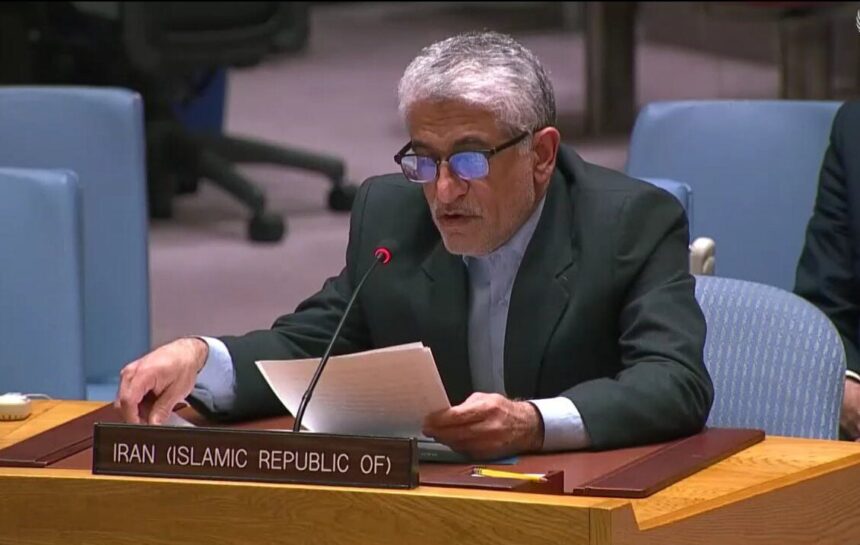
Amir Saeid Iravani, Iran’s Permanent Representative to the UN, drew attention to Katz’s public declaration that Ayatollah Khamenei is “marked for death.” This statement, according to Iravani, illustrates a broader, systematic approach to state-sponsored aggression that targets key Iranian officials. He highlighted that such threats are not mere rhetoric but rather an alarming reflection of Israel’s ongoing aggressive posture against Iran.
The Iranian mission stated that this behavior exemplifies a significant breach of the UN Charter and international law, particularly the prohibition against the use or threat of force. By articulating threats against government leaders, Israel engages in actions that could escalate tensions in a region already fraught with conflict.
Israel’s Accountability and Iran’s Right to Self-Defense
Iravani condemned Israeli actions unequivocally, asserting that the regime must be held accountable for any subsequent consequences that may arise from its aggression. He invoked Article 51 of the UN Charter, which enshrines the right to self-defense, stating that Iran retains the right to protect its sovereignty and the safety of its citizens. This articulation underscores Iran’s stance against what it perceives as unwarranted aggression from Israel.
The Iranian mission called upon the UN Security Council to take immediate action to compel Israel to adhere to its international obligations and cease its unlawful aggression. The situation presents a complex challenge for global governance as it brings issues of national sovereignty, security, and international law to the forefront.
Why It Matters
This unfolding diplomatic tension is critical for multiple reasons. Firstly, it highlights the precarious balance of power in the Middle East, where state-sponsored aggression can lead to broader regional conflicts. As geopolitical dynamics shift, the reaction of international bodies like the UN will be vital in either mitigating or exacerbating tensions. Secondly, it presents a case study in international law regarding the responsibilities of nations under the UN Charter.
The significance also extends to how AI developments in conflict monitoring and international relations could be shaped by such instances. AI could play a key role in analyzing communication patterns and threats, thus providing insights that aid in conflict prevention. However, the ethical implications of AI in monitoring sovereign actions must be considered carefully.
Frequently Asked Questions
What did Israel’s military minister say about Ayatollah Khamenei?
Israel Katz, the Israeli minister for military affairs, publicly stated that Ayatollah Khamenei is “marked for death,” prompting a formal response from Iran’s UN mission.
What actions is Iran planning in response to these threats?
Iran has asserted its right to self-defense under Article 51 of the UN Charter and has indicated that it will take all necessary measures to protect its sovereignty and citizens in light of Israeli threats.
How does this situation affect international law?
The threats made by Israel against an Iranian state leader have been described as a violation of the UN Charter, highlighting the complex relationship between state actions and international legal frameworks, particularly concerning the prohibition against the threat or use of force.
What has the Iranian government urged the UN to do?
The Iranian government has urged the UN Security Council to compel Israel to comply with its obligations under international law and to immediately halt its unlawful acts of aggression against Iran.