
Summary
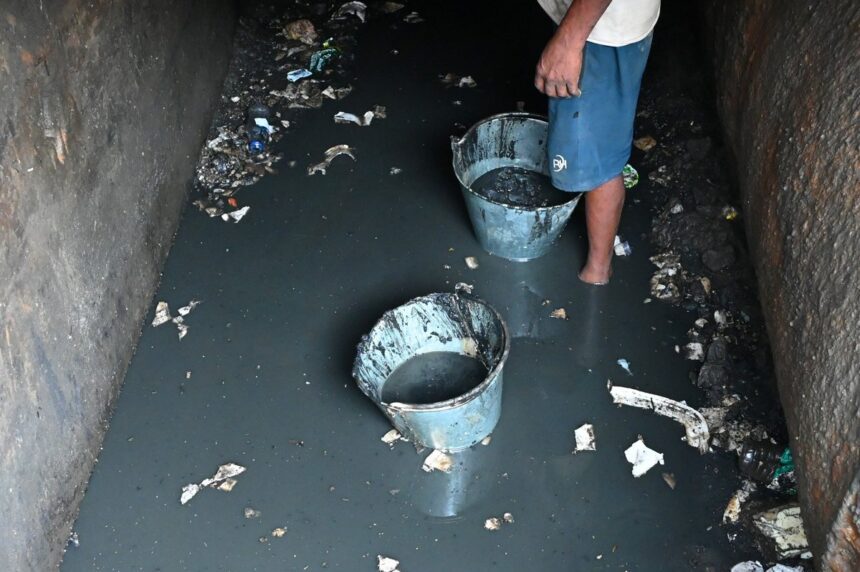
Despite being outlawed in India, the practice of manual scavenging persists, as evidenced by the sighting of 14 workers manually clearing clogged drains in Delhi. The incident raises urgent questions about worker safety and the enforcement of existing laws aimed at eradicating this hazardous practice.
Context of Manual Scavenging in India
Manual scavenging, the practice wherein individuals are employed to clean human waste, has been prohibited in India since the 1993 Employment of Manual Scavengers and Construction of Dry Latrines (Prohibition) Act. Still, the practice continues, driven by socio-economic factors and deep-rooted caste dynamics. Many individuals engaged in this work belong to marginalized communities, rendering them vulnerable to exploitation.
In Delhi, the sighting of workers near Sarai Kale Khan further emphasizes this persistent issue. They were reportedly contracted by a civic agency through a middleman, raising doubts about the effective implementation of existing laws intended to protect the rights and safety of sanitation workers.
Recent Incidents Highlighting the Dangers
The recent fatalities of three workers while cleaning a septic tank in Delhi serve as a grim reminder of the dangers associated with manual scavenging. The workers, who lost their lives, highlighted the lack of adequate safety measures and preventive protocols, emphasizing how such tragedies occur with alarming frequency across the nation.
Labor rights activists have been vocal against such incidents, urging government authorities to take stringent action against contractors engaging in illegal employment practices. Ignoring these regulations not only endangers lives but perpetuates a cycle of poverty and social inequality.
Government Response and Public Reaction
The Indian government has faced criticism regarding its effectiveness in combating manual scavenging. While there have been initiatives aimed at rehabilitating manual scavengers and providing them with alternative employment opportunities, the implementation has often been lackluster.
Public outcry following incidents like the recent deaths has led to some renewed discourse on worker safety, though the momentum is difficult to maintain. Many citizens advocate for a comprehensive approach that includes stricter enforcement of laws, better working conditions, and greater public awareness regarding the importance of sanitation workers.
Why This Matters
The persistence of manual scavenging in India has far-reaching implications for social justice, human rights, and public health. For the Indian populace, the continuation of this practice represents a failure to uphold constitutional rights and dignity for some of the most vulnerable members of society. As awareness of these issues grows, it is essential for both civil society and policymakers to seek effective solutions that eradicate this inhumane practice and protect the rights of all workers.
Frequently Asked Questions
What is manual scavenging?
Manual scavenging refers to the practice of cleaning human waste manually, primarily in places where sanitation systems are inadequate. It has been outlawed in India since 1993, yet the practice still exists in various forms.
Why is manual scavenging still prevalent despite being illegal?
Deep-rooted socio-economic factors, including caste dynamics, lack of enforcement of existing laws, and the vulnerability of marginalized communities contribute to the ongoing prevalence of manual scavenging in India.
What safety measures are needed for sanitation workers?
Sanitation workers require access to personal protective equipment (PPE), proper training for handling hazardous waste, and adherence to safety protocols to minimize risks while performing their jobs.
How can the government effectively combat manual scavenging?
Effective combat strategies should include strict enforcement of existing laws, providing rehabilitation and alternative employment opportunities to manual scavengers, and promoting public awareness campaigns about the importance of sanitation workers.