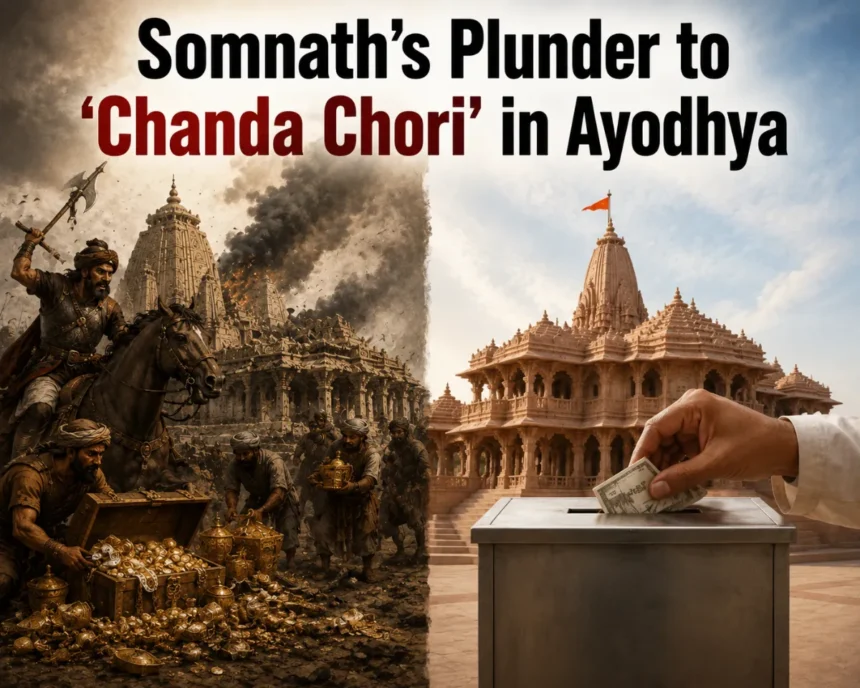

The Ram Temple in Ayodhya, built in the wake of the Babri Mosque demolition, is now at the center of a controversy surrounding the alleged misappropriation of donations. The Bharatiya Janata Party (BJP) and its affiliated organizations, accused of fostering communal divisions through their political agenda, face scrutiny as reports emerge about the siphoning off of substantial funds—estimated between Rs 2,000 to Rs 3,000 crore—from contributions made by devoted worshippers for the temple’s construction.
The Allegations of Fund Misappropriation
The recent uproar regarding the “chanda chori” or theft of donations from the Ram Temple is alarming to many across India, especially for the small-scale donors who contributed to the temple’s construction. Following the contentious history stemming from the Babri Mosque’s demolition in 1992, the atmosphere has been charged with political motivations, leading to questions about accountability within the temple’s trust. There are claims that the Prime Minister’s Office oversaw donation collections, yet many contributors reportedly did not receive any receipts for their donations.
The Vishwa Sindhi Samaj, for instance, stated that they donated nearly 200 silver bricks weighing one kilogram each without receiving any formal acknowledgment. Such incidents contribute to public skepticism regarding the transparency of the funds collected, giving rise to fears that the temple, a symbol of faith for many, has become a vehicle for financial plunder.
The Historical Context of Polarization
The construction of the Ram Temple, positioned as a triumph for Hindu nationalism, follows a deeply divisive narrative characterized by the destruction of the Babri Mosque—a legal and moral breach acknowledged even in a Supreme Court ruling. This event has had lasting repercussions, significantly altering the political landscape in India and fostering an environment rife with hostility against Muslims.
This theme of religious and political polarization is not new. Historical accounts show a long-standing trend where temples have been targeted for riches, a practice that continues to resonate today. Figures from the 11th century, such as Mahmud Ghazni, were notable for plundering temples, perpetuating the narrative of religious warfare that extremists exploit today. Nonetheless, the historical context is complex, revealing instances where Muslim rulers also contributed to Hindu temples—a fact often overlooked in contemporary discourse.
The Role of Modern Political Dynamics
The interplay between political power and religious identity in current Indian politics raises critical questions regarding democracy and inclusive governance. The BJP’s strategy appears to rely on amplifying societal divisions, undermining fundamental tenets of fraternity in a democratic context. The Ram Temple, once a religious aspiration, has become a tool of political leverage, fostering sentiments of animosity that inhibit coexistence among communities.
As financial misappropriations come to light, the contrasting ideologies become increasingly pronounced. Political leaders are urged to reconsider their approach, focusing on unifying narratives rather than historical grievances that perpetuate division. The emergence of hate-driven narratives, markedly against Muslims, echoes a disconcerting trend reminiscent of historical injustices meted out for political gains.
Why It Matters
This situation highlights the socio-political climate in India and its implications for minorities, emphasizing how marginalized groups, particularly Muslims, are impacted by policies driven by a majoritarian ethos. The financial controversies surrounding revered religious sites indicate a broader issue of accountability and transparency in governance, echoing the need for a democratic society that upholds equitable treatment for all regardless of religious affiliation. The intertwining of religion with political agendas must be critically examined to foster a more inclusive environment.
Frequently Asked Questions
What is the Ram Temple controversy about?
The Ram Temple controversy centers around the alleged misappropriation of donations collected for the temple’s construction, with estimates of funds siphoned off ranging from Rs 2,000 to Rs 3,000 crore.
How does this relate to historical events in India?
The controversy links back to the destruction of the Babri Mosque in 1992, which has been a significant flashpoint in Hindu-Muslim relations in India, alongside parallels drawn to historical temple plundering in centuries past.
What is the significance of the Prime Minister’s involvement?
Prime Minister Narendra Modi played a pivotal role in inaugurating the temple and has been described as the primary decision-maker regarding its related affairs, suggesting a blending of religious and political leadership in contemporary India.
How does this issue affect Indian Muslims?
The implications of this controversy are profound for Muslims in India, as it reflects ongoing patterns of discrimination and marginalization, exacerbated by political narratives that cultivate division along religious lines.