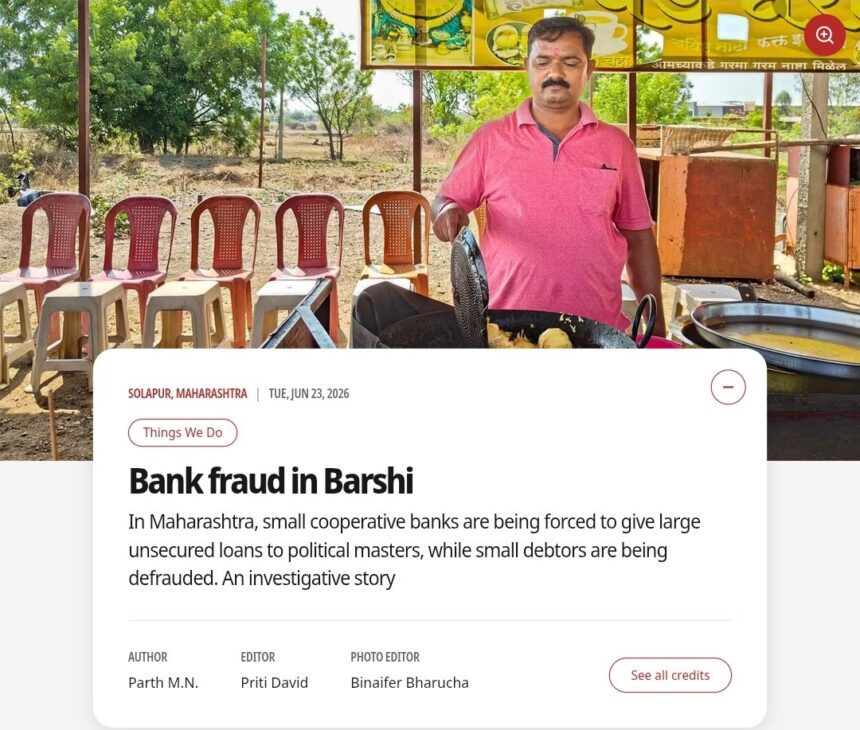

A cooperative bank in Maharashtra has been reported to extend loans that exceed the monthly income of borrowers, raising concerns about financial practices and sustainability. Instances include substantial loans with monthly repayments far exceeding the earnings of business establishments, including hotels and stone-crushing units.
Loan Discrepancies
Shiv Shakti Urban Cooperative Bank in Solapur has been granting loans to various businesses, yet the terms of these loans have drawn scrutiny. For instance, a business establishment received Rs. 1.4 crore with a monthly installment of Rs. 1.9 lakh, despite having a monthly income of only Rs. 43,000. Similarly, Hotel Rutu Lodge, which was loaned the same amount, is facing a repayment of Rs. 1.9 lakh while earning merely Rs. 36,000 monthly.
Impact on Enterprises
The financial strain on these borrowers raises questions about the bank’s lending practices. A stone crusher unit that was loaned Rs. 1.1 crore will need to repay Rs. 2.15 lakh each month, while its income hovers just over Rs. 71,000. Such discrepancies create an environment where businesses may struggle to meet loan obligations, potentially leading to a cascade of defaults.
Regulatory Oversight
The situation calls for greater regulatory scrutiny. Loan practices in cooperative banks, particularly in rural areas, must adhere to responsible lending standards to prevent over-indebtedness. There is an urgent need for financial institutions to evaluate the viability of enterprises before extending loans, particularly in a market where many small businesses operate on tight margins.
Why This Matters
This issue is of great political significance in India, where a large segment of the economy relies on small and medium enterprises (SMEs). The actions of cooperative banks not only impact individual borrowers but also reflect broader systemic issues in India’s financial ecosystem. Poor lending practices can lead to economic instability, increased poverty levels, and heightened social tension. Thus, ensuring financial institutions operate within ethical standards is crucial for sustainable development.
Frequently Asked Questions
What are cooperative banks?
Cooperative banks are financial institutions that are owned and operated by their members. They aim to provide affordable financial services to their members, often focusing on rural and local communities.
Why are loans exceeding monthly income problematic?
Loans that exceed a borrower’s monthly income create an unsustainable financial burden, risking defaults and, ultimately, financial ruin for borrowers. This can lead to a wider economic crisis if numerous borrowers default simultaneously.
What regulatory measures are in place for cooperative banks?
Cooperative banks are regulated by the Reserve Bank of India (RBI) as well as state governments. They must adhere to guidelines set by these authorities to ensure responsible lending practices and maintain financial stability.
How can borrowers protect themselves from predatory lending practices?
Borrowers can protect themselves by conducting thorough research on their potential loan providers, understanding loan terms, and seeking financial advice before taking on significant debt that exceeds their income capabilities.