
Escalating Controversies: Hate Speech and Political Pegging in India
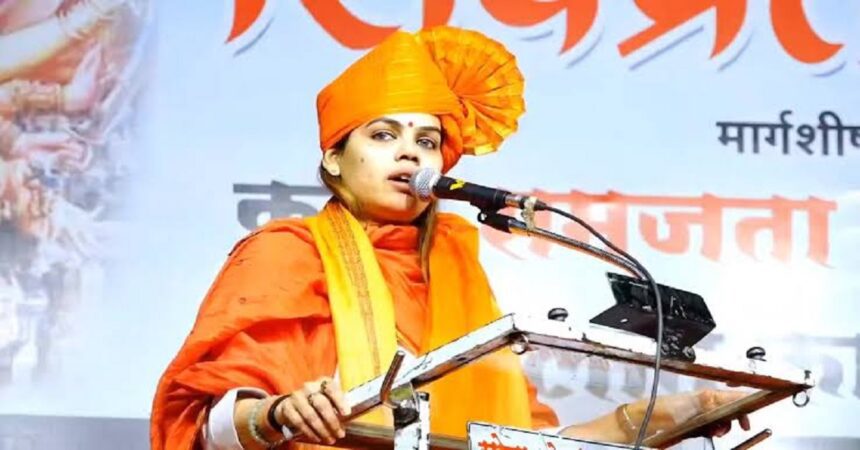
Nazia Elahi Khan, a right-wing influencer and previously affiliated with the Bharatiya Janata Party (BJP) Minority Morcha, has ignited a firestorm of dissent following a controversial podcast that allegedly featured derogatory remarks about Prophet Muhammad. Her statements have prompted multiple police complaints across several states, sparking widespread protests and highlighting ongoing issues regarding hate speech in India.
Background: Nazia Elahi Khan’s Rise and Political Alignment
Nazia Elahi Khan, also known as Nazia Sanatani, is a 41-year-old resident of West Bengal. She gained prominence in legal circles for her role in challenging the practice of triple talaq, a significant issue for many Muslim women in India. Initially leveraging her legal background, she joined the BJP in 2018, quickly becoming a prominent voice for the party’s hardline stance on various socio-political issues. Her shift from community reformer to provocateur is evident in her more recent engagements, wherein she seeks to rally support by targeting minority communities.
The Recent Podcast Controversy
The trouble began on June 19, 2026, when a podcast featuring Khan was uploaded, in which she allegedly belittled Prophet Muhammad and his family. The fallout was immediate and severe. Members of the Muslim community across India reacted strongly, resulting in protests in states like Maharashtra and Uttar Pradesh. Organizations such as the Raza Academy and AIMIM (All India Majlis-e-Ittehadul Muslimeen) have formally demanded legal repercussions against her actions, labeling them as deeply offensive and hurtful.
Multiple First Information Reports (FIRs) have been lodged against her, marking a pivotal moment in the public discourse surrounding religious freedoms and state accountability in handling hate speech. For instance, an FIR was filed in Bhiwandi, Maharashtra, alleging that her remarks were aimed at outraging religious sentiments. This legal attention underscores a broader pattern in which Khan’s far-right provocations have repeatedly tested the limits of tolerance within the socio-political landscape of India.
Historical Context: The Normalization of Hate Speech and Marginalization of Muslims
The emergence of figures like Khan comes at a time when the normalization of hate speech has become a troubling trend in India. The right-wing narrative often relies on promoting fear and exclusion, particularly against the Muslim community. In light of her prior comments advocating for the boycott of Muslim participation in public life, Khan’s rhetoric appears strategically designed to align with the broader agenda of the Sangh Parivar.
This climate of hostility forms part of a larger pattern where state and non-state actors perpetuate social and economic exclusion of Muslims. Calls for boycotting Muslim employment are not just isolated incidents; they resonate with a historical backdrop of socio-political marginalization, thus revealing a deeply entrenched system of discrimination. The Delhi assembly elections in early 2025 presented further evidence of this, as Khan openly vilified Muslims during her campaigning, asserting that they posed a genuine security threat to the nation.
Why It Matters
The ramifications of this controversy extend beyond the individuals involved and speak to larger themes of religious intolerance and governance in India. The increasing normalization of hate speech influences the socio-political landscape, allowing for the marginalization and exclusion of entire communities, particularly Muslims. There exists a crucial responsibility for law enforcement to adhere to judicial standards regarding hate speech, as highlighted by various Supreme Court decisions. If these are not upheld, it poses immediate risks for communal harmony, freedom of expression, and the very fabric of Indian democracy.
Frequently Asked Questions
What prompted the FIRs against Nazia Elahi Khan?
Multiple FIRs were filed against her after she made alleged derogatory remarks about Prophet Muhammad during an Instagram podcast, which sparked outrage and protests within the Muslim community.
How has the BJP responded to the controversy?
The BJP Minority Morcha has distanced itself from Khan, stating that she is not an office-bearer in the organization and labeling claims of her official affiliation as “false and misleading.”
What are the broader implications of hate speech in India?
The proliferation of hate speech, as exemplified by Khan’s statements, contributes to the socio-political exclusion of minority communities and raises serious concerns regarding the upholding of democratic values and communal harmony in India.
What legal frameworks govern hate speech in India?
Indian law stipulates various sections under the Indian Penal Code governing hate speech, including those addressing deliberate acts intended to outrage religious feelings and promote enmity between different communities. The Supreme Court has also provided directives mandating the prevention and prosecution of hate speech.