
Understanding Communal Harmony Amidst Tension
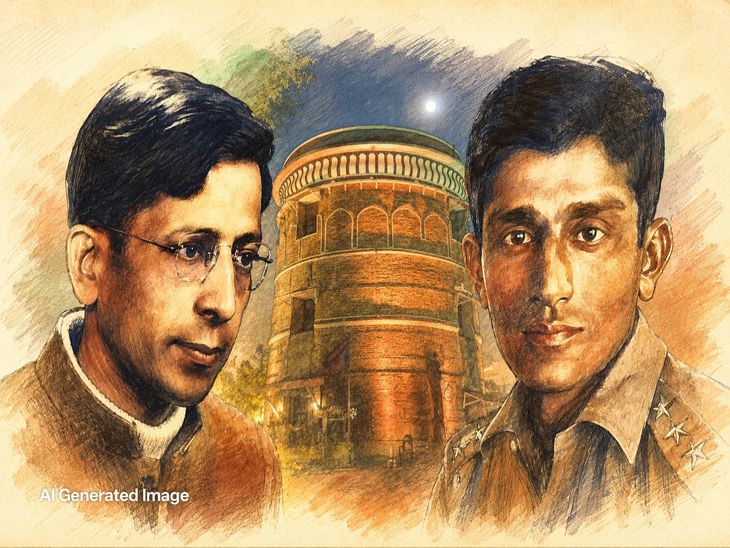
Ahmedabad, a city often characterized by rapid industrial growth, has a profound narrative of communal harmony anchored by the sacrifices of two friends, Vasantrao Hegishte and Rajab Ali Lakhani. Their act of bravery before India’s independence exemplifies a commitment to unity that remains crucial in the contemporary socio-political landscape.
A Tale of Sacrifice: Vasant and Rajab
The story of Vasant and Rajab unfolds in July 1946, during a time when Ahmedabad faced severe communal strife as the nation approached independence. Vasant, a 40-year-old Hindu, and Rajab, a 27-year-old Muslim, were dedicated Seva Dal volunteers deeply committed to promoting peace. Their friendship transcended religious divisions, a powerful testament to their belief in humanity over sectarianism.
During the Rathyatra processions, a violent mob threatened a Dalit family in Jamalpur’s Khand-ni-Sheri. Understanding the gravity of the situation, Vasant and Rajab ran towards the chaos. Choosing to act rather than retreat, they positioned themselves as shields, ultimately paying the ultimate price with their lives. Their sacrifice to protect innocents highlights an important message about inter-community solidarity and compassion.
The Legacy of the Vasant-Rajab Bandhutva Smarak
In commemoration of their sacrifice, the Vasant-Rajab Bandhutva Smarak was inaugurated on July 1, 2015, at Gaekwad Haveli in Ahmedabad. The memorial stands not only as a tribute to their bravery but also serves as a reminder of the communal harmony that is vital for the city’s fabric. Officials, including then Chief Minister Anandiben Patel, attended its opening, emphasizing its significance in contemporary socio-political discourse.
The memorial plays a crucial role in the context of the annual Jagannath Rathyatra, where the procession passes by neighborhoods that witnessed the tragic events associated with Vasant and Rajab. This serves both as a remembrance of their sacrifice and as an anchor for civil unity amid prevailing tensions. The memorial was orchestrated with collaboration between the Ahmedabad Crime Branch and Gujarat Police, reflecting a community effort to restore faith in solidarity.
Why It Matters
The legacy of Vasant and Rajab is emblematic of the broader challenges and opportunities facing communal relations in India today. In a rapidly changing socio-political environment, marked by the influence of organizations like the Rashtriya Swayamsevak Sangh (RSS) and the Bharatiya Janata Party (BJP), the remembrance of figures like Vasant and Rajab prompts critical discussions about identity, belonging, and social justice.
As communities grapple with discrimination, social exclusion, and economic boycotts, the need for interventions that encourage interfaith dialogue becomes increasingly relevant. Their story serves as a blueprint for promoting understanding and bridging divides, thereby hoping to inspire future generations to resist the temptation of communal discord.
Frequently Asked Questions
Who were Vasant and Rajab?
Vasant Hegishte was a Hindu and Rajab Ali Lakhani was a Muslim, both brave Seva Dal volunteers who sacrificed their lives during communal violence in Ahmedabad in July 1946, shielding a Dalit family from an attacking mob.
What is the Vasant-Rajab Bandhutva Smarak?
The Vasant-Rajab Bandhutva Smarak is a memorial established to honor the sacrifices of Vasant Hegishte and Rajab Lakhani, inaugurated on July 1, 2015, at Gaekwad Haveli in Ahmedabad to promote messages of communal harmony.
How does this story relate to contemporary issues in India?
The sacrifices of Vasant and Rajab serve as a powerful reminder of the need for unity and compassion in addressing communal tensions while highlighting the importance of interfaith solidarity in today’s socio-political climate.
What role does the memorial play during the Jagannath Rathyatra?
The memorial stands as a significant landmark during the annual Jagannath Rathyatra procession, which passes through neighborhoods associated with Vasant and Rajab, offering a poignant reminder of their sacrifice and the ideals of unity they represented.