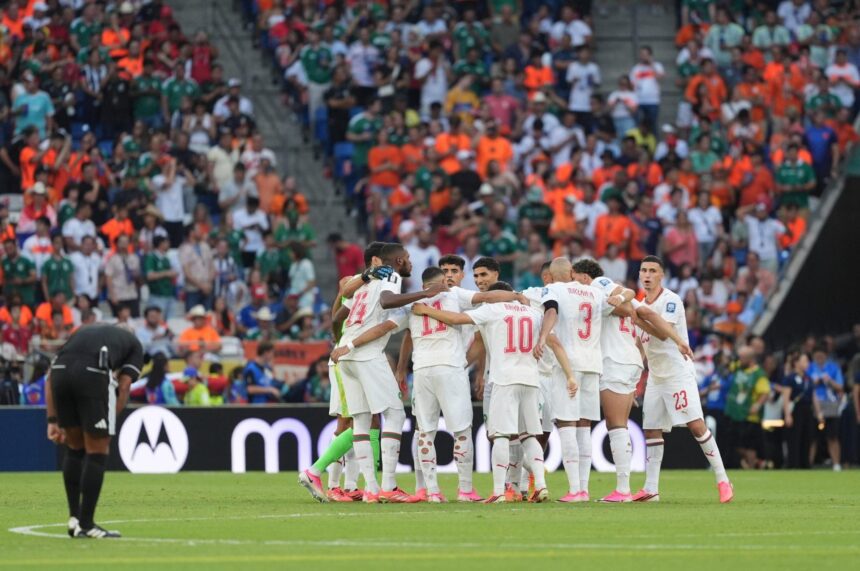

Morocco’s remarkable progress in the 2026 FIFA World Cup is a testament to their resilience and ambition as they overcame the Dutch team in a gripping encounter. The Atlas Lions, who have redefined football expectations on the African continent, remain a force to watch as they advance to the Round of 16, highlighting the ongoing struggle for recognition and success in international football.
Morocco’s Defying Odds
On a tense night at Estadio Monterrey, Morocco staged a stunning comeback to defeat the Netherlands. Cody Gakpo’s goal for the Dutch seemed to seal their fate, but deep into stoppage time, Issa Diop secured a precious equalizer for Morocco, showcasing their never-say-die spirit. The match culminated in a penalty shootout, where Morocco won 3-2, following a dramatic series of misses from both teams.
Celebrating Cultural Identity
The atmosphere surrounding Morocco’s victory extended beyond the field. After their win, the players performed the sajdat shukr, a gesture of gratitude, which resonated deeply with Muslim fans globally. This celebration of faith highlights the intersection of sports and identity, elevating the cultural significance of their footballing achievements.
A Stark Reality for the Netherlands
For the Netherlands, this defeat signifies a significant setback. It marked the first instance in which they failed to reach the Round of 16 at a World Cup they qualified for. This loss adds to their ongoing challenges in securing a World Cup title, emphasizing the competitive landscape of international football.
Why It Matters
The victory of Morocco not only embodies the aspirations of a nation but also represents a shift in the dynamics of global football. Their success is emblematic of broader issues regarding representation and acceptance within sports. Teams from traditionally marginalized backgrounds are increasingly challenging the status quo, which could contribute to changing perceptions and discussions about diversity in athletics.
Frequently Asked Questions
What does Morocco’s victory mean for African football?
Morocco’s success signifies a growing momentum in African football, showcasing that teams from the continent can compete at the highest levels. It serves as an affirmation of the talent present within African nations.
How does cultural identity play a role in football?
Cultural identity in football enhances the connection between players and their fans. Celebrations like sajdat shukr not only express gratitude but also foster a sense of pride and unity among supporters worldwide.
What does the Netherlands’ exit imply for their future?
The Netherlands’ defeat raises questions regarding their future in international tournaments. It suggests the need for reassessment and strategy adaptation to improve performance in upcoming competitions.
What can we expect from Morocco in the coming matches?
Morocco’s determination and skill suggest they will continue to be formidable opponents in the Round of 16 and beyond. With a strong track record, they are likely to make a significant impact in the tournament.