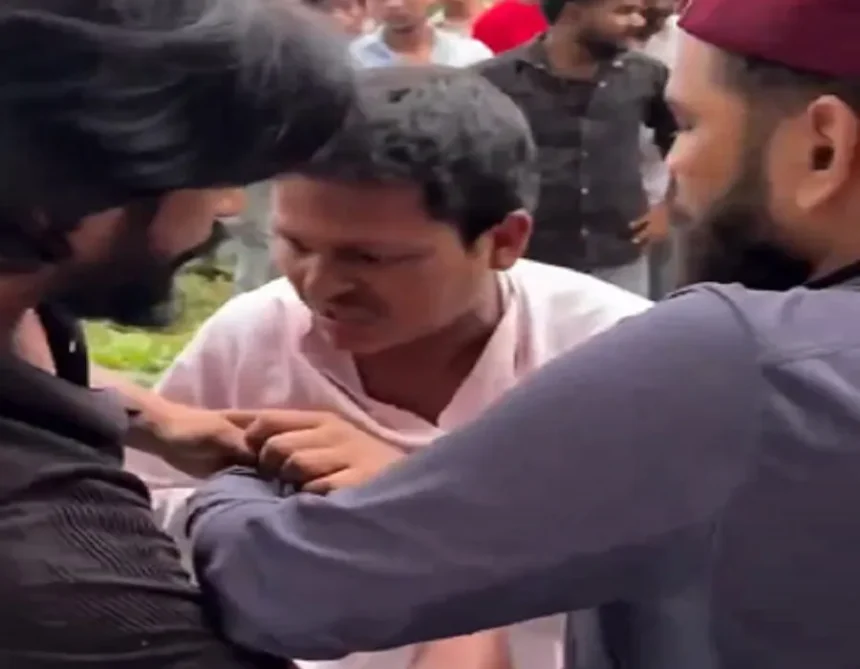

In a disturbing incident in Connaught Place, New Delhi, a Muslim youth named Imran was violently assaulted by a group of men who accused him of stalking a woman. Eyewitness accounts and social media videos suggest the attack was fueled not only by the accusations but potentially by the victim’s religious identity, raising concerns of mob vigilantism and discrimination against Muslims in India.
Details of the Incident
On June 29, 2026, at Rajiv Chowk, a public park frequented by both locals and tourists, Imran was attacked by a group of men who accused him of harassment. According to circulating videos, the assailants claimed he had been secretly filming and harassing a woman in the vicinity. Despite Imran’s repeated assertions of innocence and his pleas for mercy, he was subjected to physical violence including punches, kicks, and slaps.
Eyewitness testimonials and video evidence indicate that while the assault was ongoing, the woman involved consistently stated that no harassment had taken place, even pleading with the attackers to stop. A significant moment during the incident was captured when bystanders attempted to intervene, calling for the group to cease their actions, but their voices were largely drowned out by the aggressive actions of the mob.
Public Response and Social Media Outcry
The event sparked a significant uproar on social media platforms, inciting discussions concerning mob justice in India. Many users described the incident as a stark representation of mob vigilantism that targets individuals based on their religious identity. Prominent online personalities and organizations quickly condemned the assault, with one post emphasizing, “In India, is being Muslim enough to be targeted?” This has raised questions about the atmosphere of safety and tolerance in a country known for its cultural diversity.
Another tweet highlighted the violation of democratic norms that mob justice entails, stating, “Mob justice should not be allowed. It’s against democratic norms. India is the world’s largest democracy, not a banana republic.” Such responses reflect widespread concern regarding the implications of this incident for the security of minority groups in India, particularly Muslims.
Authorities and Accountability
As of now, Delhi Police have not publicly verified the details of the incident as depicted in the viral videos, nor have they announced any actions against the alleged assailants. This has left many observers skeptical about law enforcement’s commitment to holding individuals accountable for acts of mob violence. Critics argue that the hesitance of authorities to act decisively in incidents of mob vigilantism contributes to a culture of impunity and enables further discrimination against marginalized communities in India.
Furthermore, social media users have called for an investigation into both the assailants and the circumstances surrounding the incident. Many are demanding that officials ensure the safety of all individuals, regardless of their religious affiliation, and implement measures that would prevent similar occurrences in the future.
Why It Matters
The incident involving Imran serves as a crucial case study in the broader context of discrimination against minorities in India. As reports of mob violence and religiously motivated attacks become more frequent, they highlight the rising tensions within society and the ramifications this has for social cohesion. The implications extend beyond immediate personal safety; they encompass issues of civil rights, the rule of law, and the responsibilities of the state to protect all citizens equally. Such incidents create an environment of fear and hostility that undermines democratic values and could discourage economic and social engagement among affected communities.
Frequently Asked Questions
What happened to Imran after the assault?
According to reports, Imran was ultimately handed over to the police following the incident, though the actions taken against the assailants remain unclear.
Why are incidents like these rising in India?
The rise in mob vigilantism in India can be attributed to a combination of social tensions, religious polarization, and perceived failures in the law enforcement system to adequately protect minority communities.
What can individuals do to raise awareness of mob violence?
Individuals can raise awareness by sharing information on social media, participating in peaceful protests, supporting organizations working for minority rights, and advocating for policy changes that promote equality and justice.
Is mob violence legally punished in India?
While mob violence is illegal in India, enforcement of laws and accountability for perpetrators often varies, leading to a lack of confidence in legal outcomes for victims of such violence.