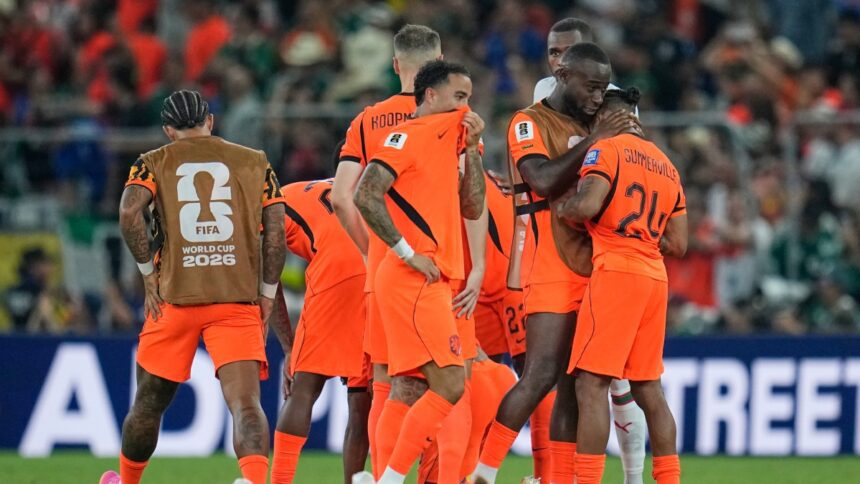

The Netherlands faced a harrowing exit from the FIFA World Cup, bowing out in the round of 32 after a nail-biting penalty shootout loss to Morocco. Despite leading at one point, the Dutch side couldn’t withstand a late equalizer and ultimately fell short, marking a significant moment in World Cup history for both the teams involved.
The Match Breakdown
The clash at Estadio Monterrey on June 30, 2026, was a thrilling encounter. The Dutch opened the scoring with a goal from Cody Gakpo in the 72nd minute, looking set to secure their place in the next round. However, the Moroccan team, known as the Atlas Lions, equalized in dramatic fashion just before full time. Issa Diop’s header found the net in the 91st minute, forcing the match into extra time.
Morocco had a golden opportunity to secure victory during the extra period, but Soufiane Rahimi squandered an easy chance that could have sealed the game. He broke through the Dutch defense but hit a weak shot straight at the goalkeeper, Bart Verbruggen, who made a crucial save with his knee, keeping the match alive for a penalty shootout.
Painful Penalty Shootout for the Dutch
The penalty shootout was a tense affair, highlighting the pressure on both teams. While Morocco managed to convert their penalties effectively, the Netherlands struggled. This defeat marks the fourth time the Dutch team has been eliminated from the World Cup on penalties, a record they now share with Spain. Their previous losses came against Brazil in the 1998 semifinals, Argentina in the 2014 semifinals, and again against Argentina in the 2022 quarterfinals.
Morocco, on the other hand, celebrated their second victory in a World Cup shootout, the first being against Spain in the 2022 World Cup. This victory not only boosts their confidence but also marks another milestone for African football on the global stage.
Historic Implications for Both Teams
For the Netherlands, this loss is significant as it reveals ongoing challenges for a historically strong team that has struggled in recent tournaments. The fact that they now share the record for most penalty shootout defeats in World Cup history is a stark reminder of their inability to clinch crucial moments in high-pressure situations.
On the flip side, Morocco’s success adds to their growing reputation in international football. The achievement of advancing to the round of 16 is emblematic of the strides African nations have made in the global football arena, indicating that they are capable of competing with traditional football powerhouses.
What This Means
For Indian fans, the match holds several lessons. It highlights the unpredictability of knockout football and the crucial role that mental strength plays in overcoming pressure. Indian football lovers can observe the growing capabilities of teams like Morocco, which showcases the evolving landscape of international football, where the traditional giants can be challenged by teams from emerging nations.
Furthermore, as India aspires to emerge as a competitive football nation, watching how teams manage pressure in pivotal moments can provide valuable insights. Building strong mental resilience will be key for India as they work towards achieving greater success on the international stage.
Frequently Asked Questions
Why did the Netherlands lose to Morocco?
The Netherlands lost to Morocco primarily due to a late equalizer that forced the match into penalties, where they faltered under pressure, failing to convert crucial penalty kicks.
What is the penalty shootout record of Netherlands at the World Cup?
The Netherlands has lost four penalty shootouts in World Cup history, which ties them with Spain for the most shootout defeats in the tournament’s history.
How did Morocco reach the round of 16?
Morocco reached the round of 16 by defeating the Netherlands in a penalty shootout after a 1-1 draw, showcasing their resilience and ability to perform under pressure.
What does this mean for African football?
This victory reaffirms the growth and competitiveness of African teams in world football, encouraging a larger recognition of their capabilities on the global stage.