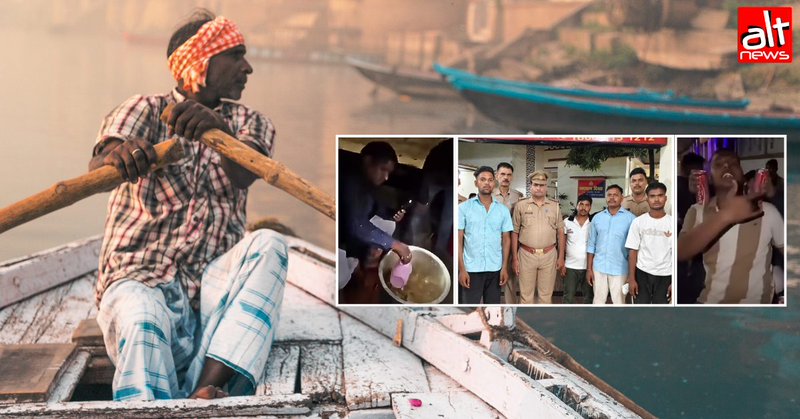

Recent incidents in Varanasi reveal a troubling disparity in legal outcomes for similar actions based on the religious identities of the accused. While five men cooking chicken and drinking beer on the Ganges received same-day bail, 14 Muslim men faced over two months in jail for consuming non-vegetarian food on a boat just months earlier. This stark contrast raises questions about bias within the legal system.
Context of the Incidents
On June 23, 2023, five men were arrested after the Dashashwamedh police initiated action based on a video where the men were seen engaging in activities considered unacceptable by local moral standards—cooking chicken and drinking alcohol on a boat on the Ganges. The incident sparked public outcry, leading to their prompt arrest. However, significant attention has emerged regarding their swift release on bail the same day, a sharp contrast to a previous case involving 14 Muslim individuals.
The Previous Case
In March, 14 Muslim men were arrested for allegedly consuming non-vegetarian food on a boat in Varanasi. Unlike the recent case, these men were detained for over two months before being granted bail. Their prolonged imprisonment, in stark contrast to the swift legal relief offered to the five men in June, highlights a troubling trend regarding how legal institutions handle cases differently based on the religious affiliations of those involved. The variation in treatment has provoked debates over potential biases inherent in the judicial and law enforcement systems.
Public Reactions and Implications
The differences in how these two cases were handled have led to widespread discussions on social media and in public forums, where many are questioning whether religious identity played a role in determining bail eligibility. Critics argue that the judicial system should be impartial and that it ought to adapt a consistent approach regardless of the religious identity of the accused. While the five men were quickly bailed out, the experience of the 14 Muslim men indicates a potential systemic issue within law enforcement and the legal system in India, where biases could exist against specific communities.
Why This Matters
The political ramifications of these incidents are significant for Indian society, particularly in the context of communal relations. The inconsistency in the legal processes may further exacerbate religious tensions in a country that has seen increasing polarization. Varanasi, known for its religious significance and cultural diversity, serves as a microcosm of broader issues affecting the nation. The differential treatment in similar cases can lead to alienation of minority communities and erosion of trust in the legal system. Such events highlight the necessity for major institutional reforms to ensure justice is not only served but is seen to be served equitably through all levels of society.
Frequently Asked Questions
What triggered the arrest of the five men in June 2023?
The arrest was prompted after police took suo motu cognizance of a video displaying them cooking chicken and drinking beer on the Ganges, which is viewed unfavorably in the local cultural context.
How did the earlier case involving 14 Muslim men unfold?
The 14 men were arrested in March 2023 for consuming non-vegetarian food on a boat, and they spent over two months in jail before being granted bail. Their prolonged detention compared to the recent case has raised questions about judicial bias.
What implications do these cases have for religious communities in India?
The differing outcomes in these cases can lead to increased tensions between religious communities, particularly if perceived as evidence of systemic bias in the legal system. This could further complicate communal relations in an already polarized environment.
Why is the comparison between these two cases significant?
The comparison highlights potential disparities in how justice is administered based on the accused’s religious affiliations, spotlighting the need for reforms to ensure fairness and equality under the law in India.