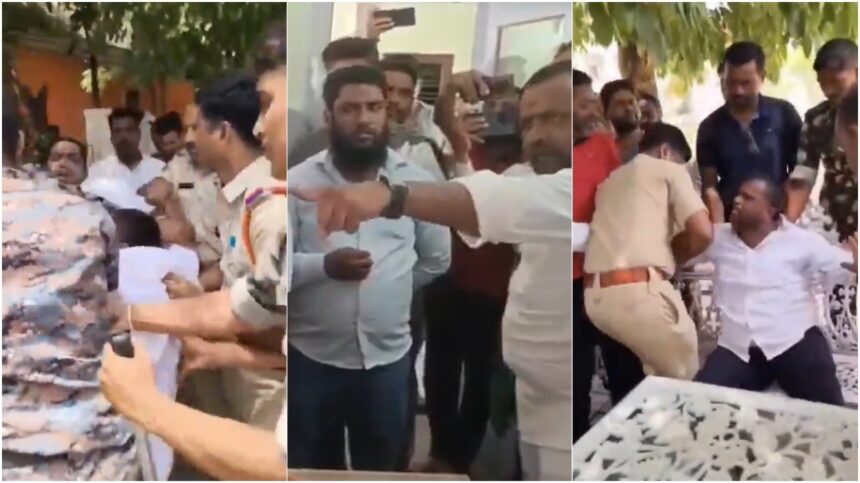

In a significant incident reflecting the turbulent socio-political climate in India, Mandula Balu, the Bharatiya Janata Party (BJP) town president of Armoor, was arrested on June 29 amid accusations of assaulting a school principal during a dispute over educational content. The altercation has escalated tensions surrounding the teaching of Urdu and Namaz to Hindu students, shedding light on larger questions of religious inclusion and discrimination within the educational framework.
Context of the Dispute
The altercation occurred at Bharat Chandra High School in Armoor, a private institution where the teaching of Urdu and Namaz to Hindu students ignited protests from parents affiliated with Hindu organizations. These protests claimed that such teachings were inappropriate and against their beliefs. In response to these allegations, Balu reportedly confronted principal Amer Khan, leading to a violent exchange.
Balu was later apprehended by the Nizamabad Police at a guest house connected to local MLA Paidi Rakesh Reddy. This suggests a network of political influence entwined with the conflict, raising further questions about the motivations behind the protests and the statements made by local BJP leaders.
Legal Implications and Political Fallout
The police lodged a case against Balu under several sections of the Bharatiya Nyaya Sanhita (BNS), reflecting the seriousness of the allegations. The charges include provisions related to assault and inciting violence. Given the involvement of a local political figure and the nature of the allegations, the case poses challenges not just for Balu, but for the political stability of the region.
Parallel to this incident, MLA Paidi Rakesh Reddy was detained while traveling to a planned protest against the school’s teaching practices. Reddy’s involvement underscores the intersection of educational policies and political agendas, portraying a climate where educational institutions can become battlegrounds for broader ideological conflicts.
Broader Social Implications
This incident does not exist in a vacuum but rather as part of a larger narrative concerning the status of religious minorities in India, particularly Muslims. The tensions surrounding educational practices can lead to further marginalization of minority communities, as the portrayal of Urdu and Namaz in a hostile light contributes to social division. The episode serves as a stark reminder of the ongoing challenges facing the secular fabric of Indian society.
Moreover, the protest actions and political endorsements by local BJP figures highlight a strategy where educational institutions are not simply places of learning but rather arenas where cultural and religious identities are contested. The ramifications for students—particularly those from diverse religious backgrounds—may include decreased enrollment in institutions that offer inclusive curricula, further isolating already vulnerable communities.
Why It Matters
This incident is emblematic of a larger trend where educational content is increasingly scrutinized through a political lens, often to the detriment of a multicultural approach to education. The potential for violence, legal repercussions, and social unrest surrounding educational practices raises critical questions regarding freedom of expression and the rights of minority communities. It is crucial for policymakers, educators, and community leaders to navigate these tensions thoughtfully to foster an environment that supports inclusivity instead of division.
Frequently Asked Questions
What were the main accusations against Mandula Balu?
Mandula Balu was accused of assaulting the principal of Bharat Chandra High School during a dispute over the teaching of Urdu and Namaz to Hindu students, leading to his arrest by the Nizamabad Police.
What charges have been brought against Balu?
Balu faces charges under Sections 329(4), 115(2), 118(1), and 324(4) read alongside Section 315 of the Bharatiya Nyaya Sanhita (BNS).
How has the BJP responded to the situation?
The BJP has been actively involved in the protests against the school’s teaching practices, with local leaders demanding an inquiry into the management of the school.
What are the implications of this incident for social harmony in India?
This incident highlights ongoing tensions concerning religious education and the potential for such conflicts to exacerbate social divisions within Indian society, particularly affecting minority communities.