
Summary of Recent Events at Ambubachi Mela
During the ongoing Ambubachi Mela at Kamakhya Temple in Guwahati, Assam, Muslim vendors faced harassment and verbal abuse from a group of Hindu activists. Reports indicate that they were pressured to shut down their stalls, highlighting ongoing patterns of discrimination against Muslim traders at significant Hindu religious functions.
Disturbing Incidents of Discrimination
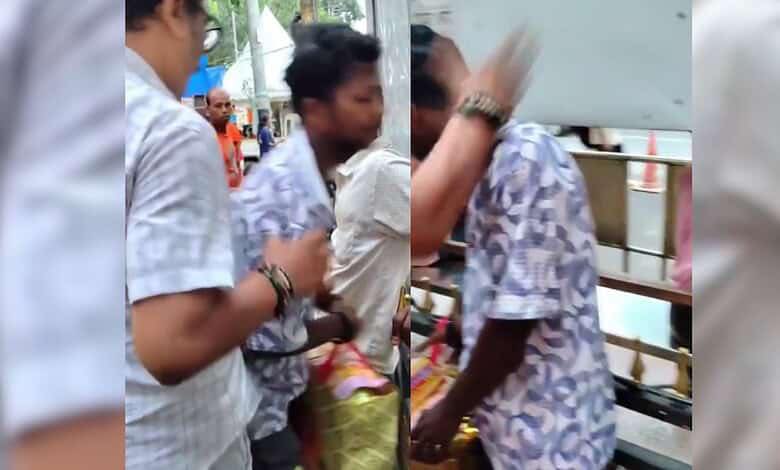
As the Ambubachi Mela unfolded from June 22 to 26, 2023, a series of confrontations emerged between Hindu activists and Muslim vendors. Videos shared on social media depict confrontations where vendors were questioned about their religious identity while selling items linked to Hindu rituals. The confrontational atmosphere escalated to the point where a vendor reportedly suffered physical assault, as he was requested to show identification, such as his Aadhaar card.
This troubling trend is not isolated to this year’s Mela. Similar incidents have been reported at various Hindu religious gatherings across India, including the Maha Kumbh Mela in Prayagraj earlier in January 2025 and at temple fairs in Karnataka since 2022. These recurrent episodes point to a disturbing wave of social exclusion and economic boycott directed towards Muslim traders during major Hindu events.
The Significance of the Ambubachi Mela
The Ambubachi Mela is among the largest religious congregations in Northeast India, drawing approximately eight lakh pilgrims annually to the Kamakhya Temple on Nilachal Hills. This event symbolizes not just religious devotion but also economic opportunities for vendors selling religious paraphernalia and food items. By coercing Muslim traders to vacate their stalls, activists are not only undermining their right to earn a livelihood but also contributing to a climate of exclusion and division within Indian society.
The lack of immediate response from authorities, including Assam Police or the Kamrup Metro district administration, raises questions about institutional complicity or negligence in addressing these issues. The absence of protective measures for minority communities during such high-profile events reflects deeper systemic biases against Muslims in India.
Why It Matters
The incidents during the Ambubachi Mela underscore significant socio-political tensions in India, particularly regarding the treatment of minority communities. For developers and stakeholders in the AI industry, these events highlight the importance of understanding the socio-political landscape when developing tools for engagement or monitoring online platforms. As AI increasingly plays a role in content moderation and community guidelines, developers must consider the implications of societal dynamics, biases, and the significance of preserving inclusivity in digital spaces.
Frequently Asked Questions
What occurred during the Ambubachi Mela in Guwahati?
Muslim vendors were verbally abused, harassed, and forced to shut down their businesses by a group of Hindu activists during the Ambubachi Mela from June 22 to 26, 2023.
What were the reactions or responses from officials regarding the harassment incidents?
No immediate response has been issued by Assam Police or the Kamrup Metro district administration concerning the complaints linked to the harassment of Muslim vendors.
Have similar incidents happened at other religious events in India?
Yes, comparable incidents targeting Muslim traders have been reported at the Maha Kumbh Mela in Prayagraj in January 2025 and at temple fairs in Karnataka since 2022.
What is the significance of the Ambubachi Mela in Indian culture?
The Ambubachi Mela is one of the largest religious gatherings in Northeast India, attracting around eight lakh pilgrims, making it a significant event both for religious devotion and economic opportunities for local vendors.