
Summary
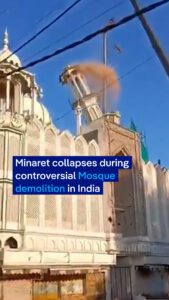
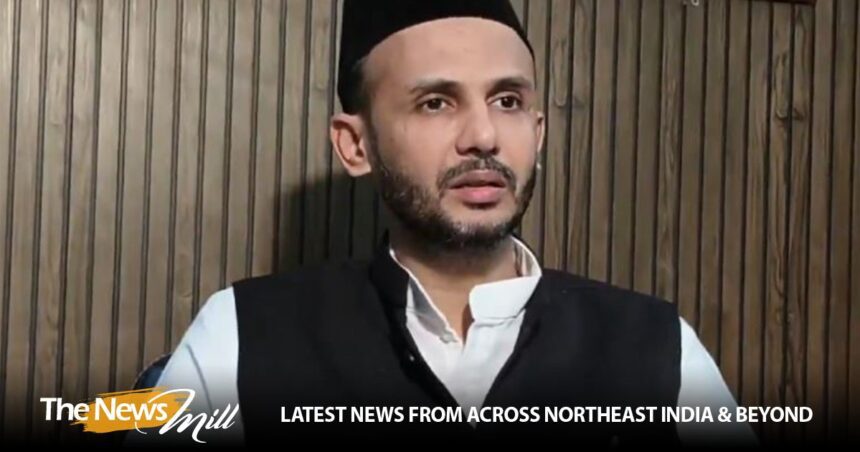
The demolition of a nearly 150-year-old mosque in Kaserua village, Sambhal district, Uttar Pradesh, has drawn sharp criticism from Samajwadi Party MP Zia Ur Rehman Barq, who argues that it represents a troubling pattern of targeting religious sites in India. This incident is seen as part of a broader agenda attributed to the ruling Bharatiya Janata Party (BJP) to exacerbate communal divisions for political advantage.
Demolition and Its Implications
On June 7, the local administration carried out the demolition of the mosque, stating that it was built illegally on government cemetery land. Barq vehemently opposed this claim, arguing that the mosque is a registered Waqf property, which he asserts protects it under the law. Citing the Places of Worship Act and Article 25 of the Constitution, he emphasized that the hasty destruction undermines constitutional rights.
Barq criticized what he describes as a “disturbing trend” in which religious sites, especially those belonging to the Muslim community, are systematically being targeted. He claimed that this trend serves the political interests of the BJP, suggesting that such measures are designed to foster divisions between Hindus and Muslims in a bid to consolidate electoral gains.
Police Actions and Community Response
During the demolition operation, police discovered items such as posters inscribed with “I Love Muhammad” and a flag that resembled Pakistan’s national emblem inside the mosque. The police contended that the presence of these items was provocative and incited hostility among the local Hindu community. Following this, a First Information Report (FIR) was filed against eight local committee members, including allegations of promoting enmity between religious groups.
Barq criticized the police action, arguing that the individuals involved were merely exercising their rights to expression, which is constitutionally protected. He announced plans to file contempt proceedings against officials for overstepping their jurisdictions, arguing that only the Waqf Tribunal has the authority in such matters.
Historical Context of Religious Tensions
This incident is not an isolated occurrence but rather part of a history of escalating tensions involving communal sentiments in India. The “I Love Muhammad” campaign has previously sparked violence, highlighted by incidents in Bareilly in 2025, where protests turned violent after police clashed with demonstrators holding placards. This again underscores the sensitive nature of religious identities in India and how they can be manipulated for political purposes.
The recent unrest led to a clampdown on communication services in Bareilly, illustrating the government’s preemptive measures to stifle dissent and manage communal tensions. Such actions raise concerns about freedom of expression and the government’s approach to handling religious disputes, which often exacerbates communal divides rather than fostering dialogue and understanding.
Why It Matters
The demolition of the Kaserua mosque and the ensuing police actions expose deeper issues within Indian society concerning religious freedom and minority rights. The targeting of religious sites suggests a pattern that can have grave implications for communal harmony, especially in a nation as diverse as India. It brings to light questions surrounding the enforcement of laws such as the Places of Worship Act, indicating potential gaps in protection for minority communities.
This situation also reflects on governance and the role of political parties in shaping societal narratives. As communal strife becomes increasingly politicized, it affects how different groups perceive their place within Indian society, potentially leading to greater social exclusion and marginalization of minorities.
Frequently Asked Questions
What is the Places of Worship Act?
The Places of Worship Act was enacted in 1991 to maintain the religious status of places of worship as it existed on August 15, 1947, prohibiting changes to the status quo of such sites.
What are Waqf properties?
Waqf properties are real estate assets that are dedicated for religious or charitable purposes under Islamic law. These properties are typically managed by a Waqf board.
What actions have been taken against the mosque’s committee members?
Eight local committee members were charged with inciting enmity and social disharmony after police found items deemed provocative during the demolition of the mosque.
How did the government respond to the unrest from the “I Love Muhammad” campaign?
Following violent protests in Bareilly linked to the campaign, the local administration suspended mobile internet and broadband services for two days to prevent the escalation of unrest.