
Summary
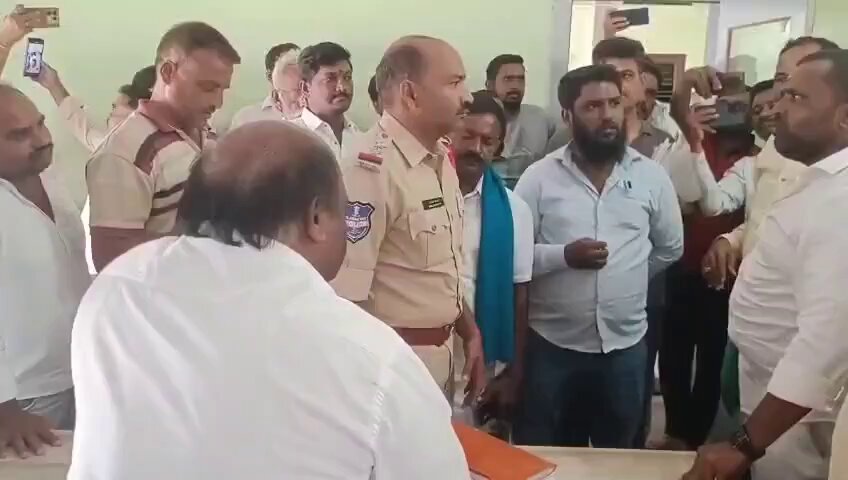
A BJP leader recently slapped a Muslim Urdu teacher in Telangana for teaching Urdu, despite the language being recognized as the officially designated second language in the state. The incident occurred in front of Telangana Police, who later detained the teacher instead of responding to the aggression against him.
Context of the Incident
The conflict surrounding the teaching of Urdu in Telangana reveals ongoing tensions relating to language and identity in Indian politics. Urdu holds significant cultural and historical relevance among the Muslim population and is commonly spoken in various parts of the country. Despite its official status in Telangana, the BJP’s actions reflect a broader narrative of promoting Hindi and other languages, potentially sidelining Urdu and its speakers.
The altercation, which took place in an educational setting, raises serious concerns about the treatment of educators and the implications of political interference in academic disciplines. The presence of police during the incident and their decision to detain the teacher rather than the aggressor sparks a discussion on law enforcement’s role and bias in handling such situations.
Background on Language Politics in India
Language politics in India is intricate and varies across states. In Telangana, Urdu is deeply intertwined with the region’s history and demographics. Following the bifurcation of Andhra Pradesh and Telangana in 2014, there has been an increasing emphasis on regional languages and cultures. However, in recent years, there have been allegations of cultural dominance by the BJP, which has been accused of promoting a singular narrative that undermines the pluralistic fabric of Indian society.
To better understand this incident, it’s crucial to consider the broader socio-political landscape. The BJP’s efforts to consolidate power often intersect with issues of linguistic identity, which some critical observers argue can lead to marginalization of minority communities. The choice to target a teacher for imparting knowledge in a minority language encapsulates this trend.
Analysis of Police Response
The response of local police in this incident raises questions about their allegiance and the effectiveness of law enforcement in such fraught circumstances. Eyewitness accounts highlight that rather than detaining the assailant, the police opted to take action against the teacher, which could imply a troubling predisposition towards the political figures involved.
This choice may be a reflection of broader systemic issues within law enforcement in India, often caught between political pressures and their duty to uphold justice. It is viewed by many as an indictment of the police’s commitment to protecting citizens, particularly those belonging to minority communities who may already feel vulnerable in such politically charged atmospheres.
Why This Matters
This incident is emblematic of the challenges minority communities face in India, especially regarding cultural and linguistic rights. The attack on the Urdu teacher sends a chilling message about the safety of educators and the freedoms of expression and instruction in the country. Moreover, it underscores a growing fear among educators in minority spaces, who may now be apprehensive about teaching subjects that are tied to their cultural heritage.
Such occurrences are critical in shaping public discourse around religious and linguistic freedoms in India and provoke urgent discussions on the implications for democracy and civil rights in a country that prides itself on its plurality.
Frequently Asked Questions
What happened in the incident involving the Urdu teacher?
A BJP leader slapped a Muslim Urdu teacher for teaching the language in Telangana, leading to police detaining the teacher instead of taking action against the aggressor.
What is the significance of Urdu in Telangana?
Urdu is recognized as the second official language in Telangana and has a rich cultural and historical significance, particularly among the state’s Muslim population.
How did the police respond to the incident?
Instead of detaining the BJP leader, the police chose to detain the Urdu teacher, raising concerns about bias and the accountability of law enforcement in politically charged situations.
Why is this incident important for Indian society?
This incident underscores ongoing tensions regarding linguistic and cultural identity in India and highlights the challenges faced by minority communities in conveying and preserving their heritage amid rising political pressures.