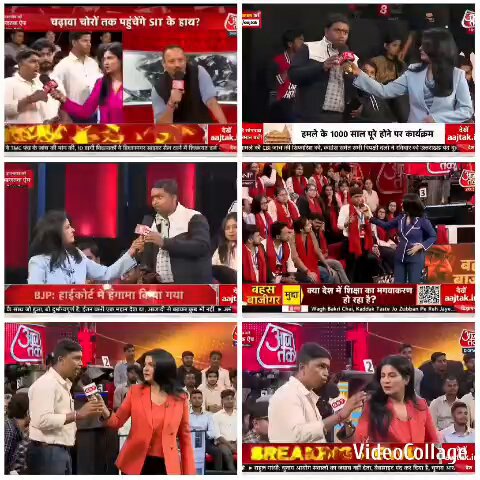

A recent observation by political commentator Mohammed Zubair (@zoo_bear) highlights potential biases in media debates regarding India’s Ram Mandir donation controversy. Zubair argues that audience participation in these debates is heavily influenced by pro-government individuals, particularly members linked to the ABVP (Akhil Bharatiya Vidyarthi Parishad), raising questions about the neutrality and integrity of such discussions.
Audience Manipulation in Media Debates
In a debate organized by Aaj Tak, which featured the Ram Mandir donation issue, Zubair points out that the supposed “Gen Z” audience is far from impartial. He notes that a recurring participant, Deepak Kashyap Mishra, frequently confronts opposition leaders, having appeared in similar formats before. Another attendee, Shreyansh, is explicitly associated with the ABVP. This observation raises concerns about genuine audience participation and whether it serves the interests of a broader public discourse or just promotes a specific political agenda.
The Role of Anchors and Media Channels
According to Zubair, news anchors like Anjana Om Kashyap actively facilitate these biased discussions. He states that the anchors often direct questions to individuals known for challenging opposition figures while defending the ruling BJP government. This editorial choice by media outlets can sway public perception, offering a distorted view of political debates. Zubair claims that the media ecosystem operates on three distinct levels: selection of topics to target opposition, aggressive questioning of opposition figures, and inviting a pre-selected audience that often leans toward the ruling party.
The Implications of Controlled Debates
The manipulation of media narratives through curated audiences not only questions journalistic integrity but also impacts public opinion. By creating an environment where dissenting voices are minimized, these debates risk perpetuating a singular narrative. The unchecked defense of government policies and the stifling of opposition critique can lead to an uninformed public, undermining the democratic principles that are essential for a vibrant political discourse.
Why This Matters
The significance of Zubair’s observations extends beyond just media criticism; it touches the core of democratic practices in India. As the country approaches elections and other vital political milestones, the potential for manipulated narratives to influence voter sentiment grows. If media platforms favor specific voices while silencing others, it risks undermining the electoral process itself, which thrives on informed choices and diverse perspectives. Understanding these dynamics is crucial for Indian citizens, as they navigate the tumultuous waters of political news and opinion.
Frequently Asked Questions
What is the main issue highlighted by Mohammed Zubair?
Zubair claims that Aaj Tak and other media channels manipulate audience participation in debates, featuring pro-government individuals while sidelining opposition voices.
Who are the mentioned participants in the debates?
Deepak Kashyap Mishra, frequently seen confronting opposition leaders, and Shreyansh, associated with the ABVP, are identified as consistent participants in these discussions.
What role do anchors play in these debates?
Anchors like Anjana Om Kashyap direct discussions towards pro-government individuals, thereby shaping the nature of debate and limiting critical discourse regarding government actions.
Why is the neutrality of media debates important?
Neutrality in media is crucial to ensure that all political perspectives are represented fairly. This fosters informed decision-making among the public, which is essential for the functioning of a healthy democracy.