
Summary: The BJP has refuted claims made by the All India Muslim Personal Law Board regarding increased discrimination and atrocities against Muslims in India, framing these remarks as politically motivated. Despite these allegations, BJP leaders maintain that Muslim communities are benefitting from significant government schemes under the leadership of Prime Minister Narendra Modi.
Rejection of Allegations by BJP Leaders
The Bharatiya Janata Party (BJP) has strongly rebuffed the All India Muslim Personal Law Board’s assertion that discrimination against Muslims has escalated over the past decade. The board’s allegations included the illegal demolition of mosques and madrasas and claims that Muslims have become mere vote banks. BJP spokespersons emphasized that these statements are an extension of the Congress party’s agenda, asserting that, under Narendra Modi’s leadership, India stands as the most supportive country for Muslims.
BJP MP Praveen Khandelwal labeled the board’s claims as completely false, insisting that the nation has advanced significantly in recent years, and that no evidence substantiates accusations of increased atrocities against Muslims. Highlighting the historic significance of “Vande Mataram” in India’s freedom struggle, he called for unity and dismissed the board’s stance as baseless.
Statistical Evidence of Government Support
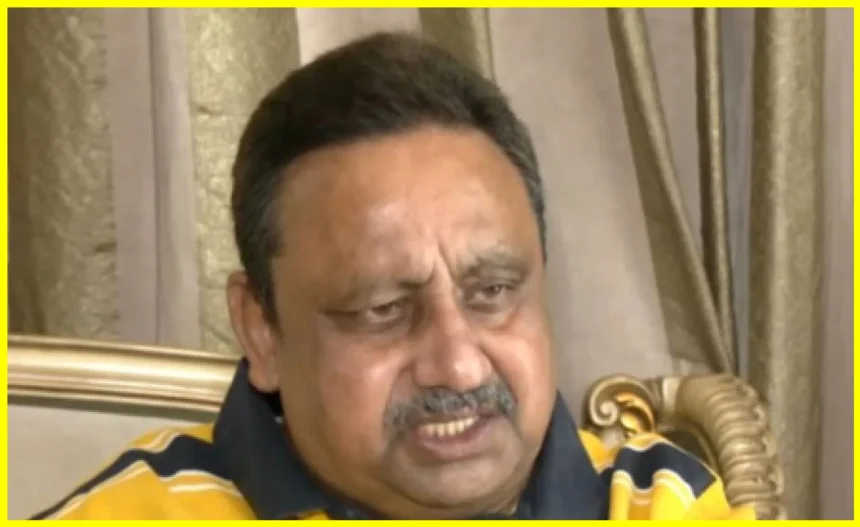
BJP leader T.R. Srinivasan voiced surprise at the board’s claims coming from an educated figure like S.Q.R. Ilyas, noting the board’s establishment in 1973 with Congress support. Srinivasan cited governmental statistics that illustrate a notable advantage for the Muslim community in India, with 77.82% of Muslims receiving scholarships and 71.50% accessing fellowships. He questioned how such figures could exist in a discriminatory system and urged the board to provide logical arguments rather than adopting a victim mentality.
Srinivasan highlighted the legality of mosque and shrine constructions, emphasizing that any such activity on government land requires approval. The BJP’s argument rests on the idea that the government is committed to ensuring equal rights and opportunities for every citizen, including Muslims.
Political Dynamics: BJP and Congress
The BJP’s rejection of the Muslim Personal Law Board’s claims also underlines ongoing political tensions in India. Shahzad Poonawala, another BJP spokesperson, suggested that the board’s narrative aligns with statements made by senior Congress leaders Rahul Gandhi and Sonia Gandhi regarding hardships faced by Muslim communities. He accused the board of prioritizing political gain over genuine issues, thereby diverging from addressing the real concerns of the Muslim populace.
Furthermore, Shah Nawaz Hussain, another BJP member, insisted that if Muslims are experiencing prosperity anywhere in the world, it is in India. He reiterated the BJP’s stance that both the country and the current government offer unparalleled opportunities and protections for the Muslim community. This emphasizes the BJP’s narrative that opposes the portrayal of Muslims as victims in a supposed hostile environment.
Why It Matters
The ongoing discourse surrounding the treatment of Muslims in India, especially in the context of political narratives, significantly impacts societal cohesion and communal harmony. Understanding these dynamics is crucial for assessing the broader implications of governance and policies that affect the rights of minority communities. The strong political stances from the BJP reflect broader strategies to reinforce their voter base while addressing or dismissing concerns raised by minority groups. This situation holds importance not only for Indian society but also for international observers interested in democratic processes and human rights in India.
Frequently Asked Questions
What are the main concerns of the All India Muslim Personal Law Board?
The board’s primary concerns include allegations of increased discrimination, illegal demolitions of mosques and madrasas, and the perception that Muslims are treated as political vote banks.
How has the BJP responded to these allegations?
The BJP has rejected the board’s claims as politically motivated and asserted that Muslims are beneficiaries of various government schemes that demonstrate support for their community.
What statistics have been cited by BJP leaders regarding support for Muslims?
BJP leaders highlighted that 77.82% of Muslims receive scholarships and 71.50% access fellowships, arguing that these figures debunk claims of systemic discrimination.
How does this situation reflect broader political dynamics in India?
The situation illustrates ongoing tensions between the BJP and Congress, with both sides utilizing the discourse surrounding Muslims for political leverage, impacting societal perceptions and communal relationships.