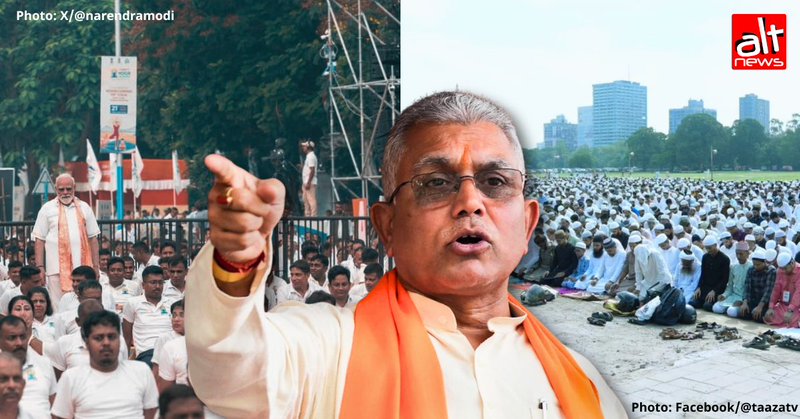

A recent statement by Bengal minister Dilip Ghosh has stirred controversy as he defended the week-long closure of the Red Road for the upcoming Yoga Day event led by Prime Minister Narendra Modi, while banning Eid prayers at the same venue. Ghosh controversially suggested that those wishing to offer namaz should go to Bangladesh or Pakistan, raising considerable backlash over perceived religious bias.
Context of the Red Road Closure
The Red Road is a significant location in Kolkata, often used for large public events. This closure for seven days is organized to facilitate International Yoga Day activities scheduled for June 21, which aims to promote the practice of yoga globally. The government’s decision has drawn criticism, particularly as it overlaps with Eid celebrations, a significant holiday for the Muslim community. The state government justified the closure based on public inconvenience; however, the decision to disallow Eid prayers at the same venue has been labelled discriminatory.
Dilip Ghosh’s Controversial Remarks
Minister Dilip Ghosh’s comments, suggesting that those who wish to pray should go to Bangladesh or Pakistan, have been met with outrage. His remarks amplify existing tensions in a diverse society where religion plays a vital role in political discourse. Critics argue that statements like Ghosh’s provide a platform for communal division, straining Hindu-Muslim relations further. Ghosh’s comments not only dismiss the sentiments of the Muslim community but also raise questions about the government’s commitment to secularism.
Reactions from the Community and Opposition
The backlash from various community leaders, activists, and political opponents has been swift. Many have condemned Ghosh’s statements as inflammatory and not reflective of India’s secular framework. Organizations representing the Muslim community have called for a reconsideration of the decision, emphasizing that the essence of India lies in its unity in diversity. The opposition parties have seized this opportunity to criticize the ruling government, alleging that it prioritizes certain religious sentiments over the rights of minorities.
Why This Matters
This incident highlights the ongoing challenges that arise from the intersection of politics and religion in India, particularly in states with a significant historical backdrop of communal tensions. The implications of Ghosh’s remarks and the government’s decision to close Red Road extend beyond the immediate controversy, affecting how citizens view the state’s approach to religious tolerance and secularism. As India navigates its identity in a multi-religious landscape, the dynamics presented by such events will shape public discourse and voter sentiment leading up to future elections.
Frequently Asked Questions
What is the International Yoga Day event?
International Yoga Day is celebrated on June 21 each year after being recognized by the United Nations. It aims to raise awareness about the benefits of yoga, and events are typically organized worldwide, including in India.
Why has the Red Road been closed for a week?
The Red Road is being closed for a week to prepare and host the International Yoga Day event, which is led by Prime Minister Modi, encompassing various yoga demonstrations and cultural festivities.
What were the specific controversies around Eid prayers?
The controversy centers on the government’s decision to prohibit Eid prayers at Red Road during its week-long closure. Minister Dilip Ghosh’s comments regarding where to offer namaz have been perceived as inflammatory and discriminatory.
How have various political factions responded to this decision?
The opposition parties and community leaders have condemned the decision and Ghosh’s remarks, citing them as examples of religious bias that could deepen communal divisions in a diverse nation like India.