
Controversial Renaming Announcement
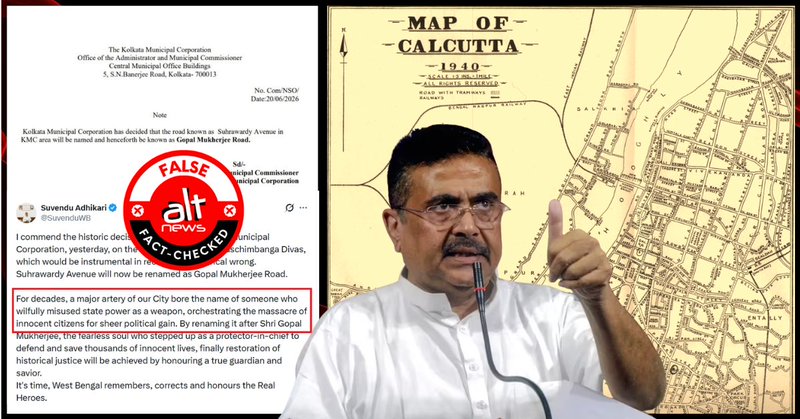
West Bengal Chief Minister Suvendu Adhikari has sparked controversy after claiming that the road known as Suhrawardy Avenue in Kolkata was named after Huseyn Shaheed Suhrawardy, a figure linked to the Great Calcutta Killings. This statement has been labeled as misleading, as the avenue is more widely recognized for historical associations unrelated to the violence.
Background on Suhrawardy Avenue
Suhrawardy Avenue is located in Kolkata, a city known for its rich historical and cultural backdrop. The road was originally named after Khwaja Nazimuddin, an important political figure who served as the last Lieutenant Governor of Bengal before the independence of India. The avenue has since become a significant location in the Park Circus area, serving as a connection to various important districts. Misconceptions about its naming often arise, particularly when linked to Huseyn Shaheed Suhrawardy, who was indeed a prominent figure but primarily for his political role during partition.
The Claims of Chief Minister Adhikari
During an announcement on June 21, Chief Minister Suvendu Adhikari asserted that the renaming of Suhrawardy Avenue to Gopal Mukherjee Road was necessary as it honored someone responsible for the infamous riots. However, this assertion ignores the historical context behind the name. Critics argue that such claims are politically motivated and aimed at garnering support by inciting communal sentiments. The misleading information can distort public memory and understanding of historical events, further complicating already sensitive religious and communal relations in India.
Historicity and Contextual Misunderstanding
The Great Calcutta Killings of 1946 were a series of communal riots ignited by the partition-related tensions. Huseyn Shaheed Suhrawardy’s involvement in these events reflects the complexities of political affiliations and rivalries rather than a singular narrative tied to one street. Mischaracterizations can lead to a simplistic interpretation of historical events, which serve only to polarize society further. This narrative shift by political leaders might displace collective memory and responsibility surrounding communal issues, raising concerns about historical accuracy being sacrificed for political narratives.
Why This Matters
Understanding the renaming of public spaces like roads is crucial in the socio-political landscape of India. Such actions are not merely naming accolades; they reflect cultural memory, historical understanding, and political ideologies. In a diverse and populous nation like India, where communal tensions can resurface at any moment, these discussions hold significant ramifications for social harmony. Misleading claims about historical figures can influence public sentiment and potentially incite unrest. Therefore, clarity and historical accuracy are essential for fostering responsible discourse in society.
Frequently Asked Questions
What was the original name of Suhrawardy Avenue?
The avenue was originally named after Khwaja Nazimuddin, a former Lieutenant Governor of Bengal.
Who was Huseyn Shaheed Suhrawardy?
Huseyn Shaheed Suhrawardy was a prominent political figure during the partition of India and served as the Chief Minister of Bengal during a tumultuous period in the country’s history.
Why was the road renamed to Gopal Mukherjee Road?
The renaming is part of an initiative by Chief Minister Suvendu Adhikari’s government to honor local historical figures and possibly reshape the political narrative surrounding the area.
What significance does this claim have for West Bengal?
The claim and subsequent renaming signify ongoing political contests over historical memory, potentially impacting social cohesion and community relations in West Bengal.