
Claim of Misattribution in Road Renaming
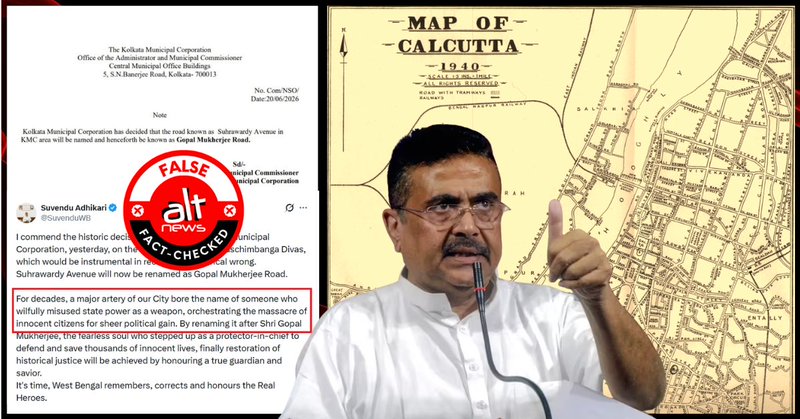
West Bengal Chief Minister Suvendu Adhikari recently claimed that Suhrawardy Avenue in Kolkata was named after Huseyn Shaheed Suhrawardy, a figure he associates with the Great Calcutta Killings. This allegation was made during the announcement of the road’s renaming to Gopal Mukherjee Road on June 21, sparking significant discussion and controversy.
Misidentified Historical Figures
The claim centers around Adhikari’s assertion linking Suhrawardy Avenue to Huseyn Shaheed Suhrawardy, a politician known for his role in the communal riots of 1946. However, historical records indicate that Suhrawardy Avenue was actually named after A. F. Rahman Suhrawardy, who was primarily associated with promoting education and public welfare in Kolkata. This misattribution raises questions regarding the knowledge and understanding of historical contexts among current political leaders.
The Great Calcutta Killings Context
The Great Calcutta Killings were a series of violent communal riots that occurred in August 1946, leading to thousands of deaths and marked a grim chapter in Indian history. Huseyn Shaheed Suhrawardy was the then Chief Minister of Bengal and has often been a controversial figure due to his perceived role in exacerbating the violence. By linking the avenue’s name to such a polarizing figure, Adhikari not only distorts historical records but also politicizes the memory of a tragic event. This manipulation of historical facts is alarming, especially considering that it can shape public perception and influence political narratives.
Cultural and Historical Significance
Road names often reflect cultural heritage and history. Suhrawardy Avenue, located in a bustling area of Kolkata, is not just a thoroughfare but a nod to a rich educational and cultural tradition. Naming roads after historical figures is a practice steeped in respect and remembrance. Thus, attributing such significance inaccurately can undermine the legacy of the actual honoree and distort local history. It also affects how communities remember and engage with their own pasts and identities.
Why This Matters
This incident highlights a broader trend of historical revisionism in Indian politics, where narratives are often skewed to fit current agendas. Such misattributions can incite communal tensions and disturb the fragile peace that is vital for societal harmony. For Indian readers, this serves as a reminder of the importance of fact-checking and understanding history, especially in a multi-cultural society where different groups may have conflicting interpretations of past events. Comprehending the actual roots of localities and public symbols can contribute to more informed discussions on communal harmony and national identity.
Frequently Asked Questions
Who was Huseyn Shaheed Suhrawardy?
Huseyn Shaheed Suhrawardy was a prominent political leader in Bengal during the pre-independence era, known for his involvement in the Indian National Congress and later the All-India Muslim League. His association with the Great Calcutta Killings has made him a controversial figure in Indian history.
What does the renaming of Suhrawardy Avenue signify?
The renaming of Suhrawardy Avenue to Gopal Mukherjee Road symbolizes a shift towards honoring figures who have contributed positively to society and reflects a desire to diminish associations with controversial historical events.
Why is historical accuracy important in political dialogue?
Historical accuracy is crucial to maintain informed public discourse, as misrepresentation can lead to misunderstandings, communal disharmony, and the perpetuation of false narratives that could affect current societal relations.
How can the public verify historical claims made by politicians?
The public can verify historical claims by consulting reputable historical sources, academic publications, and fact-checking organizations to gain a clearer and more accurate understanding of historical events and figures.