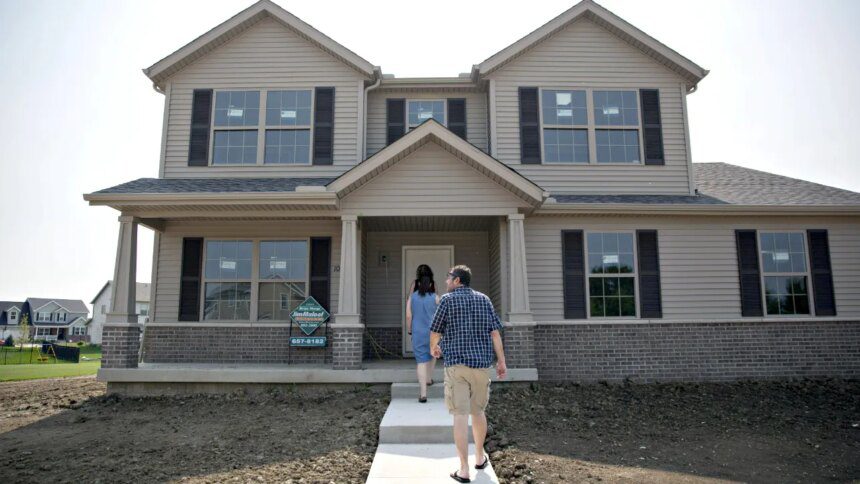

The average mortgage rates in the U.S. have recently dropped to their lowest level in over a month, reflecting a shift in market dynamics due to geopolitical concerns and economic indicators. This decline is part of a broader context involving the Federal Reserve’s monetary policy and its implications for housing markets.
Current Trends in U.S. Mortgage Rates
This week, mortgage buyer Freddie Mac reported that the average rate on the benchmark 30-year fixed mortgage fell from 6.52% to 6.47%. This marks a notable decrease from the 6.81% rate observed a year ago. The average rate on a 15-year fixed mortgage also saw a decrease, falling to 5.81% from 5.84% last week.
Freddie Mac’s chief economist Sam Khater noted that the data signals a resilient consumer, with improvements in retail sales and pending home sales indicative of a modest rise in purchase demand. As mortgage rates remain a critical factor for homebuyers, this drop may inspire more individuals to enter the housing market.
Implications of Federal Reserve Policies
In the context of these declining mortgage rates, the Federal Reserve recently announced it would hold interest rates steady in light of ongoing inflation concerns, especially amidst geopolitical tensions like the Iran conflict. New Federal Reserve Chairman Kevin Warsh’s press conference indicated a more cautious approach to future rate cuts and emphasized a commitment to price stability.
The Fed’s decision kept the federal funds rate unchanged within the range of 3.5% to 3.75%. This decision comes after several months of rate stability following previous rate cuts, showcasing a potential shift in the Fed’s focus towards managing inflation rather than simply supporting economic growth.
Geopolitical Factors Impacting the Economy
Concerns over the ongoing war in Iran have created ripples across the financial markets. The recent memorandum signed by President Donald Trump highlighted calls for an immediate cessation of hostilities and laid down preliminary conditions for negotiations aimed at addressing Iran’s nuclear program. Such geopolitical tensions invariably create uncertainty, influencing factors like inflation and mortgage rates.
According to Realtor.com senior economist Anthony Smith, the recent developments in U.S.-Iran relations could affect market sentiment, with heightened military actions potentially impacting consumer and investor confidence as well. Thus, mortgage rates are not only affected by domestic policies but also by international events and relations.
Why This Is Trending
Interest in U.S. mortgage rates and the policies of the Federal Reserve is high among Indian audiences, particularly in light of the interconnectedness of global economies. Many Indians closely follow financial trends around the world, as these can influence investment opportunities back home. Additionally, with the Indian real estate market always being a subject of interest, changes in mortgage rates in the U.S. serve as potential indicators of future trends in domestic housing finance.
Frequently Asked Questions
What factors influence mortgage rates?
Mortgage rates are influenced by various factors including the Federal Reserve’s interest rate decisions, inflation, consumer demand, and broader economic conditions, including geopolitical tensions.
How does the U.S. Federal Reserve impact global markets?
The Federal Reserve’s decisions regarding interest rates and monetary policy can have global repercussions, affecting everything from foreign exchange rates to the cost of borrowing in various economies, including India.
Why are mortgage rates important for homebuyers?
Mortgage rates directly affect the cost of borrowing for home purchases. A lower mortgage rate can significantly reduce the monthly payments for homebuyers, making homes more affordable and attractive to buyers.
How can geopolitical events affect mortgage rates?
Geopolitical events can lead to economic uncertainty, influencing investor behavior and consumer confidence, which in turn can affect the inflation landscape and, subsequently, interest rates, including mortgage rates.