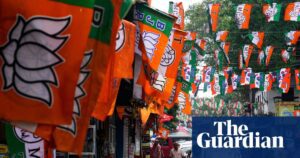

In West Bengal, a massive electoral roll revision has led to the disenfranchisement of millions, predominantly impacting the state’s Muslim population. This action, carried out by the Bharatiya Janata Party (BJP) government, is described by critics as a form of “bloodless political genocide,” raising serious concerns about the integrity of the electoral process and minority rights in India.
A Controversial Electoral Revision
The Special Intensive Revision (SIR) of the electoral roll in West Bengal has resulted in the removal of approximately 9.1 million names, representing more than 10% of the electorate. While some removals were due to deceased individuals or duplicates, nearly 2.7 million voters have contested their removal yet remain excluded from the list. This revision is part of a broader initiative across India, justified by the Modi government as necessary to eliminate what they term “infiltrators,” predominantly targeting illegal Bangladeshi Muslim immigrants.
Home Minister Amit Shah’s remarks on “purifying” the electoral roll have incited outrage among opposition leaders. Sagarika Ghose, a member of the Trinamool Congress (TMC), condemned the removals as “a constitutional crime,” arguing that it undermines the democratic rights of Indian citizens, creating a significant scandal in the nation’s post-independence history. Critics maintain that the electoral commission has lost its credibility, experiencing undue influence from the ruling party, thereby jeopardizing its impartial role in overseeing fair elections.
The Disproportionate Impact on Minorities
Analysts indicate that religious minorities, particularly Muslims, have been disproportionately affected by the mass removals from the electoral roll. Sabir Ahamed, leader of the Sabar Institute, stated that findings suggest religion has been a core factor in determining who was removed, indicating targeted disenfranchisement. In certain Muslim-majority constituencies, nearly half of the voters have been erased from the rolls, including individuals with long-standing citizenship, such as those whose names appeared on voter lists dating back to 2002.
Personal testimonies reflect the widespread anxiety in these communities. For instance, Jaber Ali, a local official in Sherpur village, reported that even individuals who diligently contributed to the voter roll revision found their names missing. The growing fear among the residents, particularly lifelong Indian citizens, is that they might be wrongfully treated as illegal immigrants, intensifying feelings of marginalization.
Government Justifications and Legal Challenges
While the BJP defends the SIR as essential for national security, experts and political opposition view it as a manipulative tactic to skew electoral outcomes in the party’s favor. Legal experts are calling the removal of voters unconstitutional, raising alarms over electoral integrity and the independence of electoral commissions across India. Former election commissioner SY Quraishi highlighted that the rushed nature of the revisions, compounded by the implementation of an AI-assisted algorithm designed to identify discrepancies, further complicates matters.
This algorithm, designed without consideration for the cultural nuances inherent in Bengali names, has resulted in erroneous removals and forced many citizens to prove their citizenship—a burdensome requirement with serious implications. Critics believe that these processes reveal an underlying effort to disenfranchise minorities while simultaneously legitimizing the BJP’s Hindu nationalist agenda. Sixty-two-year-old Senarul Haque, a retired paramilitary officer puzzled by his name’s omission from the rolls despite his extensive service, encapsulates the disillusionment many feel amid this electoral purge.
Why It Matters
The situation in West Bengal highlights critical implications for democratic processes, minority rights, and social equity in India. As populations are systematically disenfranchised, the potential for deepening societal divides increases. Understanding the ramifications of such political strategies is important for global observers, policymakers, and human rights advocates. This incident exemplifies how electoral policies can be exploited to marginalize vulnerable groups, fundamentally challenging the principles of equal citizenship and representation.
Frequently Asked Questions
What is the Special Intensive Revision (SIR)?
The SIR is a government initiative aimed at revising electoral rolls in India, which has recently led to the removal of millions of voters’ names from the West Bengal electoral register.
Why are so many Muslims being disenfranchised in West Bengal?
Reports and analyses suggest that the electoral revisions disproportionately affect Muslims, raising concerns about targeted disenfranchisement influenced by the ruling BJP’s political agenda.
What legal actions are being taken against the voter removals?
Opposition leaders and legal experts have described the removals as unconstitutional and are challenging the elections commission’s authority, seeking legal recourse for those affected.
How does this situation impact democracy in India?
The mass disenfranchisement has serious implications for democratic governance in India, raising alarms about equality, representation, and the electoral process’s integrity.