
Summary
The recent assassination of Iran’s Supreme Leader Ayatollah Ali Khamenei has sparked widespread protests among Indian Muslims, revealing a complex web of grief and political expression that has drawn both solidarity and backlash. While many from various Islamic sects, including Hindus, have joined the processions, the responses from right-wing factions in India highlight ongoing patterns of discrimination and social exclusion against Muslims in the region.
Protests Following Khamenei’s Assassination
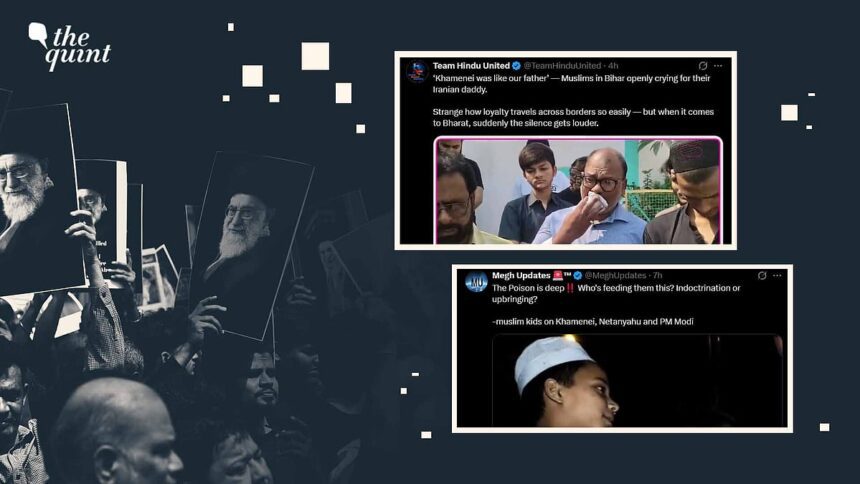
In the wake of Khamenei’s killing by a US-Israel military strike, Indian cities such as Delhi, Kashmir, Lucknow, Punjab, and Bhopal have witnessed significant demonstrations. These gatherings reflect the Shia mourning ritual, which combines expressions of grief with political dissent. Khamenei, a pivotal figure in Shia Islam and an 86-year-old symbol of resistance against Western intervention, is considered by many of his followers to be a martyr, or ‘shaheed’, particularly during the holy month of Ramzan.
The protests, which have garnered attention for their scale and fervor, also indicate a broader political stance against perceived foreign aggression. However, the backlash from the Hindutva brigade—both online and offline—demonstrates a growing intolerance towards Muslim expressions of grief and solidarity, adding a layer of complexity to the sociopolitical landscape in India.
The Response from Indian Right-Wing Groups
In response to the demonstrations, right-wing groups, including supporters of the ruling Bharatiya Janata Party (BJP), have unleashed a wave of criticism against the Muslim community. Accusatory narratives framing the protests as unpatriotic or extremist have circulated widely on social media platforms. This reaction is symptomatic of a broader pattern of vilification faced by Muslims in India, often labeled as terrorists or antinationalists for voicing dissent against the government’s foreign policy or participating in public demonstrations.
Additionally, many Muslims outside the Shia community have joined the protests, showcasing a united front against the offensive political narrative that seeks to marginalize their voices. As such, the Protests have become a litmus test for communal relations in India, highlighting deep-seated divisions and the politicization of religious identity.
Historical Context of Discrimination Against Muslims in India
Understanding the current unrest requires a look at the historical backdrop of discrimination and social exclusion experienced by Muslims in India. Over the last decade, reports of economic boycotts, community segregation, and violent incidents against Muslims have escalated. This marginalization is often justified under the guise of national security or social order, creating an environment of fear and distrust among Indian Muslims.
The policies implemented by the BJP, which openly emphasize a Hindu nationalist agenda, have further exacerbated these tensions. The legal decisions regarding citizenship and the treatment of minority communities serve to reinforce societal divides. Muslim protests, such as those in response to Khamenei’s assassination, challenge this status quo, illuminating the ongoing struggle for dignity, recognition, and justice within a framework of systemic discrimination.
Why It Matters
The implications of these developments extend beyond religious or national borders. The protests illustrate significant issues of free expression, social justice, and the political dynamics affecting minority groups worldwide. As global attention turns towards communal violence and the crackdown on dissent, the ability to observe and respond to these social movements will shape the narrative of democracy and human rights in diverse contexts. It reveals how intersecting identities and global geopolitics influence local protests, and it provides crucial lessons for interpreting similar movements globally.
Frequently Asked Questions
What was the immediate cause of the protests by Indian Muslims?
The assassination of Iran’s Supreme Leader Ayatollah Ali Khamenei by a US-Israel strike prompted widespread protests among Indian Muslims, who view his death as a significant loss and grievance.
How have right-wing groups responded to these protests?
Right-wing factions, including supporters of the BJP, have criticized the protests, labeling them as unpatriotic or extremist, which reflects ongoing patterns of social exclusion against Muslims in India.
What historical issues contribute to the current situation of Indian Muslims?
The discrimination faced by Indian Muslims is deeply rooted in a history of social exclusion, economic boycotts, and communal violence exacerbated by contemporary national policies promoting a Hindu nationalist agenda.
Why is the global community concerned about these protests?
The protests represent critical issues of civil rights, expressions of dissent, and the dynamics of minority treatment within a broader geopolitical context, raising important questions about democracy and human rights worldwide.